
Yellow-faced Whipsnake

Yellow-faced Whipsnake

Demansia psammophis

Silhouette: SeismicShrimp · PhyloPic

LCLeast ConcernNTVUENCR Endemic
Daily sighting probability ~10% · With luck
at Blue Mountains National Park

In 3 days ~30% in a week ~60%

26 Verified sightings at Blue Mountains National Park From 2019 to 2026
90 In all 5 parks
February Best month
☀️ Diurnal When it's spotted

About the Yellow-faced Whipsnake

The yellow-faced whip snake (Demansia psammophis) is a species of venomous snake in the family Elapidae, a family containing many dangerous snakes. D. psammophis is endemic to Australia, found throughout the continent in a variety of habitats from coastal fringes to interior arid scrubland.

The yellow-faced whip snake is part of the genus Demansia, a group of venomous snakes in the family Elapidae. This genus is composed of whip snakes, characterized by their large eyes and whip-like tail. The genus Demansia is commonly found in the Southern hemisphere around Australia and equatorial countries such as Papua New Guinea. 15 species are assigned to the genus Demansia.

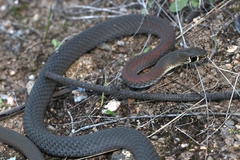
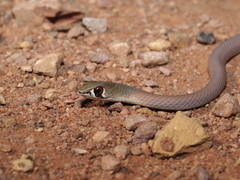
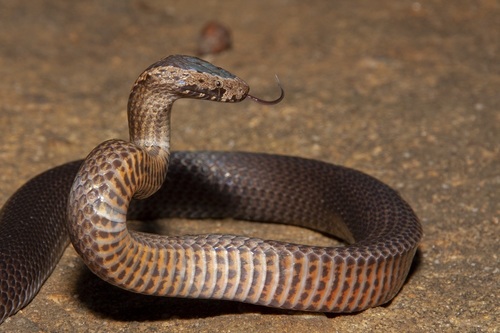
D. psammophis is a thin snake with a narrow head. It grows up to a total length (tail included) of 1 m (39 in), averaging around 80 cm (31 in), females being slightly smaller than males. Characterized by its narrow yellowish head, pale ring around the eyes, and a dark marking curving along the upper lip, D. psammophis becomes distinguishable from other Demansia snakes. Juveniles can be distinguished as a white-edged dark line is seen across the snout. The large prominent eyes surrounded by... Wikipedia →

Global Distribution

Parks Where Found

# Park Country Daily sighting probability
1 Royal National Park 🇦🇺 Australia
~20%
2 Springbrook National Park 🇦🇺 Australia
~10%
3 Noosa National Park 🇦🇺 Australia
~10%
4 Blue Mountains National Park 🇦🇺 Australia
~10%
5 Lamington National Park 🇦🇺 Australia
~10%

Cities Where Found

# City Country Daily sighting probability
1 Brisbane 🇦🇺 Australia
~10%
2 Sydney 🇦🇺 Australia
<5%

Closest Relatives at Blue Mountains National Park

Before you go

What are the chances of seeing a Yellow-faced Whipsnake in Blue Mountains National Park?

With luck

About 10% of wildlife watchers report a Yellow-faced Whipsnake sighting in Blue Mountains National Park on a given day, based on 26 verified sightings from GBIF citizen-science data from 2019 to 2026. It is the 29th most-seen of the 44 reptiles we can rate there. Over three days the chance rises to about 30%, and over a week to about 60%, if each day is a fresh chance.

When is the best time to see a Yellow-faced Whipsnake in Blue Mountains National Park?

February and August

In those months about 20% of wildlife watchers report a Yellow-faced Whipsnake in Blue Mountains National Park on a given day, against about 10% in March–July and September–January, the lowest months.

What time of day is best to see a Yellow-faced Whipsnake?

Between 10 am and 1 pm

Across all the parks we cover, that three-hour window holds the most Yellow-faced Whipsnake sightings with a recorded time, and about 9 in 10 of them come between 6 am and 6 pm: it is a daytime animal.

Is Blue Mountains National Park the best place to see a Yellow-faced Whipsnake?

4th of 5

Of the 5 parks where we can rate Yellow-faced Whipsnake sightings, Blue Mountains National Park ranks 4th at about 10%. The best odds are in Royal National Park (Australia, about 20%), Springbrook National Park (Australia, about 10%) and Noosa National Park (Australia, about 10%).

Which relatives of the Yellow-faced Whipsnake live in Blue Mountains National Park?

Same family: Elapidae

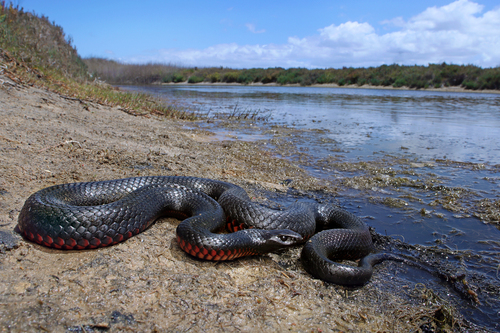
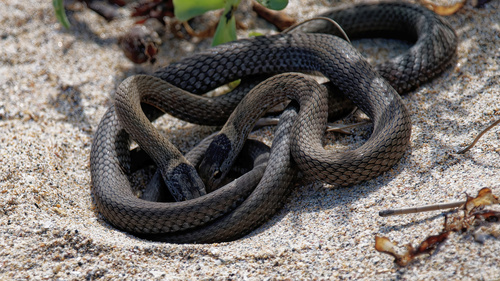
The closest relatives of the Yellow-faced Whipsnake that you can see in Blue Mountains National Park (family Elapidae, Elapid Snakes) are Red-bellied Black Snake (about 30%), Highlands Copperhead (about 30%) and Eastern Tiger Snake (about 20%), with each one's daily chance of a sighting.

Where does the Yellow-faced Whipsnake sighting chance come from?

GBIF citizen-science records

It is estimated from how often the Yellow-faced Whipsnake is recorded against all the reptiles logged in Blue Mountains National Park (26 verified sightings from 2019 to 2026), calibrated against known sighting rates. Figures are rounded to the nearest 10% because citizen-science data supports honest approximations, not decimals, and months with records from fewer than five people show "—". How it works.

← Back to Blue Mountains National Park