Painted Buttonquail

Painted Buttonquail

Turnix varius

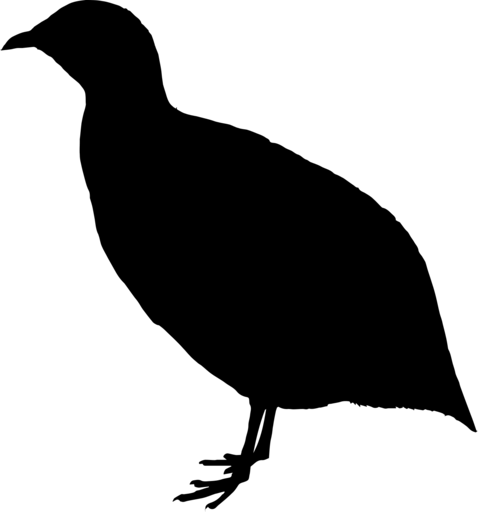
Silhouette: PhyloPic

LCLeast ConcernNTVUENCR Endemic
Daily sighting probability <5% · Rare
at Blue Mountains National Park

In 3 days <5%

30 Verified sightings at Blue Mountains National Park From 2019 to 2026
126 In all 8 parks
March Best month
☀️ Diurnal When it's spotted

About the Painted Buttonquail

The painted buttonquail (Turnix varius) is a species of buttonquail, the family Turnicidae, which resemble, but are unrelated to, the quails of Phasianidae. This species is resident in Australia where numbers are believed to be in decline. A subspecies, the Abrolhos painted buttonquail (Turnix varius scintillans), is endemic to the Houtman Abrolhos islands.

The painted buttonquail was first described by the English ornithologist John Latham in 1801 under the binomial name Perdix varia. "Painted buttonquail" has been designated the official name by the International Ornithologists' Union (IOU).

Two subspecies are recognised. The possibly-extinct New Caledonian buttonquail (Turnix novaecaledoniae) of New Caledonia was formerly considered a third subspecies, but was split as a distinct species by the IOC in 2021.

The painted buttonquail is about 19 to 20 cm (7.5 to 7.9 in) long. It is a ground-dwelling bird and is found in grassy forests and woodlands. It feeds on insects and seeds, and the males incubate the eggs for a fortnight and then care for the young.

The female is the more brightly coloured of the sexes. Her eyes are red, and her crown, face... Wikipedia →

Sounds

Song0:12

Australia · 2023

© Peter Boesman · XC860256 · CC BY-NC-ND 4.0

Call0:39

Australia · 2021

© Khristos Nizamis · XC787227 · CC BY-NC-ND 4.0

Song0:17

Australia · 2021

© Marc Anderson · XC687872 · CC BY-NC-ND 4.0

Global Distribution

Parks Where Found

# Park Country Daily sighting probability
1 Flinders Ranges National Park 🇦🇺 Australia
<5%
2 Kosciuszko National Park 🇦🇺 Australia
<5%
3 Rottnest Island 🇦🇺 Australia
<5%
4 Great Otway National Park 🇦🇺 Australia
<5%
5 Hattah-Kulkyne National Park 🇦🇺 Australia
<5%
6 Lamington National Park 🇦🇺 Australia
<5%
7 Royal National Park 🇦🇺 Australia
<5%
8 Blue Mountains National Park 🇦🇺 Australia
<5%

Cities Where Found

# City Country Daily sighting probability
1 Perth 🇦🇺 Australia
<5%
2 Melbourne 🇦🇺 Australia
<5%
3 Brisbane 🇦🇺 Australia
<5%

Zoos & Centres Where Found

# Zoo / Centre Country
1 Australia Zoo 🇦🇺 Australia In captivity

Before you go

What are the chances of seeing a Painted Buttonquail in Blue Mountains National Park?

Rare

Under 5% of wildlife watchers report a Painted Buttonquail sighting in Blue Mountains National Park on a given day, based on 30 verified sightings from GBIF citizen-science data from 2019 to 2026. It is the 173rd most-seen of the 196 birds we can rate there. Over three days the chance rises to under 5%, if each day is a fresh chance.

When is the best time to see a Painted Buttonquail in Blue Mountains National Park?

Any time of year

In every month with enough records, under 5% of wildlife watchers report a Painted Buttonquail in Blue Mountains National Park on a given day, so our monthly data shows no clear season.

What time of day is best to see a Painted Buttonquail?

Between 2 and 5 pm

Across all the parks we cover, that three-hour window holds the most Painted Buttonquail sightings with a recorded time, and about 9 in 10 of them come between 6 am and 6 pm: it is a daytime animal.

Is Blue Mountains National Park the best place to see a Painted Buttonquail?

Among the best

Of the 8 parks where we can rate Painted Buttonquail sightings, Blue Mountains National Park ranks 8th at under 5%, level with the leaders once rounded. The best odds are in Flinders Ranges National Park (Australia, under 5%), Kosciuszko National Park (Australia, under 5%) and Rottnest Island (Australia, under 5%).

Where does the Painted Buttonquail sighting chance come from?

GBIF citizen-science records

It is estimated from how often the Painted Buttonquail is recorded against all the birds logged in Blue Mountains National Park (30 verified sightings from 2019 to 2026), calibrated against known sighting rates. Figures are rounded to the nearest 10% because citizen-science data supports honest approximations, not decimals, and months with records from fewer than five people show "—". How it works.

← Back to Blue Mountains National Park