Southern Heath Monitor

Southern Heath Monitor

Varanus rosenbergi

Silhouette: Steven Traver · PhyloPic

LCLeast ConcernNTVUENCR Endemic
Daily sighting probability ~10% · With luck
at Blue Mountains National Park

In 3 days ~20% in a week ~40%

25 Verified sightings at Blue Mountains National Park From 2019 to 2026
190 In all 4 parks
November Best month
☀️ Diurnal When it's spotted

About the Southern Heath Monitor

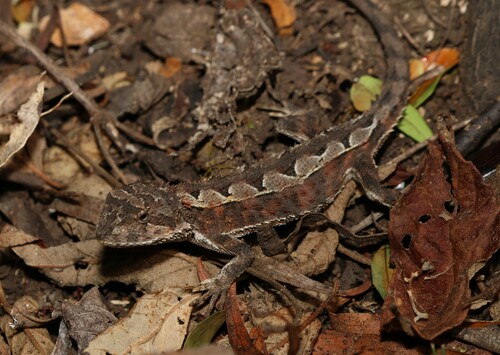
The Rosenberg's monitor (Varanus rosenbergi) is an Australian species of varanid reptile found in southern regions of the continent. They are large and fast predators with rugged bodies and long tails, having a combined length up to 1.5 metres, that will consume any smaller animal that is pursued and captured or found while foraging.

They occur in the Australian Capital Territory, New South Wales, South Australia, Victoria, where it may be rare or locally common, and more frequently observed in Western Australia, where it is sometimes abundant. The species was first described by German herpetologist Robert Mertens in 1957, named and recognized as a subspecies of Varanus gouldii; a revision of Western Australian monitors published in 1980 elevated the taxon to species status. It is now considered to be a member of the V. gouldii species complex. The holotype was collected at the Stirling Range in Southwest Australia.

The specific name, rosenbergi, is in honor of German naturalist Hermann von Rosenberg. The infrageneric classification of the species allies it to other taxa of the subgenus Varanus (Varanus). A geographically remote population in the eastern states has distinct... Wikipedia →

Global Distribution

Parks Where Found

# Park Country Daily sighting probability
1 Flinders Chase 🇦🇺 Australia
~80%
2 Kosciuszko National Park 🇦🇺 Australia
~20%
3 Royal National Park 🇦🇺 Australia
~10%
4 Blue Mountains National Park 🇦🇺 Australia
~10%

Zoos & Centres Where Found

# Zoo / Centre Country
1 Featherdale Sydney Wildlife Park 🇦🇺 Australia In captivity

Before you go

What are the chances of seeing a Southern Heath Monitor in Blue Mountains National Park?

With luck

About 10% of wildlife watchers report a Southern Heath Monitor sighting in Blue Mountains National Park on a given day, based on 25 verified sightings from GBIF citizen-science data from 2019 to 2026. It is the 39th most-seen of the 44 reptiles we can rate there. Over three days the chance rises to about 20%, and over a week to about 40%, if each day is a fresh chance.

When is the best time to see a Southern Heath Monitor in Blue Mountains National Park?

February and September–December

In those months about 10% of wildlife watchers report a Southern Heath Monitor in Blue Mountains National Park on a given day, against under 5% in January and March–August, the lowest months.

What time of day is best to see a Southern Heath Monitor?

Between 1 and 4 pm

Across all the parks we cover, that three-hour window holds the most Southern Heath Monitor sightings with a recorded time, and nearly all of them come between 6 am and 6 pm: it is a daytime animal.

Is Blue Mountains National Park the best place to see a Southern Heath Monitor?

4th of 4

Of the 4 parks where we can rate Southern Heath Monitor sightings, Blue Mountains National Park ranks 4th at about 10%. The best odds are in Flinders Chase (Australia, about 80%), Kosciuszko National Park (Australia, about 20%) and Royal National Park (Australia, about 10%).

Where does the Southern Heath Monitor sighting chance come from?

GBIF citizen-science records

It is estimated from how often the Southern Heath Monitor is recorded against all the reptiles logged in Blue Mountains National Park (25 verified sightings from 2019 to 2026), calibrated against known sighting rates. Figures are rounded to the nearest 10% because citizen-science data supports honest approximations, not decimals, and months with records from fewer than five people show "—". How it works.

← Back to Blue Mountains National Park