Wood Gecko

Wood Gecko

Diplodactylus vittatus

Silhouette: Jose Carlos Arenas-Monroy · PhyloPic

LCLeast ConcernNTVUENCR Endemic
Daily sighting probability ~10% · With luck
at Blue Mountains National Park

In 3 days ~10% in a week ~30%

5 Verified sightings at Blue Mountains National Park From 2019 to 2026
14 In all 2 parks
September Best month
🌙 Nocturnal When it's spotted

About the Wood Gecko

Diplodactylus vittatus, commonly known as the eastern stone gecko, stone gecko, and wood gecko, is a species of diplodactylid lizards that occurs in forest, shrubland and arid regions across Australia. It is widespread across the states of Queensland, Victoria and New South Wales, commonly found in dry peripheral bushlands. This gecko can be kept as a pet or seen within zoo enclosures.

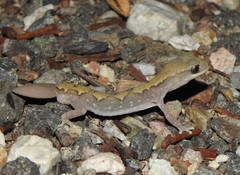
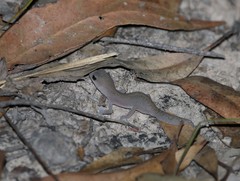
Diplodactylus vittatus is a small nocturnal terrestrial lizard which is native to Australia. The eastern stone gecko has a dark brown body with pale notched zigzag strips from the back to the tip of its short plump tail. The gecko has physical attributes of four limbs with four setae covered digits, large eyes with vertical pupils, fleshy tongue (which the species uses to clean their eyes), tiny granular scales, soft bodies and no eye lids. The tail is used for many purposes including balancing when climbing, fat storage, and camouflage.

Diplodactylus vittatus can grow up to 6 cm long from snout to vent and 9 cm from snout to tail end. The gecko has a relatively short live span of around 5 years. John Edward Gray was the scientific author who described the Diplodactylus... Wikipedia →

Global Distribution

Parks Where Found

# Park Country Daily sighting probability
1 Royal National Park 🇦🇺 Australia
~10%
2 Blue Mountains National Park 🇦🇺 Australia
~10%

Cities Where Found

# City Country Daily sighting probability
1 Brisbane 🇦🇺 Australia
~10%

Before you go

What are the chances of seeing a Wood Gecko in Blue Mountains National Park?

With luck

About 10% of wildlife watchers report a Wood Gecko sighting in Blue Mountains National Park on a given day, based on 5 verified sightings from GBIF citizen-science data from 2019 to 2026. It is the 43rd most-seen of the 44 reptiles we can rate there. Over three days the chance rises to about 10%, and over a week to about 30%, if each day is a fresh chance.

When is the best time to see a Wood Gecko in Blue Mountains National Park?

April, September and November–January

In those months about 10% of wildlife watchers report a Wood Gecko in Blue Mountains National Park on a given day, against under 5% in February–March, May–August and October, the lowest months.

What time of day is best to see a Wood Gecko?

Between 7 and 10 pm

Across all the parks we cover, that three-hour window holds the most Wood Gecko sightings with a recorded time, and about 7 in 10 of them come between 6 pm and 6 am: it is mostly seen at night.

Is Blue Mountains National Park the best place to see a Wood Gecko?

Among the best

Of the 2 parks where we can rate Wood Gecko sightings, Blue Mountains National Park ranks 2nd at about 10%, level with the leaders once rounded. The best odds are in Royal National Park (Australia, about 10%).

Where does the Wood Gecko sighting chance come from?

GBIF citizen-science records

It is estimated from how often the Wood Gecko is recorded against all the reptiles logged in Blue Mountains National Park (5 verified sightings from 2019 to 2026), calibrated against known sighting rates. Figures are rounded to the nearest 10% because citizen-science data supports honest approximations, not decimals, and months with records from fewer than five people show "—". How it works.

← Back to Blue Mountains National Park