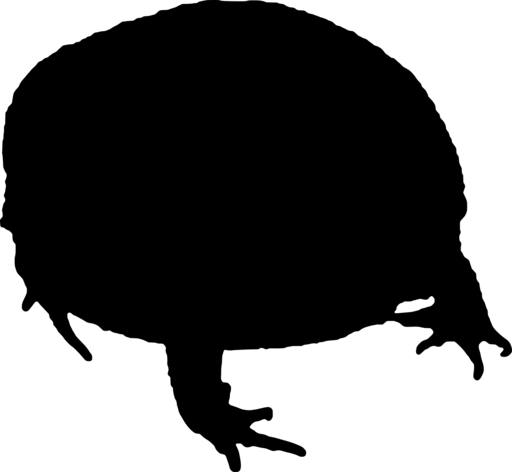
Tink Frog

Tink Frog

Diasporus diastema

Silhouette: Jose Carlos Arenas-Monroy · PhyloPic

LCLeast ConcernNTVUENCR
Daily sighting probability ~30% · Possible
at Braulio Carrillo National Park

In 3 days ~70% in a week ~90%

95 Verified sightings at Braulio Carrillo National Park From 2019 to 2026
289 In all 13 parks
August Best month
🌙 Nocturnal When it's spotted

About the Tink Frog

Diasporus diastema is a species of frog in the family Eleutherodactylidae. Common names include common tink frog or dink frog, supposedly because of the loud metallic "tink" sound that the male frog makes during the night. It is found in Central America, from Honduras through Nicaragua and Costa Rica to Panama. Its natural habitats are tropical humid lowland forests and montane forests, but it can use very disturbed habitats. It is found from sea level to 1,620 m (5,310 ft) elevation.

Its color during daylight hours, when it hides, is grayish brown with spots or bars; when it emerges at night and becomes active, the frog takes on a pale pink or tan color. The adult female reaches up to 1 inch (24 mm) long, and the male about 3/4 inch (21 mm). The tink frog has no free-swimming tadpole stage, and instead emerges as a miniature frog directly from the egg. Eggs are laid in bromeliads and tended by the male.

The diet of the tink frog consists mainly of ants and other arthropods. Kinsey, T. B. Dink Frogs. The Firefly Forest. Retrieved May 2013. Strieter, A. Common Tink Frog. Anywhere Costa Rica. Retrieved May 2013. Media related to Diasporus diastema... Wikipedia →

Sounds

Advertisement call0:17

Costa Rica · 2023

© Chris Harrison · XC893973 · CC BY-NC-SA 4.0

Recording0:10

Costa Rica · 2026

© Ryan Leys · iNaturalist · CC BY-NC 4.0

Recording0:05

Costa Rica · 2025

© D.J. McNeil · iNaturalist · CC BY-NC 4.0

Global Distribution

Parks Where Found

# Park Country Daily sighting probability
1 Braulio Carrillo National Park 🇨🇷 Costa Rica
~30%
2 Piedras Blancas National Park 🇨🇷 Costa Rica
~20%
3 Arenal Volcano National Park 🇨🇷 Costa Rica
~20%
4 Gandoca-Manzanillo Wildlife Refuge 🇨🇷 Costa Rica
~20%
5 Tortuguero National Park 🇨🇷 Costa Rica
~20%
6 Marino Ballena National Park 🇨🇷 Costa Rica
~10%
7 Tenorio Volcano National Park 🇨🇷 Costa Rica
~10%
8 Soberanía National Park 🇵🇦 Panama
~10%
9 Bastimentos Island National Marine Park 🇵🇦 Panama
~10%
10 Cahuita National Park 🇨🇷 Costa Rica
~10%
11 Monteverde Cloud Forest Reserve 🇨🇷 Costa Rica
~10%
12 Manuel Antonio National Park 🇨🇷 Costa Rica
~10%
13 La Amistad International Park (Panama) 🇵🇦 Panama
~10%

Before you go

What are the chances of seeing a Tink Frog in Braulio Carrillo National Park?

Possible

About 30% of wildlife watchers report a Tink Frog sighting in Braulio Carrillo National Park on a given day, based on 95 verified sightings from GBIF citizen-science data from 2019 to 2026. It is the 12th most-seen of the 46 amphibians we can rate there. Over three days the chance rises to about 70%, and over a week to about 90%, if each day is a fresh chance.

When is the best time to see a Tink Frog in Braulio Carrillo National Park?

February, April, July–August and October

In those months about 40% of wildlife watchers report a Tink Frog in Braulio Carrillo National Park on a given day, against about 20% in January, the lowest month.

What time of day is best to see a Tink Frog?

Between 6 and 9 pm

Across all the parks we cover, that three-hour window holds the most Tink Frog sightings with a recorded time, and about 9 in 10 of them come between 6 pm and 6 am: it is mostly seen at night.

Is Braulio Carrillo National Park the best place to see a Tink Frog?

Yes

Of the 13 parks where we can rate Tink Frog sightings, Braulio Carrillo National Park has the highest daily chance: about 30%. Next come Piedras Blancas National Park (Costa Rica, about 20%) and Arenal Volcano National Park (Costa Rica, about 20%).

Where does the Tink Frog sighting chance come from?

GBIF citizen-science records

It is estimated from how often the Tink Frog is recorded against all the amphibians logged in Braulio Carrillo National Park (95 verified sightings from 2019 to 2026), calibrated against known sighting rates. Figures are rounded to the nearest 10% because citizen-science data supports honest approximations, not decimals, and months with records from fewer than five people show "—". How it works.

← Back to Braulio Carrillo National Park