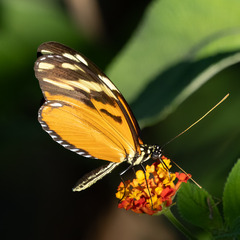
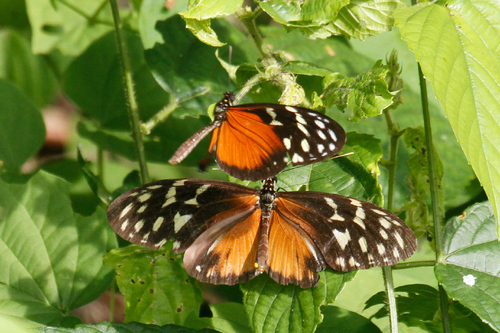
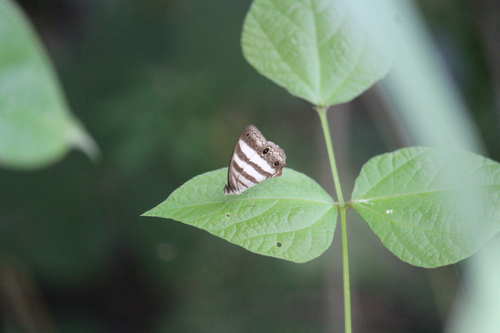
Ismenius Tiger

Ismenius Tiger

Heliconius ismenius

Daily sighting probability ~10% · With luck
at Cabo Blanco Absolute Nature Reserve

In 3 days ~40% in a week ~70%

6 Verified sightings at Cabo Blanco Absolute Nature Reserve From 2019 to 2026
185 In all 12 parks
August Best month
☀️ Diurnal When it's spotted

About the Ismenius Tiger

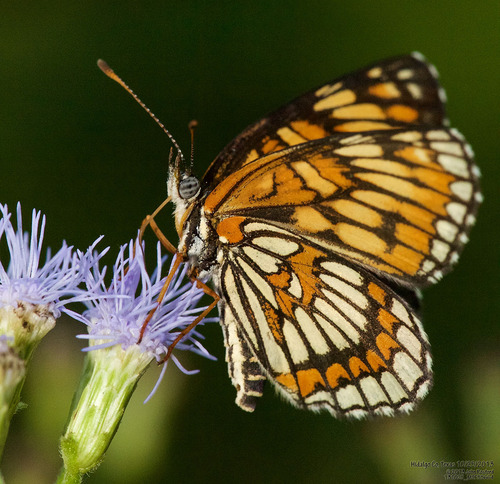
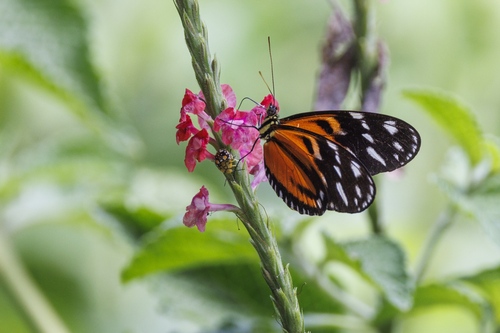
Heliconius ismenius, the Ismenius tiger or tiger heliconian, is a butterfly of the family Nymphalidae found in Central America and northern South America. They are abundant as far south as Ecuador and Venezuela and as far north as southern Mexico, Guatemala and Belize. H. ismenius are more commonly called the tiger-striped long wing butterfly. H. ismenius's nickname is derived from its long wing structure as well as the beautiful burnt orange and black stripes. Pierre André Latreille, a French zoologist, described Heliconius ismenius in 1817. H. ismenius resembles a number of other butterflies, an example of Müllerian mimicry.

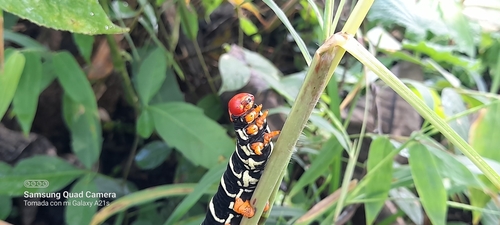
Like any other butterfly, Heliconius ismenius start as eggs, grow to a larval, caterpillar stage, pupate and then mature into butterflies. The eggs are spread out under separate leaves with the mother only placing one or two eggs in a specific location of the host plant. The eggs are small and yellow approximately 1.3 mm (height) x 0.8 mm (width). As the larvae mature, they become larger, approximately 2 cm in size, and become colored. They have an orange head and anal plate and a white body with black spots all over. According... Wikipedia →
Global Distribution

Parks Where Found

# Park Country Daily sighting probability
1 Pico Bonito National Park 🇭🇳 Honduras
~30%
2 Lago de Yojoa 🇭🇳 Honduras
~20%
3 Piedras Blancas National Park 🇨🇷 Costa Rica
~20%
4 Corcovado National Park 🇨🇷 Costa Rica
~20%
5 Marino Ballena National Park 🇨🇷 Costa Rica
~20%
6 Cabo Blanco Absolute Nature Reserve 🇨🇷 Costa Rica
~10%
7 Tenorio Volcano National Park 🇨🇷 Costa Rica
~10%
8 Manuel Antonio National Park 🇨🇷 Costa Rica
~10%
9 Arenal Volcano National Park 🇨🇷 Costa Rica
~10%
10 Carara National Park 🇨🇷 Costa Rica
~10%
11 Soberanía National Park 🇵🇦 Panama
~10%
12 Tapantí-Macizo de la Muerte National Park 🇨🇷 Costa Rica
~10%

Cities Where Found

# City Country Daily sighting probability
1 San Salvador 🇸🇻 El Salvador
~10%
2 San José 🇨🇷 Costa Rica
~10%

Before you go

What are the chances of seeing an Ismenius Tiger in Cabo Blanco Absolute Nature Reserve?

With luck

About 10% of wildlife watchers report an Ismenius Tiger sighting in Cabo Blanco Absolute Nature Reserve on a given day, based on 6 verified sightings from GBIF citizen-science data from 2019 to 2026. It is the 13th most-seen of the 25 insects we can rate there. Over three days the chance rises to about 40%, and over a week to about 70%, if each day is a fresh chance.

When is the best time to see an Ismenius Tiger in Cabo Blanco Absolute Nature Reserve?

August

In that month about 30% of wildlife watchers report an Ismenius Tiger in Cabo Blanco Absolute Nature Reserve on a given day, against under 5% in February, April–July and September–October, the lowest months. That is one of Cabo Blanco Absolute Nature Reserve's wettest months, with about 510 mm of rain against 15 mm in February.

What time of day is best to see an Ismenius Tiger?

Between 9 am and noon

Across all the parks we cover, that three-hour window holds the most Ismenius Tiger sightings with a recorded time, and about 9 in 10 of them come between 6 am and 6 pm: it is a daytime animal.

Is Cabo Blanco Absolute Nature Reserve the best place to see an Ismenius Tiger?

6th of 12

Of the 12 parks where we can rate Ismenius Tiger sightings, Cabo Blanco Absolute Nature Reserve ranks 6th at about 10%. The best odds are in Pico Bonito National Park (Honduras, about 30%), Lago de Yojoa (Honduras, about 20%) and Piedras Blancas National Park (Costa Rica, about 20%).

Where does the Ismenius Tiger sighting chance come from?

GBIF citizen-science records

It is estimated from how often the Ismenius Tiger is recorded against all the insects logged in Cabo Blanco Absolute Nature Reserve (6 verified sightings from 2019 to 2026), calibrated against known sighting rates. Figures are rounded to the nearest 10% because citizen-science data supports honest approximations, not decimals, and months with records from fewer than five people show "—". How it works.

← Back to Cabo Blanco Absolute Nature Reserve