

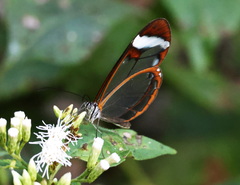
Completed


Pale Owl-Butterfly
Caligo telamonius
- KingdomAnimalia (Animals)
- PhylumArthropoda (Arthropods)
- ClassInsecta (Insects)
- OrderLepidoptera (Butterflies and Moths)
- FamilyNymphalidae (Brush-footed Butterflies)
- GenusCaligo (Owl-Butterflies)
- SpeciesCaligo telamonius (Pale Owl-Butterfly)
In 3 days ~40% in a week ~70%
9 Verified sightings at Biotopo Cerro Cahuí From 2019 to 2026
201 In all 16 parks
August Best month
☀️ Diurnal When it's spotted
About the Pale Owl-Butterfly
Caligo telamonius is a brush-footed butterfly (family Nymphalidae). The species was first described by Cajetan von Felder and Rudolf Felder in 1862. It is found in southern North America, Central America, and South America.
Two subspecies belong to the species Caligo telamonius: Caligo telamonius memnon Caligo telamonius menus Media related to Caligo telamonius at Wikimedia Commons Wikipedia →
Recent sightings of Pale Owl-Butterfly in Biotopo Cerro Cahuí
LIVEiNaturalistGlobal Distribution
Parks Where Found
| # | Park | Country | Daily sighting probability |
|---|---|---|---|
| 1 | Pico Bonito National Park | 🇭🇳 Honduras | |
| 2 | Lago de Yojoa | 🇭🇳 Honduras | |
| 3 | Ostional Wildlife Refuge | 🇨🇷 Costa Rica | |
| 4 | Tikal National Park | 🇬🇹 Guatemala | |
| 5 | Masaya Volcano National Park | 🇳🇮 Nicaragua | |
| 6 | Carara National Park | 🇨🇷 Costa Rica | |
| 7 | Biotopo Cerro Cahuí | 🇬🇹 Guatemala | |
| 8 | Cerro Azul Meámbar National Park | 🇭🇳 Honduras | |
| 9 | Manuel Antonio National Park | 🇨🇷 Costa Rica | |
| 10 | Sian Ka'an Biosphere Reserve | 🇲🇽 Mexico | |
| 11 | Arenal Volcano National Park | 🇨🇷 Costa Rica | |
| 12 | Soberanía National Park | 🇵🇦 Panama | |
| 13 | Corcovado National Park | 🇨🇷 Costa Rica | |
| 14 | Parque Natural Metropolitano | 🇵🇦 Panama | |
| 15 | Monteverde Cloud Forest Reserve | 🇨🇷 Costa Rica | |
| 16 | La Amistad International Park (Panama) | 🇵🇦 Panama |
Cities Where Found
| # | City | Country | Daily sighting probability |
|---|---|---|---|
| 1 | San Salvador | 🇸🇻 El Salvador | |
| 2 | San José | 🇨🇷 Costa Rica | |
| 3 | Panama City | 🇵🇦 Panama |
Closest Relatives at Biotopo Cerro Cahuí





Before you go
What are the chances of seeing a Pale Owl-Butterfly in Biotopo Cerro Cahuí?
Possible
About 20% of wildlife watchers report a Pale Owl-Butterfly sighting in Biotopo Cerro Cahuí on a given day, based on 9 verified sightings from GBIF citizen-science data from 2019 to 2026. It is the 44th most-seen of the 77 insects we can rate there. Over three days the chance rises to about 40%, and over a week to about 70%, if each day is a fresh chance.
When is the best time to see a Pale Owl-Butterfly in Biotopo Cerro Cahuí?
August
In that month about 40% of wildlife watchers report a Pale Owl-Butterfly in Biotopo Cerro Cahuí on a given day, against under 5% in January–July, September and November, the lowest months. That is one of Biotopo Cerro Cahuí's wettest months, with about 170 mm of rain against 25 mm in March.
What time of day is best to see a Pale Owl-Butterfly?
Between 8 and 11 am
Across all the parks we cover, that three-hour window holds the most Pale Owl-Butterfly sightings with a recorded time, and about 8 in 10 of them come between 6 am and 6 pm: it is a daytime animal.
Is Biotopo Cerro Cahuí the best place to see a Pale Owl-Butterfly?
7th of 16
Of the 16 parks where we can rate Pale Owl-Butterfly sightings, Biotopo Cerro Cahuí ranks 7th at about 20%. The best odds are in Pico Bonito National Park (Honduras, about 40%), Lago de Yojoa (Honduras, about 30%) and Ostional Wildlife Refuge (Costa Rica, about 30%).
Which relatives of the Pale Owl-Butterfly live in Biotopo Cerro Cahuí?
Same family: Nymphalidae
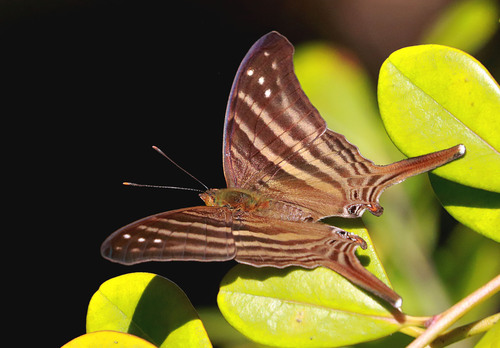
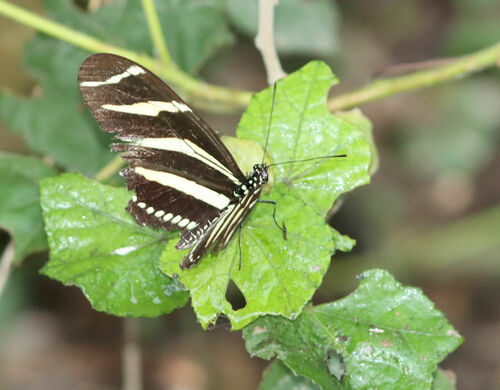
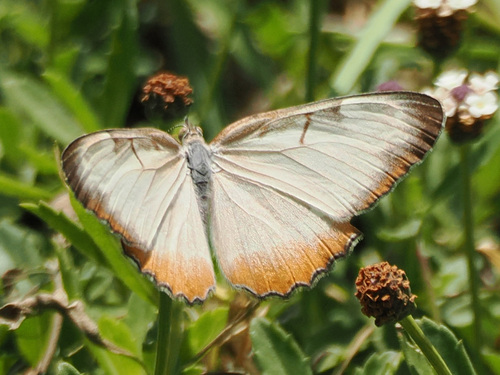
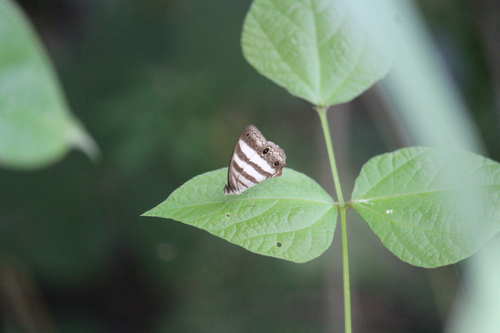
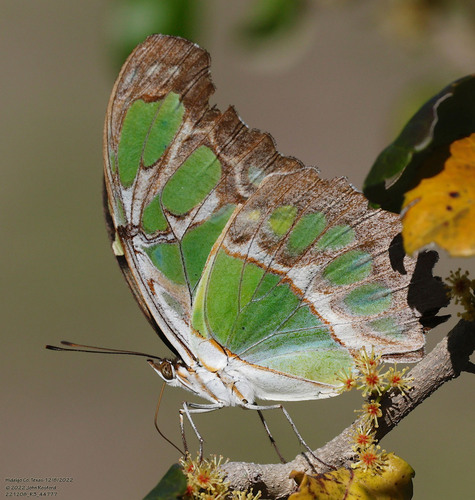
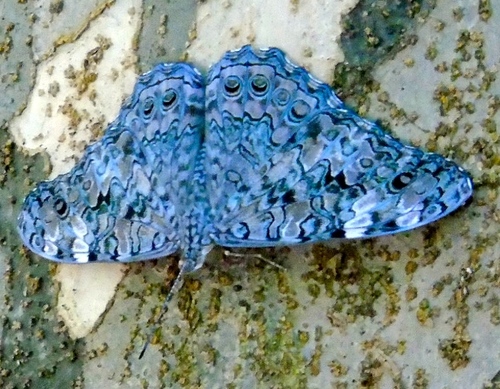
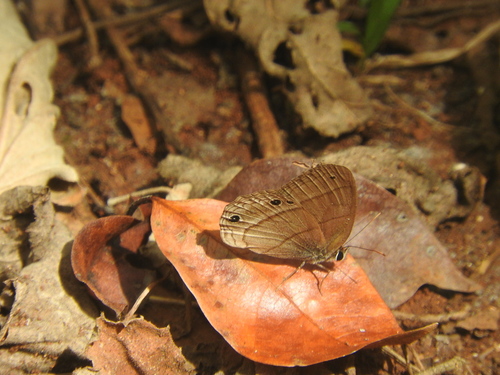
The closest relatives of the Pale Owl-Butterfly that you can see in Biotopo Cerro Cahuí (family Nymphalidae, Brush-footed Butterflies) are Banded Peacock (about 40%), White Peacock (about 40%) and Many-Banded Daggerwing (about 30%), with each one's daily chance of a sighting.
Where does the Pale Owl-Butterfly sighting chance come from?
GBIF citizen-science records
It is estimated from how often the Pale Owl-Butterfly is recorded against all the insects logged in Biotopo Cerro Cahuí (9 verified sightings from 2019 to 2026), calibrated against known sighting rates. Figures are rounded to the nearest 10% because citizen-science data supports honest approximations, not decimals, and months with records from fewer than five people show "—". How it works.
