Kuhl's pipistrelle

Kuhl's pipistrelle

Pipistrellus kuhlii

Silhouette: Margot Michaud · PhyloPic

LCLeast ConcernNTVUENCR
Daily sighting probability ~10% · With luck
at Cévennes National Park

In 3 days ~30% in a week ~60%

12 Verified sightings at Cévennes National Park From 2019 to 2026
12 In 1 park
October Best month
☀️🌙 Day & Night When it's spotted

About the Kuhl's pipistrelle

Kuhl's pipistrelle (Pipistrellus kuhlii) is a species of vesper bat that occurs in large areas of North Africa, Southern Europe and West Asia. It lives in temperate forests, subtropical or tropical dry shrubland, Mediterranean-type shrubby vegetation, temperate grassland, rural gardens, and urban areas.

Kuhl's pipistrelle was first described in 1817, under the name Vespertilio kuhlii, in a work by Heinrich Kuhl entitled Die deutschen Fledermäuse ("The bats of Germany"). The specific epithet was chosen by Johann Natterer, who had collected the first specimens, and commemorates Kuhl; under the rules of the International Code of Zoological Nomenclature, however, Kuhl himself is regarded as the authority, as the first to report the name.

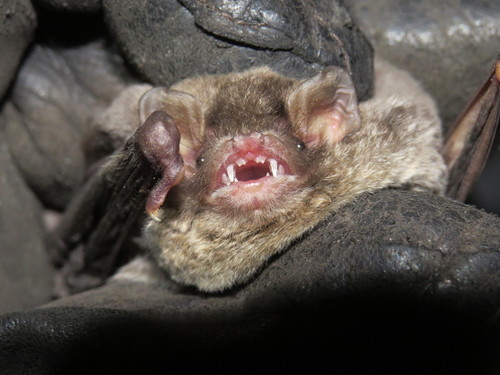
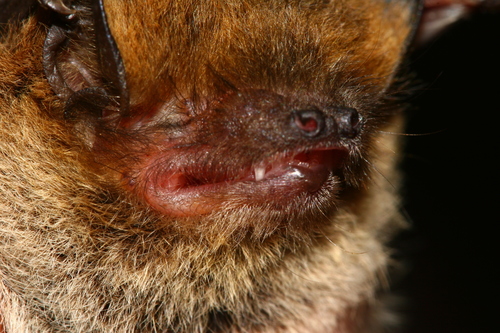
The population in Algeria, Egypt, Libya, Sudan was formerly known as Pipistrellus deserti, which is now considered to be a junior synonym of Pipistrellus kuhlii. Kuhl's pipistrelle's fur is dark brown to yellowish, while the wings are black or dark brown. Some individuals have a white stripe at the wing edges. It has a body length of 40–55 mm (1.6–2.2 in) with a 30–45 mm (1.2–1.8 in) long tail, and it weighs around 5–10... Wikipedia →
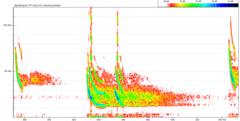
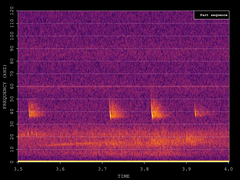
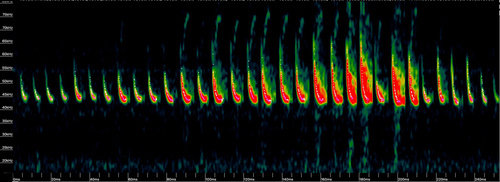
Sounds

Recording0:44

France · 2020

© lousauvajon · iNaturalist · CC BY-NC 4.0

Recording0:08

Portugal · 2021

© neilfletcher · iNaturalist · CC BY-NC 4.0

Recording0:14

France · 2024

© Mathieu Pélissié · iNaturalist · CC BY-NC 4.0

Global Distribution

Parks Where Found

# Park Country Daily sighting probability
1 Cévennes National Park 🇫🇷 France
~10%

More parks will be added in future updates.

Before you go

What are the chances of seeing a Kuhl's pipistrelle in Cévennes National Park?

With luck

About 10% of wildlife watchers report a Kuhl's pipistrelle sighting in Cévennes National Park on a given day, based on 12 verified sightings from GBIF citizen-science data from 2019 to 2026. It is the 19th most-seen of the 30 mammals we can rate there. Over three days the chance rises to about 30%, and over a week to about 60%, if each day is a fresh chance.

When is the best time to see a Kuhl's pipistrelle in Cévennes National Park?

February–March and September–October

In those months about 20% of wildlife watchers report a Kuhl's pipistrelle in Cévennes National Park on a given day, against under 5% in April, July–August and November–January, the lowest months.

What time of day is best to see a Kuhl's pipistrelle?

Between 8 and 11 pm

Across all the parks we cover, that three-hour window holds the most Kuhl's pipistrelle sightings with a recorded time, and about 7 in 10 of them come between 6 pm and 6 am: it is seen both by day and at night.

Where else can you see a Kuhl's pipistrelle?

Only Cévennes National Park, in our data

Cévennes National Park is the only park on Wallace's Line with enough records to rate Kuhl's pipistrelle sightings: about 10% of wildlife watchers there report one on a given day.

Which relatives of the Kuhl's pipistrelle live in Cévennes National Park?

Same genus: Pipistrellus

The closest relatives of the Kuhl's pipistrelle that you can see in Cévennes National Park (genus Pipistrellus, Pipistrelles) are Common Pipistrelle (about 10%) and Pygmy Pipistrelle (about 10%), with each one's daily chance of a sighting.

Where does the Kuhl's pipistrelle sighting chance come from?

GBIF citizen-science records

It is estimated from how often the Kuhl's pipistrelle is recorded against all the mammals logged in Cévennes National Park (12 verified sightings from 2019 to 2026), calibrated against known sighting rates. Figures are rounded to the nearest 10% because citizen-science data supports honest approximations, not decimals, and months with records from fewer than five people show "—". How it works.

← Back to Cévennes National Park