Geoffroy's Bat

Geoffroy's Bat

Myotis emarginatus

Silhouette: Archibald Thorburn · PhyloPic

LCLeast ConcernNTVUENCR
Daily sighting probability ~10% · With luck
at Cévennes National Park

In 3 days ~30% in a week ~50%

11 Verified sightings at Cévennes National Park From 2019 to 2026
19 In all 2 parks
November Best month
☀️ Diurnal When it's spotted

About the Geoffroy's Bat

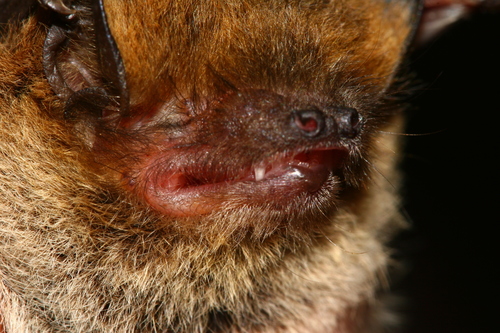
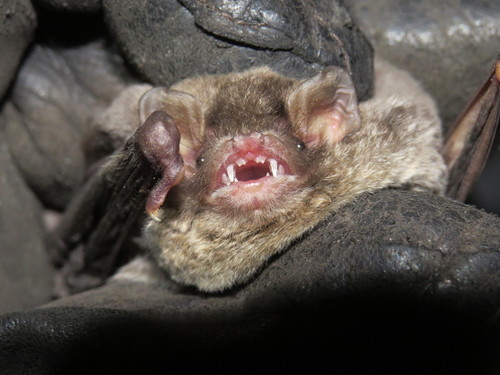
Geoffroy's bat (Myotis emarginatus), also known as the notch-eared bat, is a species of vesper bat. M. emarginatus is a medium-sized bat with long and woolly fur. The dorsal side of the torso is rust-brown to fox-red and the ventral side is a poorly delineated pale yellowish-brown. The young animals are almost fully grey. The face is light brown. The ears are brown and they have an almost right-angled notch at the outer edge and many scattered, wart-like growths on the auricle. The tip of the tragus does not reach the notch on the edge of the ear. The wings are brown and broad. The edge of the tail membrane is supported by a straight calcar and part of it has short, straight and soft hairs.

Geoffroy's bat feeds primarily on spiders and flies. Geoffroy's bats in southern Belgium feed primarily on blood-feeding muscid flies, primarily the stable fly and the face fly, which collectively made up up to 72% of their diet in some areas. The other primary element of their diet are web-building spiders, which make up an increased portion of their prey in areas where suitable flies are absent. Most spiders consumed by Geoffroy's bats are of the family Araneidae... Wikipedia →

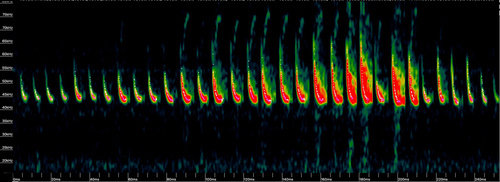
Sounds

Recording0:01

Netherlands · 2020

© Jan Buys · Observation.org, Nature data from around the World · CC BY-NC-ND 4.0

Global Distribution

Parks Where Found

# Park Country Daily sighting probability
1 Cévennes National Park 🇫🇷 France
~10%
2 Pyrénées National Park 🇫🇷 France
~10%

Before you go

What are the chances of seeing a Geoffroy's Bat in Cévennes National Park?

With luck

About 10% of wildlife watchers report a Geoffroy's Bat sighting in Cévennes National Park on a given day, based on 11 verified sightings from GBIF citizen-science data from 2019 to 2026. It is the 20th most-seen of the 30 mammals we can rate there. Over three days the chance rises to about 30%, and over a week to about 50%, if each day is a fresh chance.

When is the best time to see a Geoffroy's Bat in Cévennes National Park?

July, September and November

In those months about 20% of wildlife watchers report a Geoffroy's Bat in Cévennes National Park on a given day, against under 5% in October and December–April, the lowest months.

What time of day is best to see a Geoffroy's Bat?

Between 10 am and 1 pm

Across all the parks we cover, that three-hour window holds the most Geoffroy's Bat sightings with a recorded time, and about 8 in 10 of them come between 6 am and 6 pm: it is a daytime animal.

Is Cévennes National Park the best place to see a Geoffroy's Bat?

Yes

Of the 2 parks where we can rate Geoffroy's Bat sightings, Cévennes National Park has the highest daily chance: about 10%. Next come Pyrénées National Park (France, about 10%).

Where does the Geoffroy's Bat sighting chance come from?

GBIF citizen-science records

It is estimated from how often the Geoffroy's Bat is recorded against all the mammals logged in Cévennes National Park (11 verified sightings from 2019 to 2026), calibrated against known sighting rates. Figures are rounded to the nearest 10% because citizen-science data supports honest approximations, not decimals, and months with records from fewer than five people show "—". How it works.

← Back to Cévennes National Park