Lesser Noctule

Lesser Noctule

Nyctalus leisleri

Silhouette: Archibald Thorburn · PhyloPic

LCLeast ConcernNTVUENCR
Daily sighting probability ~10% · With luck
at Cévennes National Park

In 3 days ~20% in a week ~40%

17 Verified sightings at Cévennes National Park From 2019 to 2026
17 In 1 park
October Best month
☀️🌙 Day & Night When it's spotted

About the Lesser Noctule

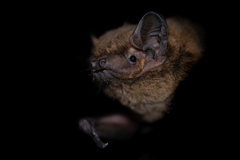
The lesser noctule or the Leisler's bat (Nyctalus leisleri), is a species of insectivorous bat belonging to the vesper bat family, Vespertilionidae. The species was named to honour the naturalist Johann Philipp Achilles Leisler.

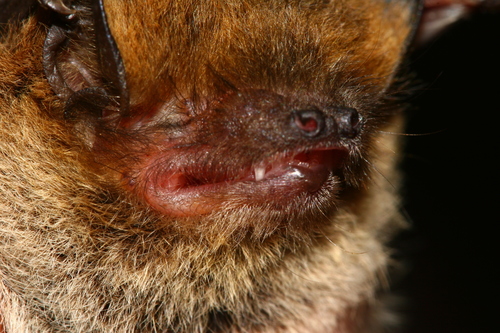
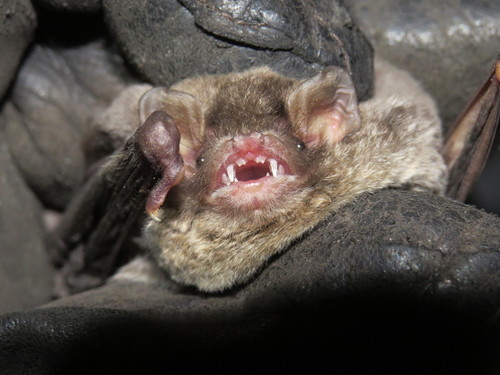
It is a medium-sized bat, slightly smaller than the common noctule. It has a length of 48 to 68 mm (head and body) and a wingspan of 260 to 330 mm. The forearm measures 38 to 47 mm and the bat's weight is 11 to 20 grams. The face, ears and wings are dark. The fur is brown, darker at the base than the tip unlike that of the common noctule which is the same colour along its length. The undersides of the arms are hairy giving it the alternative name "hairy-armed bat". The ears are short and rounded with a mushroom-shaped tragus. The wings are long and narrow.

The lesser noctule is found locally across Europe and western Asia, eastwards as far as the Urals and Himalayas. It is also found in north-west Africa, the Canary Islands and Madeira. The form in the Azores is often considered to be a separate species – Azores noctule (Nyctalus azoreum).

It is typically found in forests, both coniferous and deciduous, but has also adapted... Wikipedia →

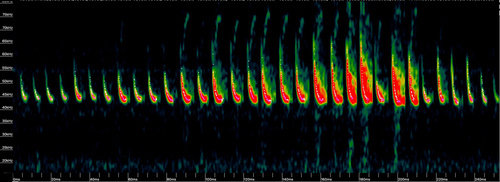
Sounds

Distress call0:22

France · 2023

© Fabrice Schmitt · XC815850 · CC BY-NC-SA 4.0

Recording0:50

France · 2026

© Denis Forzy · iNaturalist · CC BY 4.0

Recording0:11

France · 2022

Yann Geshors · iNaturalist · CC0

Global Distribution

Parks Where Found

# Park Country Daily sighting probability
1 Cévennes National Park 🇫🇷 France
~10%

More parks will be added in future updates.

Before you go

What are the chances of seeing a Lesser Noctule in Cévennes National Park?

With luck

About 10% of wildlife watchers report a Lesser Noctule sighting in Cévennes National Park on a given day, based on 17 verified sightings from GBIF citizen-science data from 2019 to 2026. It is the 24th most-seen of the 30 mammals we can rate there. Over three days the chance rises to about 20%, and over a week to about 40%, if each day is a fresh chance.

When is the best time to see a Lesser Noctule in Cévennes National Park?

October

In that month about 20% of wildlife watchers report a Lesser Noctule in Cévennes National Park on a given day, against under 5% in May, August and November–February, the lowest months. That is one of Cévennes National Park's wettest months, with about 260 mm of rain against 35 mm in July.

What time of day is best to see a Lesser Noctule?

Between 9 pm and midnight

Across all the parks we cover, that three-hour window holds the most Lesser Noctule sightings with a recorded time, and about 6 in 10 of them come between 6 pm and 6 am: it is seen both by day and at night.

Where else can you see a Lesser Noctule?

Only Cévennes National Park, in our data

Cévennes National Park is the only park on Wallace's Line with enough records to rate Lesser Noctule sightings: about 10% of wildlife watchers there report one on a given day.

Where does the Lesser Noctule sighting chance come from?

GBIF citizen-science records

It is estimated from how often the Lesser Noctule is recorded against all the mammals logged in Cévennes National Park (17 verified sightings from 2019 to 2026), calibrated against known sighting rates. Figures are rounded to the nearest 10% because citizen-science data supports honest approximations, not decimals, and months with records from fewer than five people show "—". How it works.

← Back to Cévennes National Park