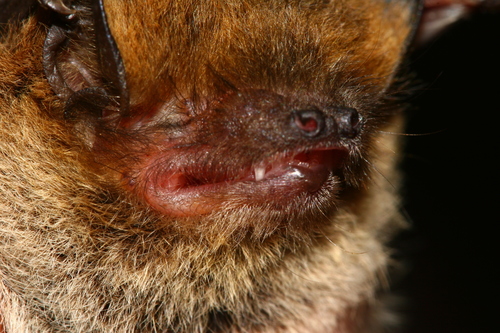
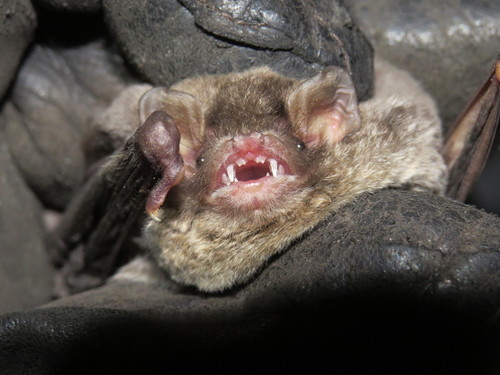
Pygmy Pipistrelle

Pygmy Pipistrelle

Pipistrellus pygmaeus

Silhouette: Evgeniy Yakhontov · PhyloPic

LCLeast ConcernNTVUENCR
Daily sighting probability ~10% · With luck
at Cévennes National Park

In 3 days ~30% in a week ~60%

13 Verified sightings at Cévennes National Park From 2019 to 2026
13 In 1 park
March Best month
🌙 Nocturnal When it's spotted

About the Pygmy Pipistrelle

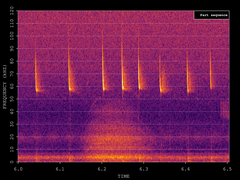
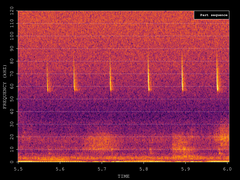
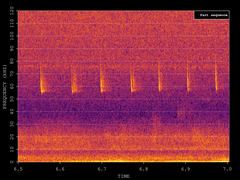
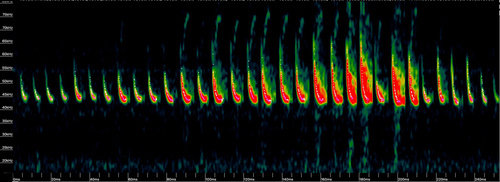
The soprano pipistrelle (Pipistrellus pygmaeus) is a small species of bat. It is found in Europe and often roosts on buildings. Until 1999, the soprano pipistrelle was considered as conspecific with the common pipistrelle. It is possible that these two species diverged from one another in the Mediterranean, resulting in the soprano pipistrelle having the ability to thermoregulate at temperatures as high as 40 degrees Celsius. Since the two species were split, a number of other differences, in appearance, habitat and food, have also been discovered. The two species were first distinguished on the basis of the different frequency of their echolocation calls. The common pipistrelle uses a call of 45 kHz, while the soprano pipistrelle echolocates at 55 kHz. The soprano pipistrelle is also known as the 55 kHz pipistrelle and the brown pipistrelle.

The soprano pipistrelle is known to roost throughout Europe in rooftops and houses. One study, by Lourneco and Palmeirim, suggested that the reason for a preference for rooftops was because of the available thermal differences throughout a roof. Although soprano pipistrelles can thermoregulate up to... Wikipedia →

Sounds

Recording0:50

France · 2026

© Denis Forzy · iNaturalist · CC BY 4.0

Recording1:03

United Kingdom · 2025

Alison JC Brown · iNaturalist · CC0

Recording0:05

United Kingdom · 2026

© brook1951 · iNaturalist · CC BY-NC 4.0

Global Distribution

Parks Where Found

# Park Country Daily sighting probability
1 Cévennes National Park 🇫🇷 France
~10%

More parks will be added in future updates.

Cities Where Found

# City Country Daily sighting probability
1 Copenhagen 🇩🇰 Denmark
<5%

Before you go

What are the chances of seeing a Pygmy Pipistrelle in Cévennes National Park?

With luck

About 10% of wildlife watchers report a Pygmy Pipistrelle sighting in Cévennes National Park on a given day, based on 13 verified sightings from GBIF citizen-science data from 2019 to 2026. It is the 17th most-seen of the 30 mammals we can rate there. Over three days the chance rises to about 30%, and over a week to about 60%, if each day is a fresh chance.

When is the best time to see a Pygmy Pipistrelle in Cévennes National Park?

March, June and October

In those months about 20% of wildlife watchers report a Pygmy Pipistrelle in Cévennes National Park on a given day, against under 5% in July and November–February, the lowest months. Those are among Cévennes National Park's wettest months, with about 160 mm of rain a month against 35 mm in July.

What time of day is best to see a Pygmy Pipistrelle?

Between 8 and 11 pm

Across all the parks we cover, that three-hour window holds the most Pygmy Pipistrelle sightings with a recorded time, and about 7 in 10 of them come between 6 pm and 6 am: it is mostly seen at night.

Where else can you see a Pygmy Pipistrelle?

Only Cévennes National Park, in our data

Cévennes National Park is the only park on Wallace's Line with enough records to rate Pygmy Pipistrelle sightings: about 10% of wildlife watchers there report one on a given day.

Which relatives of the Pygmy Pipistrelle live in Cévennes National Park?

Same genus: Pipistrellus

The closest relatives of the Pygmy Pipistrelle that you can see in Cévennes National Park (genus Pipistrellus, Pipistrelles) are Common Pipistrelle (about 10%) and Kuhl's pipistrelle (about 10%), with each one's daily chance of a sighting.

Where does the Pygmy Pipistrelle sighting chance come from?

GBIF citizen-science records

It is estimated from how often the Pygmy Pipistrelle is recorded against all the mammals logged in Cévennes National Park (13 verified sightings from 2019 to 2026), calibrated against known sighting rates. Figures are rounded to the nearest 10% because citizen-science data supports honest approximations, not decimals, and months with records from fewer than five people show "—". How it works.

← Back to Cévennes National Park