Western Barbastelle

Western Barbastelle

Barbastella barbastellus

Silhouette: C. Robiller / Naturlichter.de · PhyloPic

LCNTNear ThreatenedVUENCR
Daily sighting probability ~10% · With luck
at Cévennes National Park

In 3 days ~20% in a week ~40%

12 Verified sightings at Cévennes National Park From 2019 to 2026
19 In all 2 parks
January Best month
☀️🌙 Day & Night When it's spotted

About the Western Barbastelle

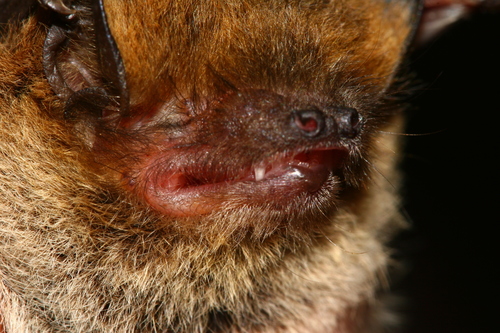
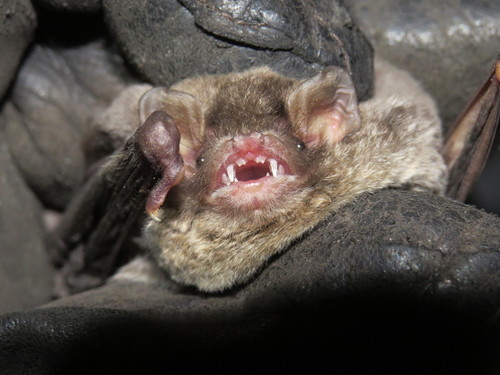
The western barbastelle (Barbastella barbastellus), also known as the barbastelle or barbastelle bat, is a European bat in the genus Barbastella. This species is found from Portugal to Azerbaijan and from Sweden to Canary Islands, where a sub-species was identified. It has a short nose, small eyes and wide ears. The conservation status of B. barbastellus is assessed as "near threatened", "vulnerable", "critically endangered" or "extinct" in various parts of its range.

The western barbastelle was described as a new species in 1774 by Johann Christian Daniel von Schreber, who placed it in the genus Vespertilio, with a species name of Vespertilio barbastellus. The holotype had been collected in Burgundy, France. In 1836 it was placed in the genus Barbastellus, and the first use of its current name combination of Barbastella barbastellus was in 1897 by Gerrit Smith Miller Jr. The name Barbastella barbastellus might be coming from the Latin barba (beard) and stella (star). Viewed from the side, it seems that the upper lip has a beard, or a moustache.

Two subspecies are recognized by Mammal Species of the World (2005): Barbastella barbastellus barbastellus: distributed... Wikipedia →

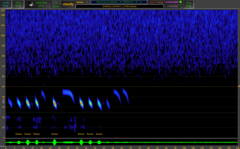
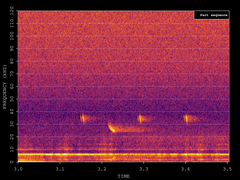
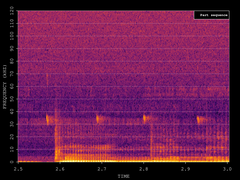
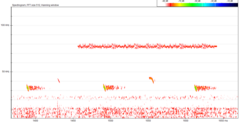
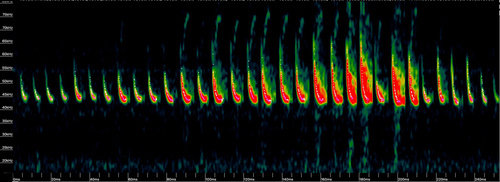
Sounds

Recording0:14

Spain · 2025

© Pablo de la Fuente Brun · iNaturalist · CC BY-NC 4.0

Recording0:21

Germany · 2020

© Jiri van der Drift · Observation.org, Nature data from around the World · CC BY-NC-SA 4.0

Global Distribution

Parks Where Found

# Park Country Daily sighting probability
1 Cévennes National Park 🇫🇷 France
~10%
2 Pyrénées National Park 🇫🇷 France
<5%

Zoos & Centres Where Found

# Zoo / Centre Country
1 Wilhelma 🇩🇪 Germany In captivity

Before you go

What are the chances of seeing a Western Barbastelle in Cévennes National Park?

With luck

About 10% of wildlife watchers report a Western Barbastelle sighting in Cévennes National Park on a given day, based on 12 verified sightings from GBIF citizen-science data from 2019 to 2026. It is the 27th most-seen of the 30 mammals we can rate there. Over three days the chance rises to about 20%, and over a week to about 40%, if each day is a fresh chance.

When is the best time to see a Western Barbastelle in Cévennes National Park?

January

In that month about 20% of wildlife watchers report a Western Barbastelle in Cévennes National Park on a given day, against under 5% in March–April, July, October and December, the lowest months.

What time of day is best to see a Western Barbastelle?

Between 7 and 10 pm

Across all the parks we cover, that three-hour window holds the most Western Barbastelle sightings with a recorded time, and about half of them come between 6 am and 6 pm: it is seen both by day and at night.

Is Cévennes National Park the best place to see a Western Barbastelle?

Yes

Of the 2 parks where we can rate Western Barbastelle sightings, Cévennes National Park has the highest daily chance: about 10%. Next come Pyrénées National Park (France, under 5%).

Which relatives of the Western Barbastelle live in Cévennes National Park?

Same family: Vespertilionidae

The closest relatives of the Western Barbastelle that you can see in Cévennes National Park (family Vespertilionidae, Evening Bats) are Common Pipistrelle (about 10%), Daubenton's bat (about 10%) and Pygmy Pipistrelle (about 10%), with each one's daily chance of a sighting.

Where does the Western Barbastelle sighting chance come from?

GBIF citizen-science records

It is estimated from how often the Western Barbastelle is recorded against all the mammals logged in Cévennes National Park (12 verified sightings from 2019 to 2026), calibrated against known sighting rates. Figures are rounded to the nearest 10% because citizen-science data supports honest approximations, not decimals, and months with records from fewer than five people show "—". How it works.

← Back to Cévennes National Park