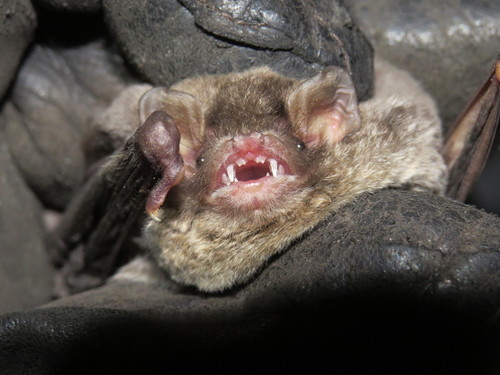
Savi's Pipistrelle

Savi's Pipistrelle

Hypsugo savii

Silhouette: PhyloPic

LCLeast ConcernNTVUENCR
Daily sighting probability ~10% · With luck
at Cévennes National Park

In 3 days ~20% in a week ~40%

7 Verified sightings at Cévennes National Park From 2019 to 2026
7 In 1 park
November Best month
☀️🌙 Day & Night When it's spotted

About the Savi's Pipistrelle

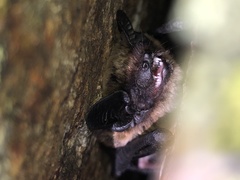
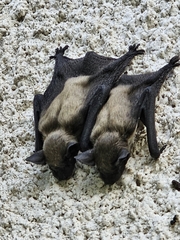
Savi's pipistrelle (Hypsugo savii sometimes classified as Pipistrellus savii) is a species of vesper bat found across North West Africa, the Mediterranean region and the Middle East. It feeds at night on flying insects. In the summer it roosts under bark, in holes in trees, in old buildings and in rock crevices but in winter it prefers roosts where the temperature is more even such as caves, underground vaults and deep rock cracks.

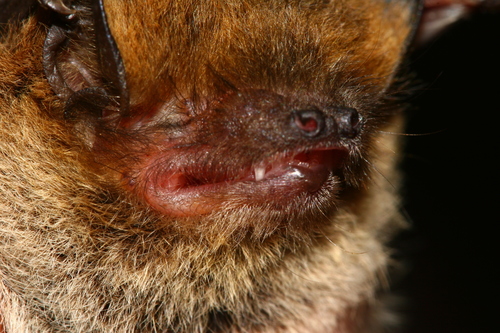
Based on mitochondrial DNA, specifically the regions that encode cytochrome c oxidase and cytochrome b, Savi's pipistrelle is most closely related to Hypsugo alaschanicus. Savi's pipistrelle is a small bat with a head and body length of between 44 and 51 mm (1.75 and 2 in) and a forearm length between 32 and 38 mm (1.25 and 1.5 in) from elbow to wrist. It weighs between 7.4 and 9.9 g (0.26 and 0.35 oz). It has broad, rounded ears each with a short tragus that is widest in the middle and narrows towards the rounded tip. The face, ears and wing membranes are black. The short fur on the upperside of the head and body is dark brown and that on the underside is pale, with the chin, throat and chest contrasting sharply with the... Wikipedia →

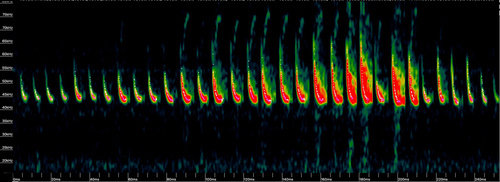
Sounds

Recording0:19

Spain · 2012

© Javier García - Oliva Mascarós · Observation.org, Nature data from around the World · CC BY-NC-ND 4.0

Global Distribution

Parks Where Found

# Park Country Daily sighting probability
1 Cévennes National Park 🇫🇷 France
~10%

More parks will be added in future updates.

Cities Where Found

# City Country Daily sighting probability
1 Vienna 🇦🇹 Austria
<5%

Before you go

What are the chances of seeing a Savi's Pipistrelle in Cévennes National Park?

With luck

About 10% of wildlife watchers report a Savi's Pipistrelle sighting in Cévennes National Park on a given day, based on 7 verified sightings from GBIF citizen-science data from 2019 to 2026. It is the 22nd most-seen of the 30 mammals we can rate there. Over three days the chance rises to about 20%, and over a week to about 40%, if each day is a fresh chance.

When is the best time to see a Savi's Pipistrelle in Cévennes National Park?

November

In that month about 20% of wildlife watchers report a Savi's Pipistrelle in Cévennes National Park on a given day, against under 5% in August–October and December–April, the lowest months. That is one of Cévennes National Park's wettest months, with about 170 mm of rain against 35 mm in July.

What time of day is best to see a Savi's Pipistrelle?

Between 9 pm and midnight

Across all the parks we cover, that three-hour window holds the most Savi's Pipistrelle sightings with a recorded time, and about 6 in 10 of them come between 6 pm and 6 am: it is seen both by day and at night.

Where else can you see a Savi's Pipistrelle?

Only Cévennes National Park, in our data

Cévennes National Park is the only park on Wallace's Line with enough records to rate Savi's Pipistrelle sightings: about 10% of wildlife watchers there report one on a given day.

Which relatives of the Savi's Pipistrelle live in Cévennes National Park?

Same family: Vespertilionidae

The closest relatives of the Savi's Pipistrelle that you can see in Cévennes National Park (family Vespertilionidae, Evening Bats) are Common Pipistrelle (about 10%), Daubenton's bat (about 10%) and Pygmy Pipistrelle (about 10%), with each one's daily chance of a sighting.

Where does the Savi's Pipistrelle sighting chance come from?

GBIF citizen-science records

It is estimated from how often the Savi's Pipistrelle is recorded against all the mammals logged in Cévennes National Park (7 verified sightings from 2019 to 2026), calibrated against known sighting rates. Figures are rounded to the nearest 10% because citizen-science data supports honest approximations, not decimals, and months with records from fewer than five people show "—". How it works.

← Back to Cévennes National Park