About the Common Side-blotched Lizard
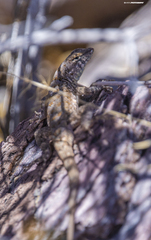
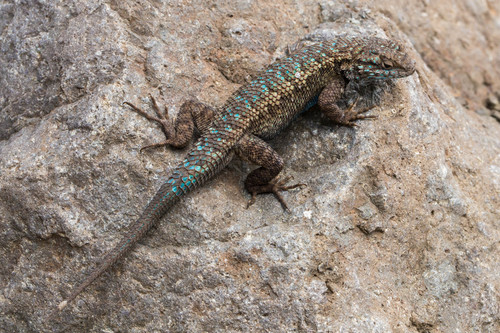
The common side-blotched lizard (Uta stansburiana) is a species of side-blotched lizard in the family Phrynosomatidae. The species is native to dry regions of the western United States and northern Mexico. It is notable for having a unique form of polymorphism wherein each of the three different male morphs utilizes a different strategy in acquiring mates. The three morphs compete against each other following a pattern of rock paper scissors, where one morph has advantages over another but is outcompeted by the third.
The specific epithet, stansburiana, is in honor of Captain Howard Stansbury of the US Corps of Topographical Engineers, who collected the first specimens while leading the 1849-1851 expedition to explore and survey the Great Salt Lake of Utah.
The systematics and taxonomy of the widespread and variable lizards of the genus Uta is much disputed. Countless forms and morphs have been described as subspecies or even distinct species. The forms which occur in most of Mexico (except Baja California) have been recognized as a very distinct species, the eastern side-blotched lizard, Uta stejnegeri.
Populations from San Benito and Cedros Islands... Wikipedia →