Yellow-Haired Sun Fly

Yellow-Haired Sun Fly

Myathropa florea

Daily sighting probability ~10% · With luck
at Athens

In 3 days ~30% in a week ~50%

14 Verified sightings at Athens
150 In all 8 parks From 2019 to 2026
April Best month
☀️ Diurnal When it's spotted

About the Yellow-Haired Sun Fly

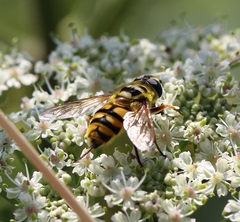
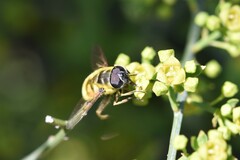
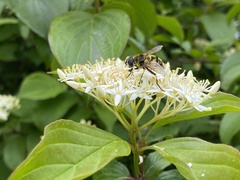
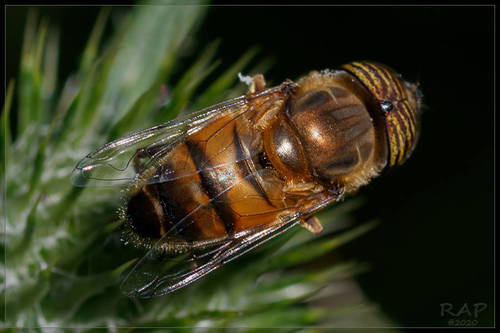
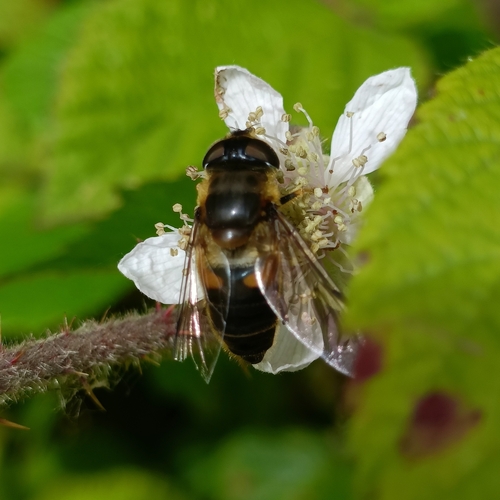
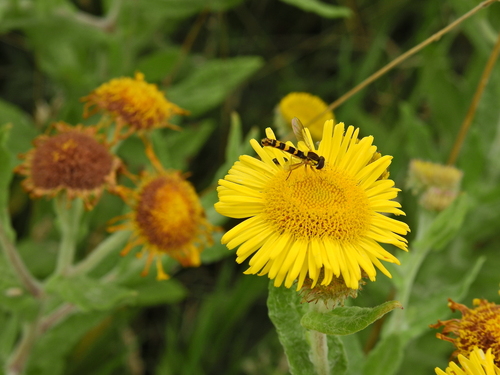
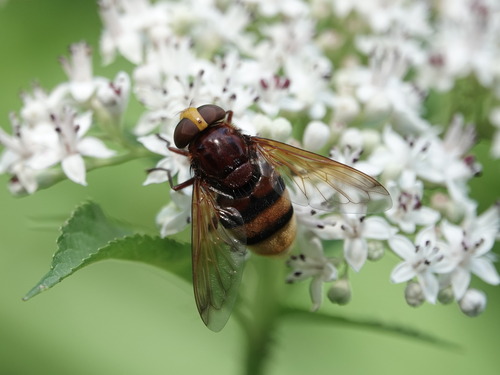
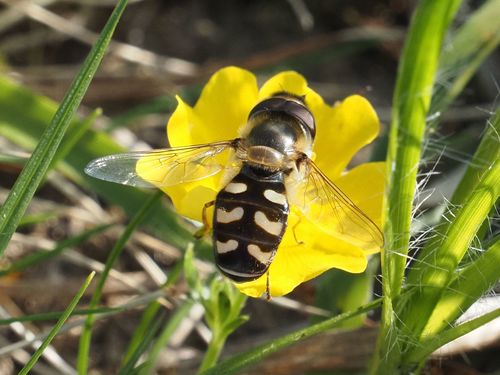
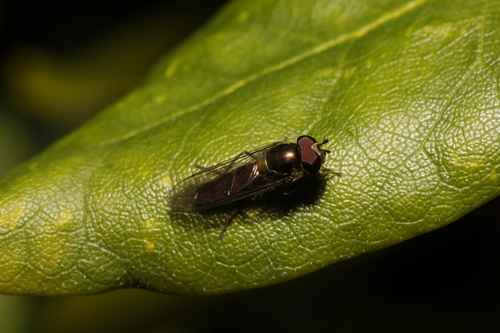
Myathropa florea, sometimes referred to as the Yellow-haired Sun Fly or the Batman hoverfly, is a very common European and North African species of hoverfly. Adults may be seen on flowers from May to September. It is of a similar size to the common drone fly (Eristalis tenax), but M. florea is generally more yellow, with two light bands to the thorax, interrupted with a black central smudge. In museum specimens, any yellow colour soon fades to brown after death. Like most species in the tribe Eristalini, M. florea is rather variable in size, shape and colour.

For terms see Morphology of Diptera The species has a wing length of 7–12 mm (0.3–0.5 in). Thorax dorsum with a characteristic "skull" black pattern. Abdomen black with yellow patterning. Legs pale and black. The larvae of the species were described and figured by Graham E. Rotheray in 1993.

See references for determination. Myathropa florea is found in the Palearctic from Fennoscandia south to Iberia and the Mediterranean basin, and from Ireland eastwards across Europe and Russia. It has been adventive on the Pacific coast of North America since 2005.

They occur in deciduous... Wikipedia →

Global Distribution

Parks Where Found

# Park Country Daily sighting probability
1 Bavarian Forest National Park 🇩🇪 Germany
~20%
2 Triglav National Park 🇸🇮 Slovenia
~10%
3 Snowdonia National Park 🇬🇧 United Kingdom
~10%
4 Cévennes National Park 🇫🇷 France
~10%
5 Wadden Sea National Park 🇩🇪 Germany
~10%
6 Pyrénées National Park 🇫🇷 France
~10%
7 Cairngorms National Park 🇬🇧 United Kingdom
~10%
8 Great Bear Rainforest 🇨🇦 Canada
<5%

Cities Where Found

# City Country Daily sighting probability
1 London 🇬🇧 United Kingdom
~40%
2 Birmingham 🇬🇧 United Kingdom
~40%
3 Liverpool 🇬🇧 United Kingdom
~30%
4 Manchester 🇬🇧 United Kingdom
~20%
5 Copenhagen 🇩🇰 Denmark
~20%
6 Paris 🇫🇷 France
~20%
7 Kharkiv 🇺🇦 Ukraine
~20%
8 Ankara 🇹🇷 Turkey
~20%
9 Dublin 🇮🇪 Ireland
~20%
10 Leeds 🇬🇧 United Kingdom
~20%

Before you go

What are the chances of seeing a Yellow-Haired Sun Fly in Athens?

With luck

About 10% of wildlife watchers report a Yellow-Haired Sun Fly sighting in Athens on a given day, based on 14 verified sightings from GBIF citizen-science data. It is the 70th most-seen of the 242 insects we can rate there. Over three days the chance rises to about 30%, and over a week to about 50%, if each day is a fresh chance.

When is the best time to see a Yellow-Haired Sun Fly in Athens?

April and July

In those months about 20% of wildlife watchers report a Yellow-Haired Sun Fly in Athens on a given day, against under 5% in January–February, August–September and November, the lowest months. Those are among Athens's driest months, with about 20 mm of rain a month against 85 mm in December.

What time of day is best to see a Yellow-Haired Sun Fly?

Between 11 am and 2 pm

Across all the parks we cover, that three-hour window holds the most Yellow-Haired Sun Fly sightings with a recorded time, and about 9 in 10 of them come between 6 am and 6 pm: it is a daytime animal.

Is Athens the best place to see a Yellow-Haired Sun Fly?

25th of 49

Of the 49 cities where we can rate Yellow-Haired Sun Fly sightings, Athens ranks 25th at about 10%. The best odds are in London (United Kingdom, about 40%), Birmingham (United Kingdom, about 40%) and Liverpool (United Kingdom, about 30%).

Which relatives of the Yellow-Haired Sun Fly live in Athens?

Same family: Syrphidae

The closest relatives of the Yellow-Haired Sun Fly that you can see in Athens (family Syrphidae, Hover Flies) are Common Drone Fly (about 10%), Stripe-Eyed Lagoon Fly (about 10%) and Marmalade Hover Fly (about 10%), with each one's daily chance of a sighting.

Where does the Yellow-Haired Sun Fly sighting chance come from?

GBIF citizen-science records

It is estimated from how often the Yellow-Haired Sun Fly is recorded against all the insects logged in Athens (14 verified sightings), calibrated against known sighting rates. Figures are rounded to the nearest 10% because citizen-science data supports honest approximations, not decimals, and months with records from fewer than five people show "—". How it works.

← Back to Athens