Common Globetail

Common Globetail

Sphaerophoria scripta

Daily sighting probability ~10% · With luck
at Athens

In 3 days ~20% in a week ~40%

6 Verified sightings at Athens
218 In all 11 parks From 2019 to 2026
May Best month
☀️ Diurnal When it's spotted

About the Common Globetail

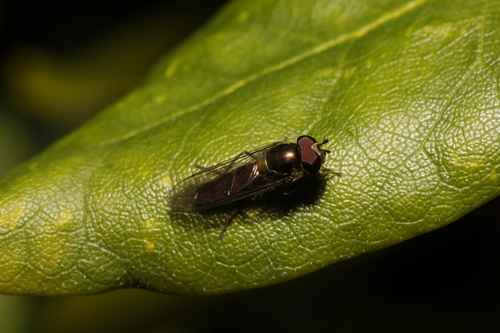
Sphaerophoria scripta, the long hoverfly, is a species of hoverfly belonging to the family Syrphidae. This species has a worldwide distribution. It can be found in most of Europe, in the eastern Palearctic realm, in the Near East, in the Nearctic realm, in North Africa and in the Indomalayan realm.

This species lives in thickets, gardens and meadows rich of flowering plants. Adults can pollinate flowering plants such as Galeopsis angustifolia and Silene gallica, which S. scripta are the most effective pollinators of.

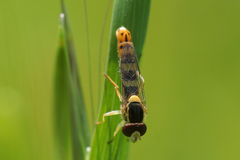
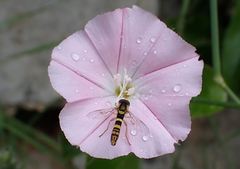
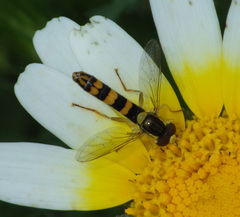
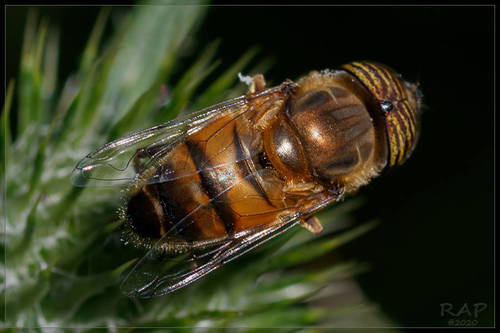
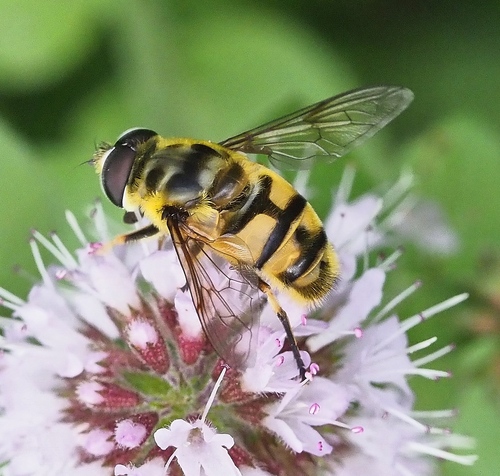
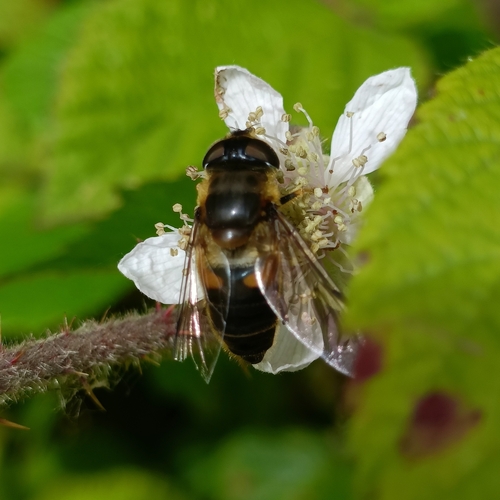
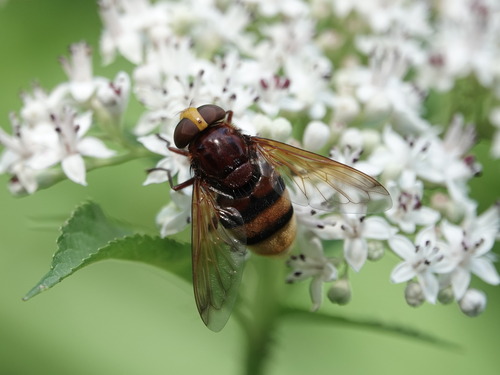
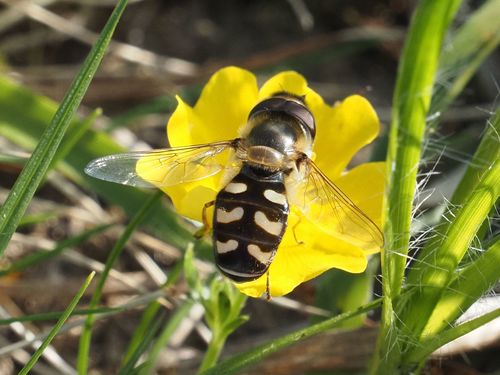
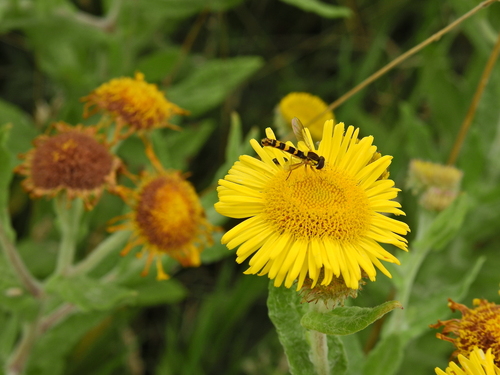
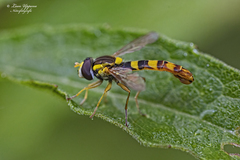
Sphaerophoria scripta can reach a length of 7–12 millimetres (0.28–0.47 in) and a wingspan of 5–7 mm. Body is long and narrow, with yellow and black bands. The wings are transparent. Antennae are short and yellow. The face is yellow. Thorax is a bit dull, copper colored with broad yellow side stripes. Scutellum is yellow. Abdomen is long and cylindrical with four wide, yellow transverse bands. The legs are yellow. Females are brighter than the males. In the males the last two bands are often blurred.

The adult hoverflies can be found from April to November. The larvae feed on aphids, while adult hoverflies... Wikipedia →
Global Distribution

Parks Where Found

# Park Country Daily sighting probability
1 Triglav National Park 🇸🇮 Slovenia
~10%
2 Picos de Europa National Park 🇪🇸 Spain
~10%
3 Fertő-Hanság National Park 🇭🇺 Hungary
~10%
4 Sierra Nevada National Park 🇪🇸 Spain
~10%
5 Aigüestortes National Park 🇪🇸 Spain
~10%
6 Cévennes National Park 🇫🇷 France
~10%
7 Pyrénées National Park 🇫🇷 France
~10%
8 Bavarian Forest National Park 🇩🇪 Germany
~10%
9 Camargue 🇫🇷 France
~10%
10 Sierra de Guadarrama National Park 🇪🇸 Spain
~10%
11 Wadden Sea National Park 🇩🇪 Germany
~10%

Cities Where Found

# City Country Daily sighting probability
1 Birmingham 🇬🇧 United Kingdom
~20%
2 Algiers 🇩🇿 Algeria
~10%
3 London 🇬🇧 United Kingdom
~10%
4 Warsaw 🇵🇱 Poland
~10%
5 Lyon 🇫🇷 France
~10%
6 Liverpool 🇬🇧 United Kingdom
~10%
7 Budapest 🇭🇺 Hungary
~10%
8 Helsinki 🇫🇮 Finland
~10%
9 Manchester 🇬🇧 United Kingdom
~10%
10 Berlin 🇩🇪 Germany
~10%

Before you go

What are the chances of seeing a Common Globetail in Athens?

With luck

About 10% of wildlife watchers report a Common Globetail sighting in Athens on a given day, based on 6 verified sightings from GBIF citizen-science data. It is the 162nd most-seen of the 242 insects we can rate there. Over three days the chance rises to about 20%, and over a week to about 40%, if each day is a fresh chance.

When is the best time to see a Common Globetail in Athens?

February to May

In those months about 10% of wildlife watchers report a Common Globetail in Athens on a given day, against under 5% in June to January, the lowest months.

What time of day is best to see a Common Globetail?

Between 11 am and 2 pm

Across all the parks we cover, that three-hour window holds the most Common Globetail sightings with a recorded time, and about 9 in 10 of them come between 6 am and 6 pm: it is a daytime animal.

Is Athens the best place to see a Common Globetail?

35th of 44

Of the 44 cities where we can rate Common Globetail sightings, Athens ranks 35th at about 10%. The best odds are in Birmingham (United Kingdom, about 20%), Algiers (Algeria, about 10%) and London (United Kingdom, about 10%).

Which relatives of the Common Globetail live in Athens?

Same family: Syrphidae

The closest relatives of the Common Globetail that you can see in Athens (family Syrphidae, Hover Flies) are Common Drone Fly (about 10%), Stripe-Eyed Lagoon Fly (about 10%) and Marmalade Hover Fly (about 10%), with each one's daily chance of a sighting.

Where does the Common Globetail sighting chance come from?

GBIF citizen-science records

It is estimated from how often the Common Globetail is recorded against all the insects logged in Athens (6 verified sightings), calibrated against known sighting rates. Figures are rounded to the nearest 10% because citizen-science data supports honest approximations, not decimals, and months with records from fewer than five people show "—". How it works.

← Back to Athens