Passionvine Hopper

Passionvine Hopper

Scolypopa australis

Daily sighting probability ~30% · Possible
at Auckland

In 3 days ~60% in a week ~90%

337 Verified sightings at Auckland
149 In all 7 parks From 2019 to 2026
January Best month
☀️ Diurnal When it's spotted

About the Passionvine Hopper

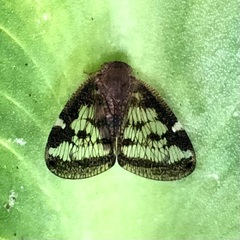
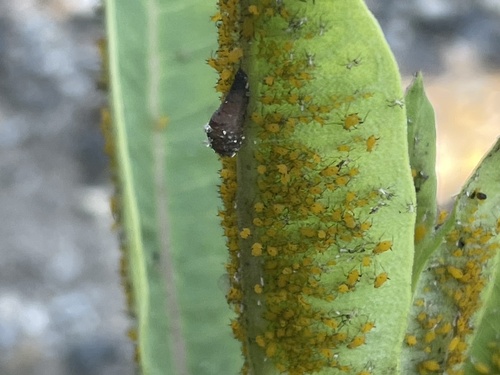
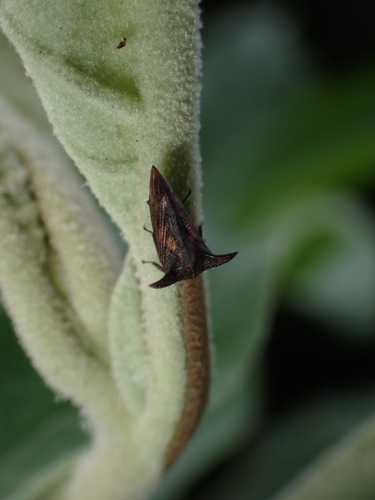
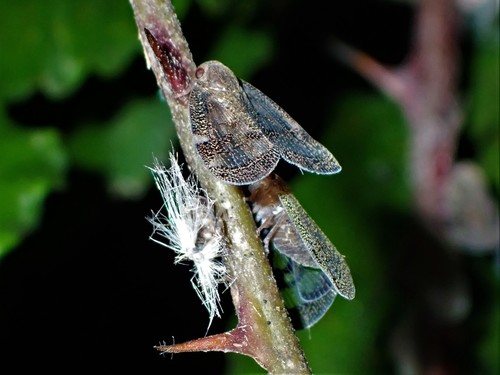
Scolypopa australis, commonly known as the passionvine hopper, is a species of insect in the Ricaniidae family of planthoppers (Fulgoroidea) that is native to Australia and was introduced to New Zealand. Despite its name, they are found not only on passion vines, but on many plant species, including kiwifruit and the lantana. Brown with partly transparent wings, they are 5–6 mm long as adults and 5 mm as nymphs. As an adult they look somewhat like a moth to the untrained eye, and walk "like a ballerina". The nymphs are wingless and are informally known as fluffy bums. When sufficiently aroused they will hop off their plant "with a 'snap'". Like all planthoppers they suck plant sap. This leaves a honeydew secretion which bees gather.

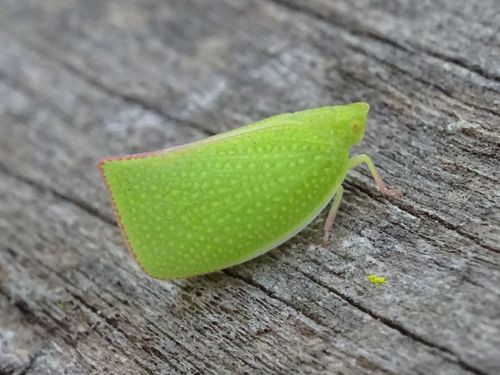
They were first recorded in New Zealand in 1878, where they are among over 40 species of planthopper, mostly native, but including the introduced Siphanta acuta (green planthoppers), Achilus flammeus (red fingernail bugs) and Anzora unicolor (grey planthoppers), all from Australia. They may be a vector of the 'sudden decline' disease caused by Phytoplasma australiense that has affected the native cabbage tree (Cordyline australis), and... Wikipedia →
Global Distribution

Parks Where Found

# Park Country Daily sighting probability
1 Abel Tasman National Park 🇳🇿 New Zealand
~20%
2 Egmont National Park 🇳🇿 New Zealand
~20%
3 Lamington National Park 🇦🇺 Australia
~10%
4 Royal National Park 🇦🇺 Australia
~10%
5 Blue Mountains National Park 🇦🇺 Australia
~10%
6 Great Otway National Park 🇦🇺 Australia
~10%
7 Springbrook National Park 🇦🇺 Australia
~10%

Cities Where Found

# City Country Daily sighting probability
1 Auckland 🇳🇿 New Zealand
~30%
2 Melbourne 🇦🇺 Australia
~20%
3 Hobart 🇦🇺 Australia
~10%
4 Sydney 🇦🇺 Australia
~10%
5 Brisbane 🇦🇺 Australia
<5%

Before you go

What are the chances of seeing a Passionvine Hopper in Auckland?

Possible

About 30% of wildlife watchers report a Passionvine Hopper sighting in Auckland on a given day, based on 337 verified sightings from GBIF citizen-science data. It is the 8th most-seen of the 689 insects we can rate there. Over three days the chance rises to about 60%, and over a week to about 90%, if each day is a fresh chance.

When is the best time to see a Passionvine Hopper in Auckland?

January and February

In those months about 40% of wildlife watchers report a Passionvine Hopper in Auckland on a given day, against under 5% in August and September, the lowest months.

What time of day is best to see a Passionvine Hopper?

Between 10 am and 1 pm

Across all the parks we cover, that three-hour window holds the most Passionvine Hopper sightings with a recorded time, and about 8 in 10 of them come between 6 am and 6 pm: it is a daytime animal.

Is Auckland the best place to see a Passionvine Hopper?

Yes

Of the 5 cities where we can rate Passionvine Hopper sightings, Auckland has the highest daily chance: about 30%. Next come Melbourne (Australia, about 20%) and Hobart (Australia, about 10%).

Which relatives of the Passionvine Hopper live in Auckland?

Same order: Hemiptera

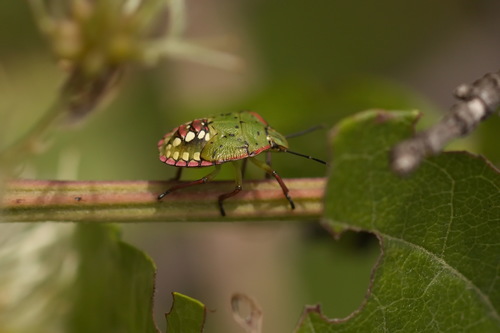
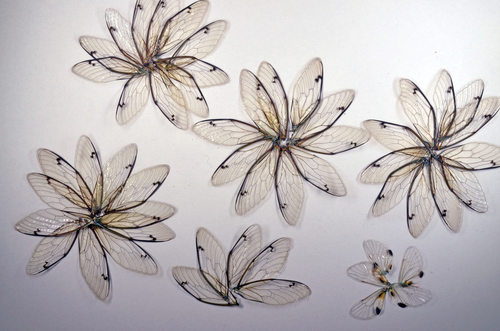
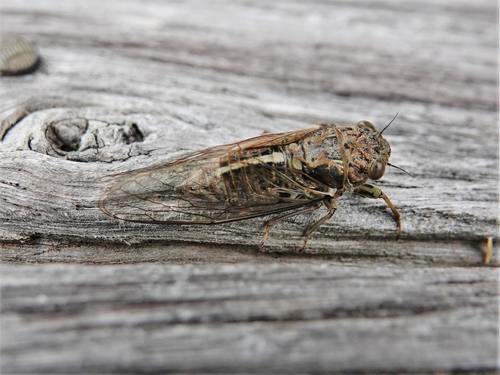
The closest relatives of the Passionvine Hopper that you can see in Auckland (order Hemiptera, True Bugs, Hoppers, Aphids, and allies) are Glaucias amyota (about 20%), Southern Green Stink Bug (about 20%) and Clapping Cicada (about 10%), with each one's daily chance of a sighting.

Where does the Passionvine Hopper sighting chance come from?

GBIF citizen-science records

It is estimated from how often the Passionvine Hopper is recorded against all the insects logged in Auckland (337 verified sightings), calibrated against known sighting rates. Figures are rounded to the nearest 10% because citizen-science data supports honest approximations, not decimals, and months with records from fewer than five people show "—". How it works.

← Back to Auckland