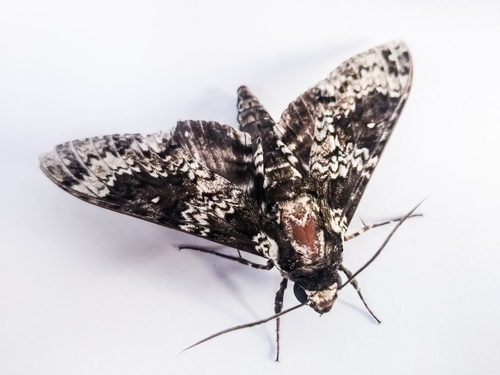
Rustic Sphinx

Rustic Sphinx

Manduca rustica

Daily sighting probability <5% · Rare
at Belo Horizonte

In 3 days ~10% in a week ~30%

6 Verified sightings at Belo Horizonte
230 In all 11 parks From 2019 to 2026
November Best month
☀️ Diurnal When it's spotted

About the Rustic Sphinx

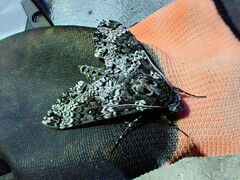
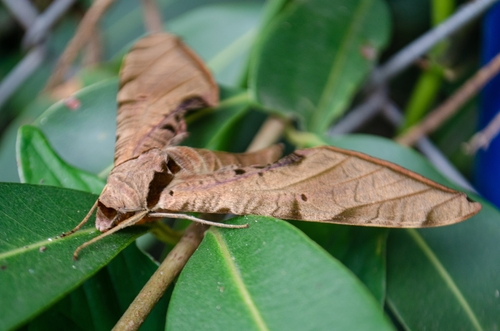
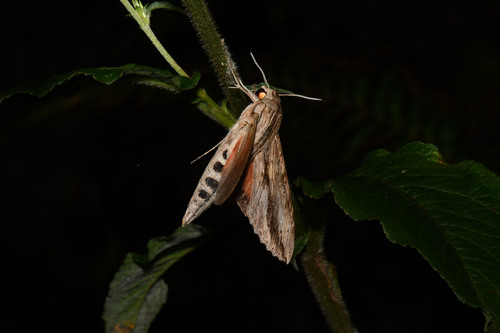
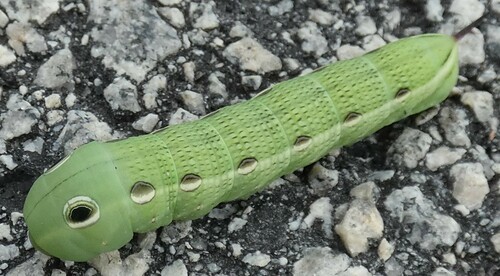
Manduca rustica, the rustic sphinx, is a moth of the family Sphingidae. The species was first described by Johan Christian Fabricius in 1775. It is found in the southern parts of the United States (straying into the northern United States at times), southward through Mexico, Central America and South America to Uruguay.

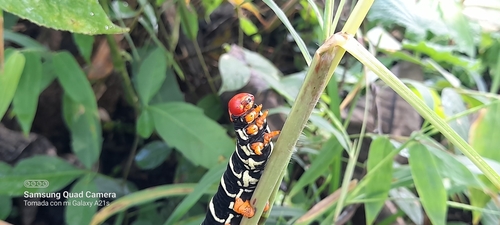
The larvae feed on a variety of plants including Jasminum, Bignonia and Chilopsis. Larvae have been recorded on plants from a variety of families, including Bignoniaceae, Oleaceae, Verbenaceae, Convolvulaceae and Lamiaceae.

The species is widespread and adaptable, living in varied habitats from rainforests to deserts and thriving in urban and disturbed habitat. It can live on many types of native and exotic plants. Manduca rustica cortesi (Cary, 1963) (Mexico)

Lucia) Manduca rustica rustica (Americas) Lotts, Kelly & Naberhaus, Thomas (2017). "Rustic... Wikipedia →
Global Distribution

Parks Where Found

# Park Country Daily sighting probability
1 Galápagos Islands 🇪🇨 Ecuador
~10%
2 Ostional Wildlife Refuge 🇨🇷 Costa Rica
~10%
3 Saguaro National Park 🇺🇸 United States
~10%
4 Iguazú National Park 🇦🇷 Argentina
~10%
5 Iguaçu National Park 🇧🇷 Brazil
~10%
6 Tambopata National Reserve 🇵🇪 Peru
~10%
7 Zion National Park 🇺🇸 United States
~10%
8 Parque Natural Metropolitano 🇵🇦 Panama
<5%
9 La Amistad International Park (Panama) 🇵🇦 Panama
<5%
10 Cumbres de Monterrey National Park 🇲🇽 Mexico
<5%
11 Great Smoky Mountains National Park 🇺🇸 United States
<5%

Cities Where Found

# City Country Daily sighting probability
1 Manaus 🇧🇷 Brazil
~20%
2 Porto Alegre 🇧🇷 Brazil
~10%
3 Mesa 🇺🇸 United States
~10%
4 Phoenix 🇺🇸 United States
~10%
5 Buenos Aires 🇦🇷 Argentina
~10%
6 Austin 🇺🇸 United States
~10%
7 Panama City 🇵🇦 Panama
~10%
8 Lima 🇵🇪 Peru
~10%
9 San Antonio 🇺🇸 United States
~10%
10 Miami 🇺🇸 United States
~10%

Before you go

What are the chances of seeing a Rustic Sphinx in Belo Horizonte?

Rare

Under 5% of wildlife watchers report a Rustic Sphinx sighting in Belo Horizonte on a given day, based on 6 verified sightings from GBIF citizen-science data. It is the 139th most-seen of the 186 insects we can rate there. Over three days the chance rises to about 10%, and over a week to about 30%, if each day is a fresh chance.

When is the best time to see a Rustic Sphinx in Belo Horizonte?

October to January

In those months about 10% of wildlife watchers report a Rustic Sphinx in Belo Horizonte on a given day, against under 5% in February to September, the lowest months. Those are among Belo Horizonte's wettest months, with about 190 mm of rain a month against 5 mm in July.

What time of day is best to see a Rustic Sphinx?

Between 8 and 11 am

Across all the parks we cover, that three-hour window holds the most Rustic Sphinx sightings with a recorded time, and about 8 in 10 of them come between 6 am and 6 pm: it is a daytime animal.

Is Belo Horizonte the best place to see a Rustic Sphinx?

15th of 22

Of the 22 cities where we can rate Rustic Sphinx sightings, Belo Horizonte ranks 15th at under 5%. The best odds are in Manaus (Brazil, about 20%), Porto Alegre (Brazil, about 10%) and Mesa (United States, about 10%).

Which relatives of the Rustic Sphinx live in Belo Horizonte?

Same family: Sphingidae

The closest relatives of the Rustic Sphinx that you can see in Belo Horizonte (family Sphingidae, Sphinx Moths) are Streaked Sphinx (about 10%), Ello Sphinx (about 10%) and Tetrio Sphinx (about 10%), with each one's daily chance of a sighting.

Where does the Rustic Sphinx sighting chance come from?

GBIF citizen-science records

It is estimated from how often the Rustic Sphinx is recorded against all the insects logged in Belo Horizonte (6 verified sightings), calibrated against known sighting rates. Figures are rounded to the nearest 10% because citizen-science data supports honest approximations, not decimals, and months with records from fewer than five people show "—". How it works.

← Back to Belo Horizonte