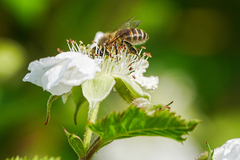
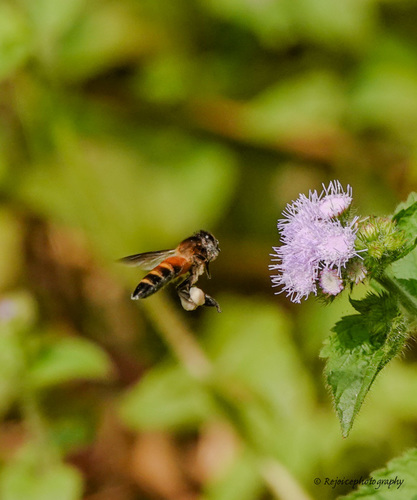
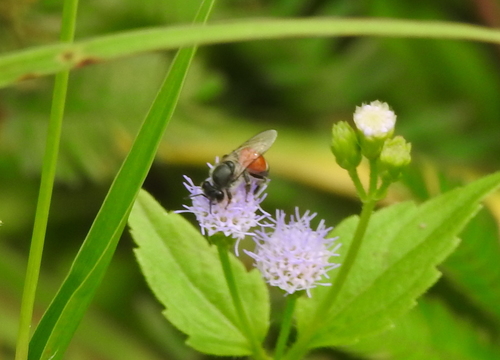
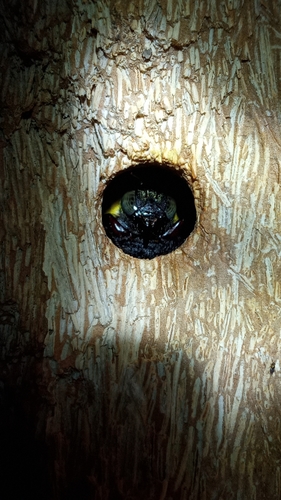
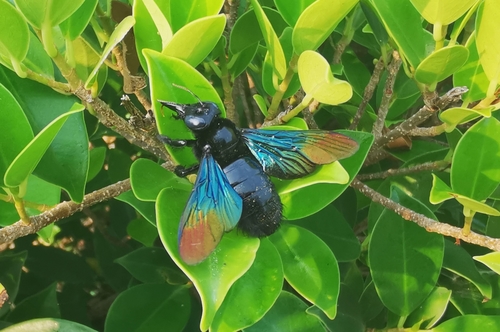
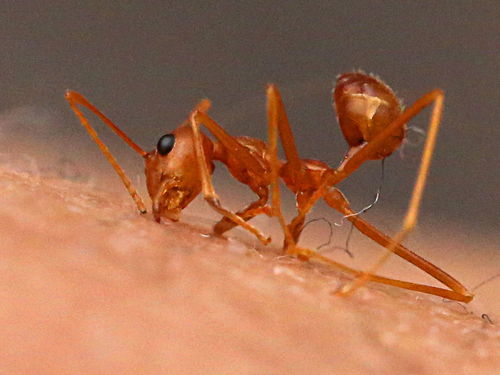
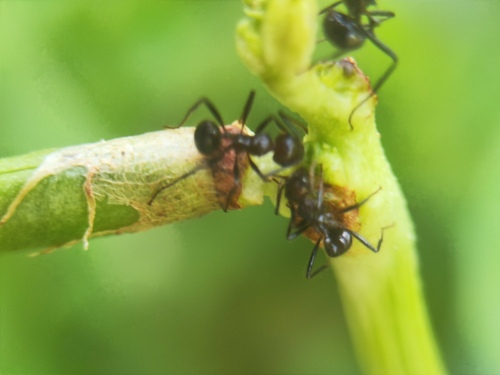
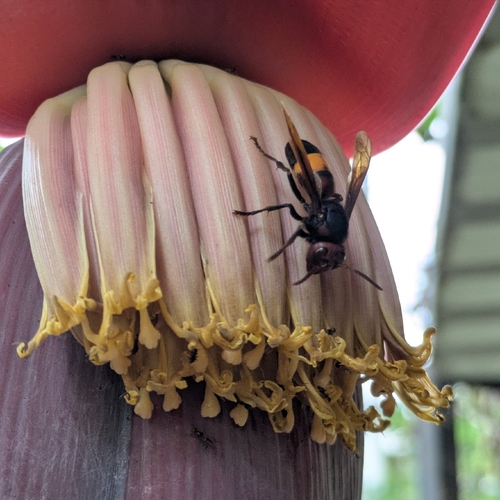
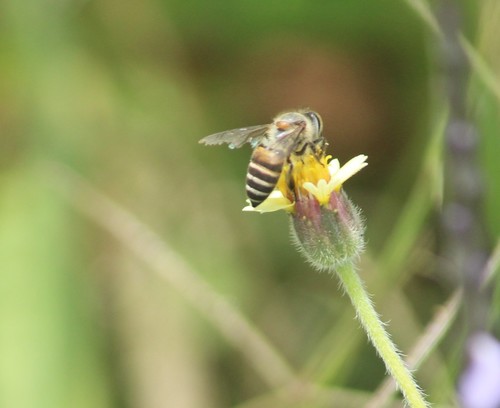
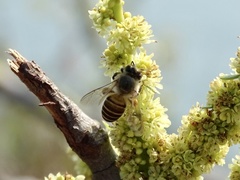
Asian Honey Bee
Daily sighting probability ~20% · Possible
at Bengaluru

In 3 days ~50% in a week ~80%

196 Verified sightings at Bengaluru
222 In all 11 parks From 2019 to 2026
May Best month
☀️ Diurnal When it's spotted

About the Asian Honey Bee

Apis cerana, the eastern honey bee, Asiatic honey bee or Asian honey bee, is a species of honey bee native to South, Southeast and East Asia. This species is the sister species of Apis koschevnikovi and both are in the same subgenus as the western (European) honey bee, Apis mellifera. A. cerana is known to live sympatrically along with Apis koschevnikovi within the same geographic location. Apis cerana colonies are known for building nests consisting of multiple combs in cavities containing a small entrance, presumably for defense against invasion by individuals of another nest. The diet of this honey bee species consists mostly of pollen and nectar, or honey. Moreover, Apis cerana is known for its highly social behavior, reflective of its classification as a type of honey bee.

The terms Apis cerana indica and Apis Indica or Indian honey bee, is a historic term, with all Asian hive bees now referred to as Apis cerana. Danish zoologist Johan Christian Fabricius described Apis cerana, also known as the eastern or Asian honey bee, in 1793. The genus name Apis is Latin for "bee". The eastern honey bee is of the Apidae family, one of the most diverse families... Wikipedia →
Global Distribution

Parks Where Found

# Park Country Daily sighting probability
1 Taroko National Park 🇹🇼 Taiwan
~30%
2 Kerinci Seblat National Park 🇮🇩 Indonesia
~30%
3 Cuc Phuong National Park 🇻🇳 Vietnam
~30%
4 Khao Yai National Park 🇹🇭 Thailand
~30%
5 Doi Inthanon National Park 🇹🇭 Thailand
~20%
6 Cat Tien National Park 🇻🇳 Vietnam
~20%
7 Kinabalu Park 🇲🇾 Malaysia
~10%
8 Taman Negara National Park 🇲🇾 Malaysia
~10%
9 Kaeng Krachan National Park 🇹🇭 Thailand
~10%
10 Sinharaja Forest Reserve 🇱🇰 Sri Lanka
~10%
11 Daintree National Park 🇦🇺 Australia
~10%

Cities Where Found

# City Country Daily sighting probability
1 Xiuying District 🇨🇳 China
~60%
2 Nanchang 🇨🇳 China
~50%
3 Zhuhai [Macau] 🇨🇳 China
~50%
4 Guiyang 🇨🇳 China
~40%
5 Jammu 🇮🇳 India
~40%
6 Zhengzhou 🇨🇳 China
~40%
7 Hanoi 🇻🇳 Vietnam
~40%
8 Denpasar 🇮🇩 Indonesia
~30%
9 Kunming 🇨🇳 China
~30%
10 Kathmandu 🇳🇵 Nepal
~30%

Before you go

What are the chances of seeing an Asian Honey Bee in Bengaluru?

Possible

About 20% of wildlife watchers report an Asian Honey Bee sighting in Bengaluru on a given day, based on 196 verified sightings from GBIF citizen-science data. It is the 28th most-seen of the 477 insects we can rate there. Over three days the chance rises to about 50%, and over a week to about 80%, if each day is a fresh chance.

When is the best time to see an Asian Honey Bee in Bengaluru?

April and May

In those months about 30% of wildlife watchers report an Asian Honey Bee in Bengaluru on a given day, against about 10% in September and October, the lowest months.

What time of day is best to see an Asian Honey Bee?

Between 9 am and noon

Across all the parks we cover, that three-hour window holds the most Asian Honey Bee sightings with a recorded time, and about 9 in 10 of them come between 6 am and 6 pm: it is a daytime animal.

Is Bengaluru the best place to see an Asian Honey Bee?

49th of 74

Of the 74 cities where we can rate Asian Honey Bee sightings, Bengaluru ranks 49th at about 20%. The best odds are in Xiuying District (China, about 60%), Nanchang (China, about 50%) and Zhuhai [Macau] (China, about 50%).

Which relatives of the Asian Honey Bee live in Bengaluru?

Same genus: Apis

The closest relatives of the Asian Honey Bee that you can see in Bengaluru (genus Apis, Honey Bees) are Giant Honey Bee (about 30%) and Red Dwarf Honey Bee (about 20%), with each one's daily chance of a sighting.

Where does the Asian Honey Bee sighting chance come from?

GBIF citizen-science records

It is estimated from how often the Asian Honey Bee is recorded against all the insects logged in Bengaluru (196 verified sightings), calibrated against known sighting rates. Figures are rounded to the nearest 10% because citizen-science data supports honest approximations, not decimals, and months with records from fewer than five people show "—". How it works.

← Back to Bengaluru