Scarce Copper

Scarce Copper

Lycaena virgaureae

Daily sighting probability <5% · Rare
at Berlin

In 3 days ~10% in a week ~20%

10 Verified sightings at Berlin
1,077 In all 15 parks From 2019 to 2026
July Best month
☀️ Diurnal When it's spotted

About the Scarce Copper

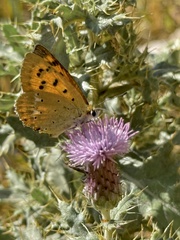
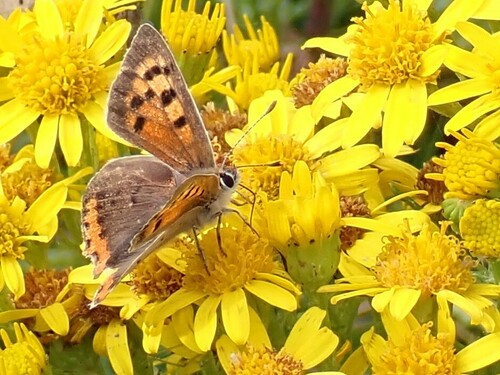
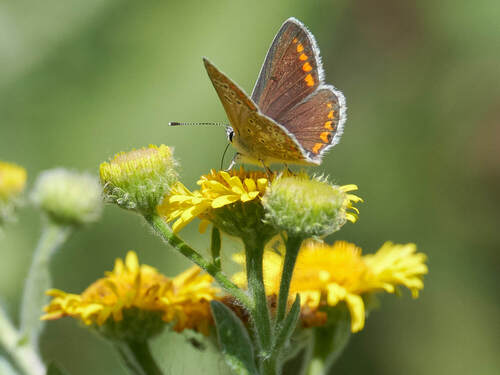
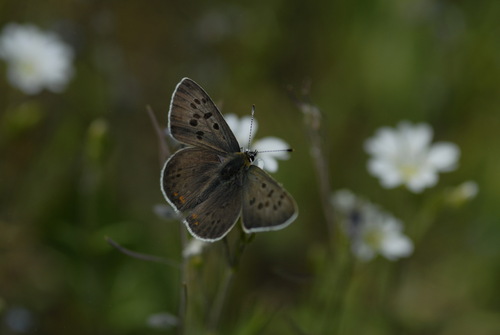
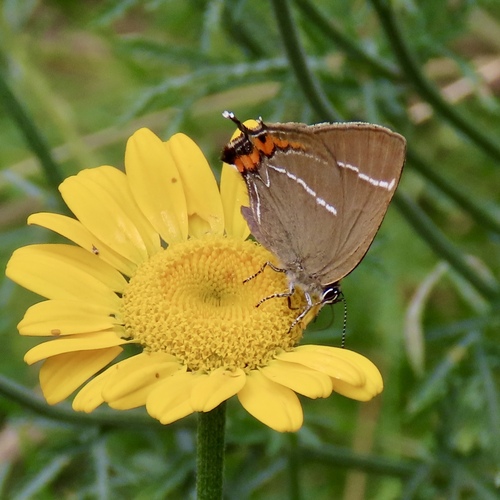
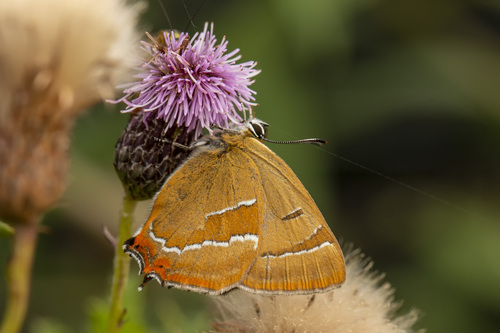
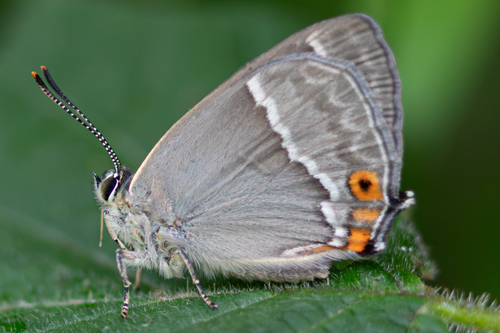
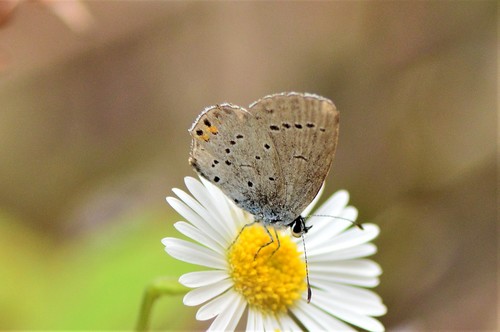
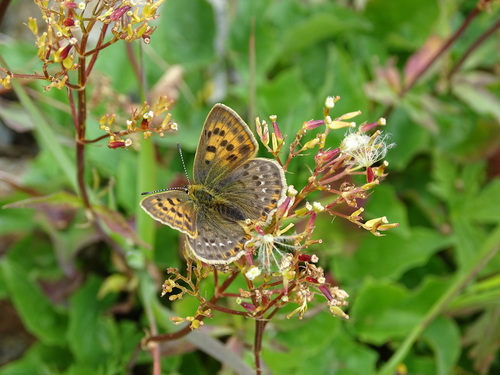
The scarce copper (Lycaena virgaureae) is a butterfly of the family Lycaenidae (copper or gossamer-winged butterflies). The lower surfaces of the back wings are yellowish and have only a few black dots; there are characteristic white marks in the immediate vicinity of these. The species exhibits one kind of sexual dimorphism: male butterflies are colored bright gold-red on the upper side of wing, while the females have broader orange wings with a dark design.

A generation appears from mid-July to mid-September. Eggs are laid on dried-out plant parts, for example on dry sorrel stems. The eggs are white in color and somewhat larger than those of other Lycaena species. The caterpillars are green and nocturnal and eat sorrel. Lycaena virgaureae is the only species of this genus whose eggs last over the winter. The butterflies feed on blossoms of such plants as the ground-elder, Eupatorium, Valeriana, and burnet saxifrage.

Lycaena virgaureae lives preferably on flower-rich, dry and damp meadows in Central Europe. In Spain it is found in the Pyrenees and in the Cantabrian Mountains. In southern France it is found in the Massif Central. Its area... Wikipedia →

Global Distribution

Parks Where Found

# Park Country Daily sighting probability
1 Hohe Tauern National Park 🇦🇹 Austria
~50%
2 Mercantour National Park 🇫🇷 France
~50%
3 Vanoise National Park 🇫🇷 France
~40%
4 Aigüestortes National Park 🇪🇸 Spain
~40%
5 Ecrins National Park 🇫🇷 France
~30%
6 Biebrza National Park 🇵🇱 Poland
~30%
7 Picos de Europa National Park 🇪🇸 Spain
~30%
8 Białowieża National Park 🇵🇱 Poland
~30%
9 Pyrénées National Park 🇫🇷 France
~20%
10 Sierra de Guadarrama National Park 🇪🇸 Spain
~20%
11 Triglav National Park 🇸🇮 Slovenia
~20%
12 Cévennes National Park 🇫🇷 France
~20%
13 Tatra National Park 🇸🇰 Slovakia
~10%
14 Bavarian Forest National Park 🇩🇪 Germany
~10%
15 Wadden Sea National Park 🇩🇪 Germany
<5%

Cities Where Found

# City Country Daily sighting probability
1 Warsaw 🇵🇱 Poland
~10%
2 Nizhny Novgorod 🇷🇺 Russia
<5%
3 Berlin 🇩🇪 Germany
<5%
4 Moscow 🇷🇺 Russia
<5%

Before you go

What are the chances of seeing a Scarce Copper in Berlin?

Rare

Under 5% of wildlife watchers report a Scarce Copper sighting in Berlin on a given day, based on 10 verified sightings from GBIF citizen-science data. It is the 646th most-seen of the 1065 insects we can rate there. Over three days the chance rises to about 10%, and over a week to about 20%, if each day is a fresh chance.

When is the best time to see a Scarce Copper in Berlin?

June and July

In those months about 10% of wildlife watchers report a Scarce Copper in Berlin on a given day, against under 5% in August to May, the lowest months.

What time of day is best to see a Scarce Copper?

Between 11 am and 2 pm

Across all the parks we cover, that three-hour window holds the most Scarce Copper sightings with a recorded time, and nearly all of them come between 6 am and 6 pm: it is a daytime animal.

Is Berlin the best place to see a Scarce Copper?

3rd of 4

Of the 4 cities where we can rate Scarce Copper sightings, Berlin ranks 3rd at under 5%. The best odds are in Warsaw (Poland, about 10%) and Nizhny Novgorod (Russia, under 5%).

Which relatives of the Scarce Copper live in Berlin?

Same genus: Lycaena

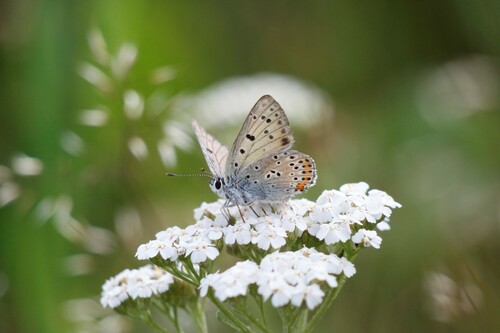
The closest relatives of the Scarce Copper that you can see in Berlin (genus Lycaena, Lycaena butterflies) are Small Copper (about 20%) and Purple-Shot Copper (about 10%), with each one's daily chance of a sighting.

Where does the Scarce Copper sighting chance come from?

GBIF citizen-science records

It is estimated from how often the Scarce Copper is recorded against all the insects logged in Berlin (10 verified sightings), calibrated against known sighting rates. Figures are rounded to the nearest 10% because citizen-science data supports honest approximations, not decimals, and months with records from fewer than five people show "—". How it works.
← Back to Berlin