


Completed


Duck-billed Platypus
Ornithorhynchus anatinus
Silhouette: Steven Traver · PhyloPic
- KingdomAnimalia (Animals)
- PhylumChordata (Chordates)
- ClassMammalia (Mammals)
- OrderMonotremata (Monotremes)
- FamilyOrnithorhynchidae (Platypuses)
- GenusOrnithorhynchus (Platypuses)
- SpeciesOrnithorhynchus anatinus (Duck-billed Platypus)
In 3 days ~10% in a week ~30%
27 Verified sightings at Brisbane
165 In all 7 parks From 2019 to 2026
August Best month
☀️ Diurnal When it's spotted


Completed
About the Duck-billed Platypus
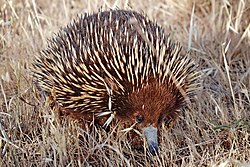
The platypus (Ornithorhynchus anatinus), sometimes referred to as the duck-billed platypus, is a semiaquatic, egg-laying mammal endemic to eastern Australia, including Tasmania. The platypus is the sole living representative of the family Ornithorhynchidae and genus Ornithorhynchus, though a number of related species appear in the fossil record. Together with the four species of echidna, it is one of the five extant species of monotremes, mammals that lay eggs instead of giving birth to live young. Like other monotremes, the platypus has a sense of electrolocation, which it uses to detect prey in water while its eyes, ears and nostrils are closed. It is one of the few species of venomous mammals, as the male platypus has a spur on each hind foot that delivers an extremely painful venom.
The unusual appearance of this egg-laying, duck-billed, beaver-tailed mammal at first baffled European naturalists. In 1799, the first scientists to examine a preserved platypus body judged it a fake made of several animals sewn together. The unique features of the platypus make it important in the study of evolutionary biology, and a recognisable and iconic symbol of Australia. It is culturally significant to several Aboriginal peoples, who also used to hunt it for food, and has appeared on stamps and currency.
The platypus was hunted for its fur, but since 1912 it has been a legally protected species in all states where it is found. Captive breeding programs have had slight success, and it is vulnerable to pollution, bycatching and climate change. It is classified as a near-threatened species by the IUCN, but a November 2020 report has recommended that it be upgraded to threatened species under the federal EPBC Act, due to habitat destruction and declining numbers in all states. Wikipedia →
Sounds
Recording1:40
Australia · 2024
© kath_wilson_forager · iNaturalist · CC BY-NC 4.0
Recent sightings of Duck-billed Platypus in Brisbane
LIVEiNaturalistGlobal Distribution
Parks Where Found
| # | Park | Country | Daily sighting probability |
|---|---|---|---|
| 1 | Cradle Mountain-Lake St Clair National Park | 🇦🇺 Australia | |
| 2 | Kosciuszko National Park | 🇦🇺 Australia | |
| 3 | Flinders Chase | 🇦🇺 Australia | |
| 4 | Great Otway National Park | 🇦🇺 Australia | |
| 5 | Lamington National Park | 🇦🇺 Australia | |
| 6 | Springbrook National Park | 🇦🇺 Australia | |
| 7 | Blue Mountains National Park | 🇦🇺 Australia |
Zoos & Centres Where Found
| # | Zoo / Centre | Country | |
|---|---|---|---|
| 1 | California Academy of Sciences | 🇺🇸 United States | |
| 2 | San Diego Zoo Safari Park | 🇺🇸 United States | |
| 3 | Healesville Sanctuary | 🇦🇺 Australia | |
| 4 | Taronga Zoo | 🇦🇺 Australia | |
| 5 | Currumbin Wildlife Sanctuary | 🇦🇺 Australia | |
| 6 | Melbourne Zoo | 🇦🇺 Australia | |
| 7 | Lone Pine Koala Sanctuary | 🇦🇺 Australia | |
| 8 | Australian Reptile Park | 🇦🇺 Australia | |
| 9 | Ralph Perkins II Wildlife Center and Woods Garden | 🇺🇸 United States | |
| 10 | Sea Life Sydney Aquarium | 🇦🇺 Australia | |
| 11 | Wild Life Sydney | 🇦🇺 Australia |
Closest Relatives at Brisbane




Before you go
What are the chances of seeing a Duck-billed Platypus in Brisbane?
With luck
About 10% of wildlife watchers report a Duck-billed Platypus sighting in Brisbane on a given day, based on 27 verified sightings from GBIF citizen-science data. It is the 15th most-seen of the 22 mammals we can rate there. Over three days the chance rises to about 10%, and over a week to about 30%, if each day is a fresh chance.
When is the best time to see a Duck-billed Platypus in Brisbane?
March–May, July–September and December
In those months about 10% of wildlife watchers report a Duck-billed Platypus in Brisbane on a given day, against under 5% in January–February, June and October–November, the lowest months.
What time of day is best to see a Duck-billed Platypus?
Between 9 am and noon
Across all the parks we cover, that three-hour window holds the most Duck-billed Platypus sightings with a recorded time, and about 9 in 10 of them come between 6 am and 6 pm: it is a daytime animal.
Is Brisbane the best place to see a Duck-billed Platypus?
2nd of 3
Of the 3 cities where we can rate Duck-billed Platypus sightings, Brisbane ranks 2nd at about 10%. The best odds are in Hobart (Australia, about 20%).
Where does the Duck-billed Platypus sighting chance come from?
GBIF citizen-science records
It is estimated from how often the Duck-billed Platypus is recorded against all the mammals logged in Brisbane (27 verified sightings), calibrated against known sighting rates. Figures are rounded to the nearest 10% because citizen-science data supports honest approximations, not decimals, and months with records from fewer than five people show "—". How it works.
