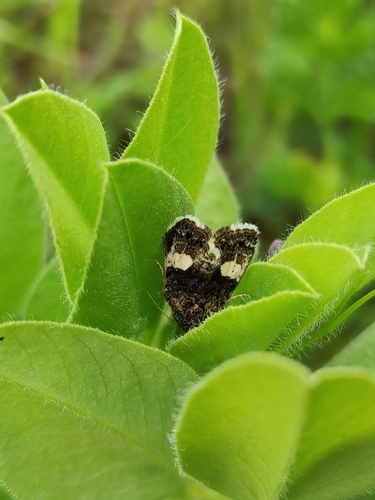
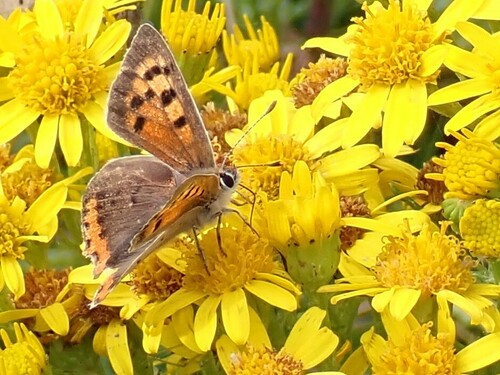
Queen Of Spain Fritillary

Queen Of Spain Fritillary

Issoria lathonia

Daily sighting probability ~10% · With luck
at Bucharest

In 3 days ~20% in a week ~40%

13 Verified sightings at Bucharest
1,201 In all 16 parks From 2019 to 2026
July Best month
☀️ Diurnal When it's spotted

About the Queen Of Spain Fritillary

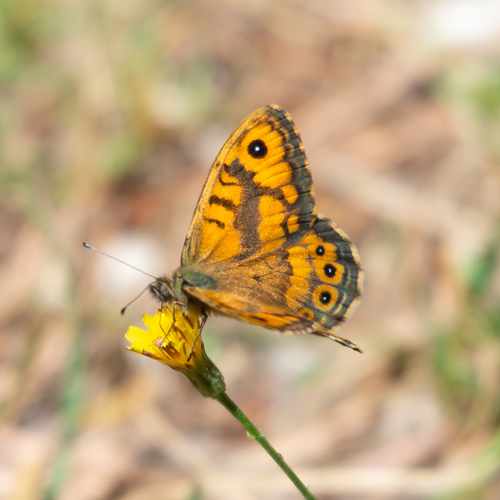
The Queen of Spain fritillary (Issoria lathonia) is a butterfly of the family Nymphalidae. Issoria lathonia isaeoides Reuss, 1925 (Sichuan, China) This migratory species is widespread in most of Europe, in North Africa, Canary Islands, and in the eastern Palearctic realm (Central Asia, Himalayas, Baluchistan, and Western China). These butterflies live in open areas, in dry lawns, agricultural wastelands and in extensive crops at altitudes between sea level and 2700 m.

Issoria lathonia is a medium-sized butterfly with a wingspan of 38–46 millimetres (1.5–1.8 in). The wings show a deep orange-violet background, with rounded black spots arranged in regular rows and suffused with greenish gray in the females. The underside of the hindwings is decorated with large pearly nacreous spots and it is crossed by a postdiscal row of black eyespots with pearly pupils. Some pearly spots also appear at the apex of the forewings.

The caterpillar can reach a length of 35 millimetres... Wikipedia →

Global Distribution

Parks Where Found

# Park Country Daily sighting probability
1 Kiskunság National Park 🇭🇺 Hungary
~40%
2 Mercantour National Park 🇫🇷 France
~40%
3 Sierra de Guadarrama National Park 🇪🇸 Spain
~40%
4 Aigüestortes National Park 🇪🇸 Spain
~30%
5 Sierra Nevada National Park 🇪🇸 Spain
~30%
6 Picos de Europa National Park 🇪🇸 Spain
~20%
7 Vanoise National Park 🇫🇷 France
~20%
8 Cévennes National Park 🇫🇷 France
~20%
9 Pyrénées National Park 🇫🇷 France
~20%
10 Hohe Tauern National Park 🇦🇹 Austria
~20%
11 Biebrza National Park 🇵🇱 Poland
~20%
12 Ecrins National Park 🇫🇷 France
~20%
13 Fertő-Hanság National Park 🇭🇺 Hungary
~10%
14 Bavarian Forest National Park 🇩🇪 Germany
~10%
15 Wadden Sea National Park 🇩🇪 Germany
~10%
16 Triglav National Park 🇸🇮 Slovenia
~10%

Cities Where Found

# City Country Daily sighting probability
1 Ankara 🇹🇷 Turkey
~40%
2 Yerevan 🇦🇲 Armenia
~20%
3 Budapest 🇭🇺 Hungary
~20%
4 Prague 🇨🇿 Czechia
~10%
5 Turin 🇮🇹 Italy
~10%
6 Milan 🇮🇹 Italy
~10%
7 Kharkiv 🇺🇦 Ukraine
~10%
8 Novosibirsk 🇷🇺 Russia
~10%
9 Vienna 🇦🇹 Austria
~10%
10 Sofia 🇧🇬 Bulgaria
~10%

Before you go

What are the chances of seeing a Queen Of Spain Fritillary in Bucharest?

With luck

About 10% of wildlife watchers report a Queen Of Spain Fritillary sighting in Bucharest on a given day, based on 13 verified sightings from GBIF citizen-science data. It is the 133rd most-seen of the 361 insects we can rate there. Over three days the chance rises to about 20%, and over a week to about 40%, if each day is a fresh chance.

When is the best time to see a Queen Of Spain Fritillary in Bucharest?

July

In that month about 20% of wildlife watchers report a Queen Of Spain Fritillary in Bucharest on a given day, against under 5% in September to May, the lowest months.

What time of day is best to see a Queen Of Spain Fritillary?

Between 11 am and 2 pm

Across all the parks we cover, that three-hour window holds the most Queen Of Spain Fritillary sightings with a recorded time, and nearly all of them come between 6 am and 6 pm: it is a daytime animal.

Is Bucharest the best place to see a Queen Of Spain Fritillary?

13th of 21

Of the 21 cities where we can rate Queen Of Spain Fritillary sightings, Bucharest ranks 13th at about 10%. The best odds are in Ankara (Turkey, about 40%), Yerevan (Armenia, about 20%) and Budapest (Hungary, about 20%).

Which relatives of the Queen Of Spain Fritillary live in Bucharest?

Same family: Nymphalidae

The closest relatives of the Queen Of Spain Fritillary that you can see in Bucharest (family Nymphalidae, Brush-footed Butterflies) are Red Admiral (about 10%), Painted Lady (about 10%) and European Peacock Butterfly (about 10%), with each one's daily chance of a sighting.

Where does the Queen Of Spain Fritillary sighting chance come from?

GBIF citizen-science records

It is estimated from how often the Queen Of Spain Fritillary is recorded against all the insects logged in Bucharest (13 verified sightings), calibrated against known sighting rates. Figures are rounded to the nearest 10% because citizen-science data supports honest approximations, not decimals, and months with records from fewer than five people show "—". How it works.

← Back to Bucharest