Diamondback Moth

Diamondback Moth

Plutella xylostella

Daily sighting probability ~10% · With luck
at Budapest

In 3 days ~20% in a week ~40%

9 Verified sightings at Budapest
233 In all 14 parks From 2019 to 2026
December Best month
☀️🌙 Day & Night When it's spotted

About the Diamondback Moth

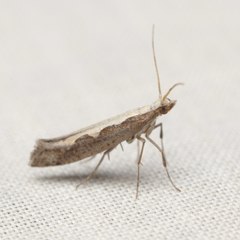
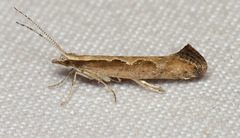
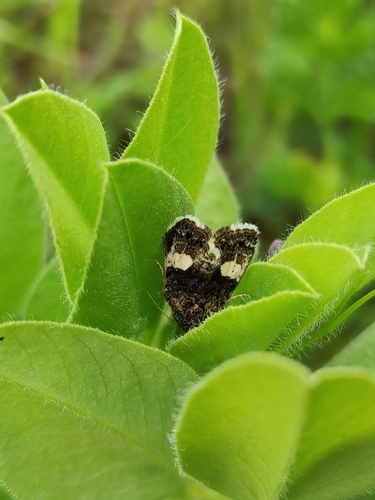
The diamondback moth (Plutella xylostella), sometimes called the cabbage moth, is a moth species of the family Plutellidae and genus Plutella. The small, grayish-brown moth sometimes has a cream-colored band that forms a diamond along its back. The species may have originated in Europe, South Africa, or the Mediterranean region, but it has now spread worldwide.

The moth has a short life cycle (14 days at 25 °C), is highly fecund, and is capable of migrating long distances. Diamondback moths are considered pests as they feed on the leaves of cruciferous crops and plants that produce glucosinolates. However, not all of these plants are equally useful as hosts to the moth. Because of this, studies have suggested using wintercress as a trap crop around agricultural fields because diamondback moths are highly attracted to that plant but their larvae fail to survive when eggs are laid on it.

Originally, pesticides were used to kill the moths but diamondbacks have developed resistance to many of the common chemicals. For this reason, new biological and chemical controls, as well as different planting methods, are being pursued to reduce the destruction caused by the moths. Wikipedia →

Global Distribution

Parks Where Found

# Park Country Daily sighting probability
1 Rakiura National Park 🇳🇿 New Zealand
~20%
2 Kanha National Park 🇮🇳 India
~10%
3 Guadalupe Mountains National Park 🇺🇸 United States
~10%
4 Sierra Nevada National Park 🇪🇸 Spain
~10%
5 Wadden Sea National Park 🇩🇪 Germany
~10%
6 Death Valley National Park 🇺🇸 United States
~10%
7 Cévennes National Park 🇫🇷 France
~10%
8 Bavarian Forest National Park 🇩🇪 Germany
~10%
9 Sierra de Guadarrama National Park 🇪🇸 Spain
~10%
10 Addo Elephant National Park 🇿🇦 South Africa
~10%
11 Pyrénées National Park 🇫🇷 France
<5%
12 Garden Route National Park 🇿🇦 South Africa
<5%
13 Table Mountain National Park 🇿🇦 South Africa
<5%
14 Saguaro National Park 🇺🇸 United States
<5%

Cities Where Found

# City Country Daily sighting probability
1 Kuwait City 🇰🇼 Kuwait
~30%
2 Liverpool 🇬🇧 United Kingdom
~30%
3 Tel Aviv 🇮🇱 Israel
~20%
4 Kharkiv 🇺🇦 Ukraine
~20%
5 Jerusalem 🇮🇱 Israel
~10%
6 Austin 🇺🇸 United States
~10%
7 Helsinki 🇫🇮 Finland
~10%
8 Madrid 🇪🇸 Spain
~10%
9 Dallas 🇺🇸 United States
~10%
10 Kaohsiung 🇹🇼 Taiwan
~10%

Before you go

What are the chances of seeing a Diamondback Moth in Budapest?

With luck

About 10% of wildlife watchers report a Diamondback Moth sighting in Budapest on a given day, based on 9 verified sightings from GBIF citizen-science data. It is the 209th most-seen of the 404 insects we can rate there. Over three days the chance rises to about 20%, and over a week to about 40%, if each day is a fresh chance.

When is the best time to see a Diamondback Moth in Budapest?

March, May, July–August and November–December

In those months about 10% of wildlife watchers report a Diamondback Moth in Budapest on a given day, against under 5% in January–February, April, June and September–October, the lowest months.

What time of day is best to see a Diamondback Moth?

Between 9 pm and midnight

Across all the parks we cover, that three-hour window holds the most Diamondback Moth sightings with a recorded time, and about 6 in 10 of them come between 6 pm and 6 am: it is seen both by day and at night.

Is Budapest the best place to see a Diamondback Moth?

23rd of 89

Of the 89 cities where we can rate Diamondback Moth sightings, Budapest ranks 23rd at about 10%. The best odds are in Kuwait City (Kuwait, about 30%), Liverpool (United Kingdom, about 30%) and Tel Aviv (Israel, about 20%).

Which relatives of the Diamondback Moth live in Budapest?

Same order: Lepidoptera

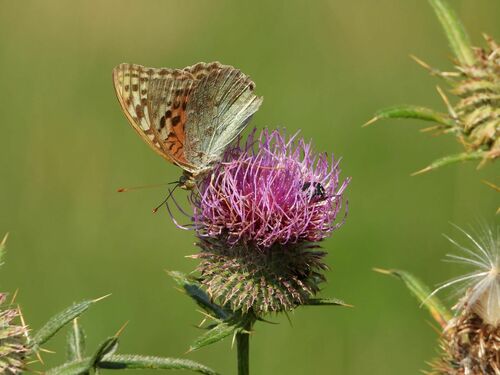
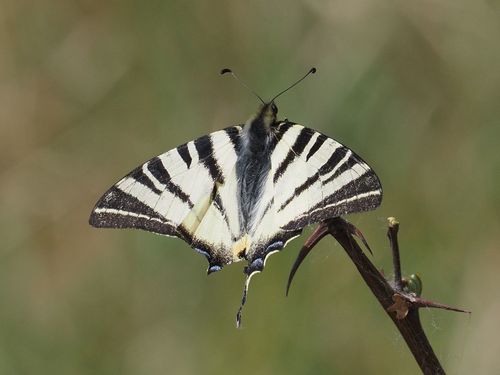
The closest relatives of the Diamondback Moth that you can see in Budapest (order Lepidoptera, Butterflies and Moths) are Common Blue (about 30%), Cardinal Butterfly (about 30%) and Scarce Swallowtail (about 20%), with each one's daily chance of a sighting.

Where does the Diamondback Moth sighting chance come from?

GBIF citizen-science records

It is estimated from how often the Diamondback Moth is recorded against all the insects logged in Budapest (9 verified sightings), calibrated against known sighting rates. Figures are rounded to the nearest 10% because citizen-science data supports honest approximations, not decimals, and months with records from fewer than five people show "—". How it works.

← Back to Budapest