Oriental Beetle

Oriental Beetle

Exomala orientalis

Daily sighting probability ~10% · With luck
at Chicago

In 3 days ~20% in a week ~40%

182 Verified sightings at Chicago
85 In all 3 parks From 2019 to 2026
July Best month
☀️ Diurnal When it's spotted

About the Oriental Beetle

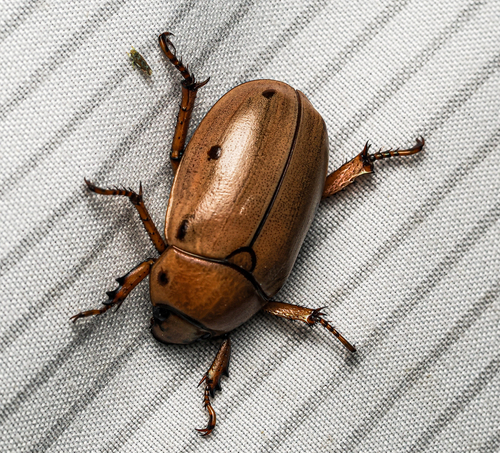
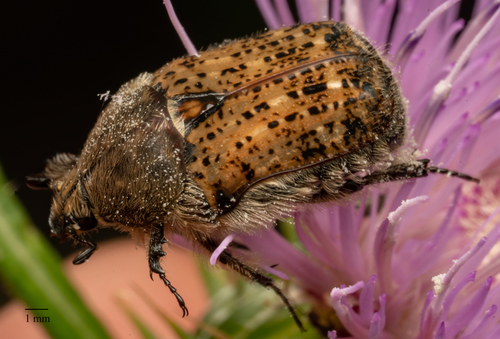
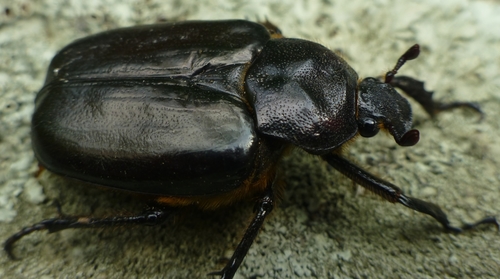
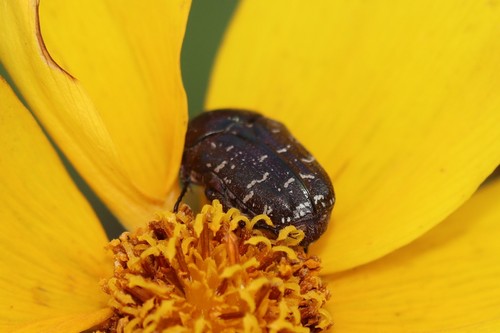
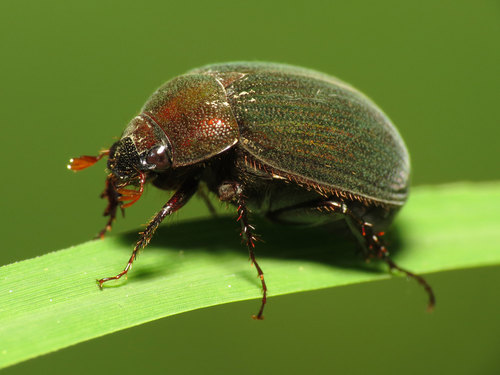
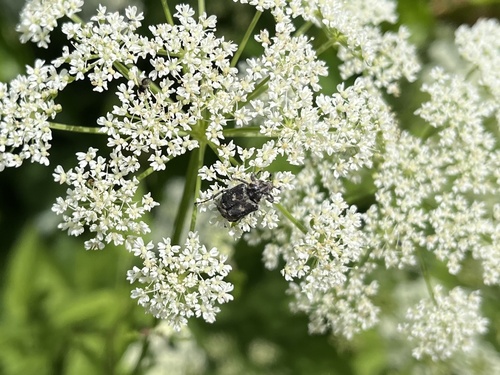
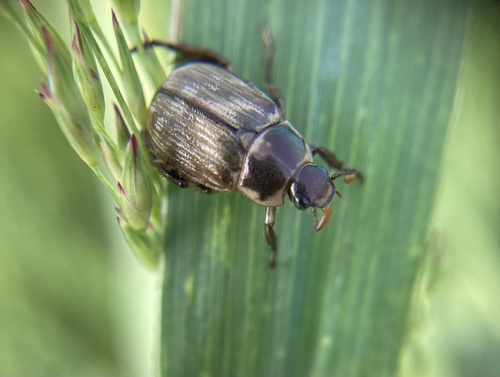
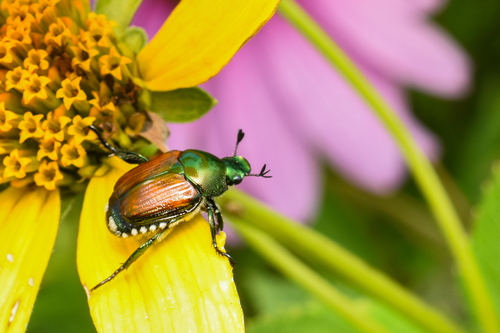
Anomala orientalis (synonym Exomala orientalis), also known as the oriental beetle (OB), is a species of Rutelinae (shining leaf chafers) in the family Scarabaeidae. It is a beetle about 0.7 - 1.1 cm (0.3 - 0.4 inches) long, with mottled, metallic brown- and black-colored elytra and a similarly colored thorax and head during the adult stage. It is sometimes confused with the larger and more colorful Japanese beetle. During the larval stage, the oriental beetle can be identified by the parallel line raster pattern.

This species is native to Asia where it was first found in Japan in 1875. Over time, A. orientalis was spread to other parts of Asia, including Korea, and has since spread to the United States. It was first found in Hawaii and further spread to Northeast states (such as Connecticut, Maine, and New York) as well as some southern states (North Carolina).

Oriental beetles are notorious for their role as pests on plants ranging from sugarcane and other crops (such as maize and pineapple). As larvae, these beetles burrow into the ground as they move throughout fields and chew through plant roots. Their infestation proves to be a current problem that pesticides are aiming to target.

Notably, these beetles have a short mating season that consists of 2 months (mid-June to mid-August) and normally reside beneath the soil burrowed deeply. During mating season, the female will exit the ground and begin emitting a sex pheromone that lures males to her. The molecule serves as a tool for males to locate the female. After copulation, the female returns back into the ground to deposit her eggs. This is where the larvae will mature and begin feeding on plant roots (its pest behavior). Wikipedia →
Global Distribution

Parks Where Found

# Park Country Daily sighting probability
1 Nikko National Park 🇯🇵 Japan
~20%
2 Acadia National Park 🇺🇸 United States
~20%
3 Great Smoky Mountains National Park 🇺🇸 United States
<5%

Cities Where Found

# City Country Daily sighting probability
1 Gwangju 🇰🇷 South Korea
~20%
2 Nagoya 🇯🇵 Japan
~20%
3 Daejeon 🇰🇷 South Korea
~20%
4 Boston 🇺🇸 United States
~20%
5 Sendai 🇯🇵 Japan
~20%
6 Detroit 🇺🇸 United States
~20%
7 Daegu 🇰🇷 South Korea
~20%
8 Seoul 🇰🇷 South Korea
~20%
9 Sapporo 🇯🇵 Japan
~10%
10 Baltimore 🇺🇸 United States
~10%

Before you go

What are the chances of seeing an Oriental Beetle in Chicago?

With luck

About 10% of wildlife watchers report an Oriental Beetle sighting in Chicago on a given day, based on 182 verified sightings from GBIF citizen-science data. It is the 94th most-seen of the 978 insects we can rate there. Over three days the chance rises to about 20%, and over a week to about 40%, if each day is a fresh chance.

When is the best time to see an Oriental Beetle in Chicago?

July

In that month about 20% of wildlife watchers report an Oriental Beetle in Chicago on a given day, against under 5% in August to May, the lowest months.

What time of day is best to see an Oriental Beetle?

Between 11 am and 2 pm

Across all the parks we cover, that three-hour window holds the most Oriental Beetle sightings with a recorded time, and about 8 in 10 of them come between 6 am and 6 pm: it is a daytime animal.

Is Chicago the best place to see an Oriental Beetle?

16th of 18

Of the 18 cities where we can rate Oriental Beetle sightings, Chicago ranks 16th at about 10%. The best odds are in Gwangju (South Korea, about 20%), Nagoya (Japan, about 20%) and Daejeon (South Korea, about 20%).

Where does the Oriental Beetle sighting chance come from?

GBIF citizen-science records

It is estimated from how often the Oriental Beetle is recorded against all the insects logged in Chicago (182 verified sightings), calibrated against known sighting rates. Figures are rounded to the nearest 10% because citizen-science data supports honest approximations, not decimals, and months with records from fewer than five people show "—". How it works.

← Back to Chicago