Mossy Rose Gall Wasp

Mossy Rose Gall Wasp

Diplolepis rosae

Daily sighting probability <5% · Rare
at Denver

In 3 days ~10% in a week ~20%

6 Verified sightings at Denver
299 In all 16 parks From 2019 to 2026
August Best month
☀️ Diurnal When it's spotted

About the Mossy Rose Gall Wasp

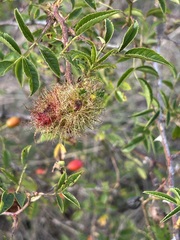
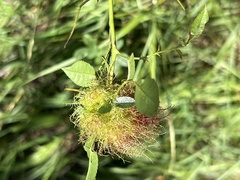
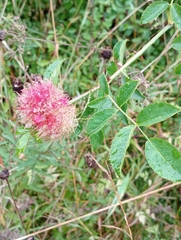
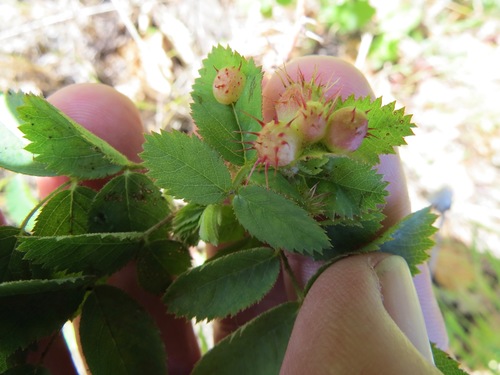
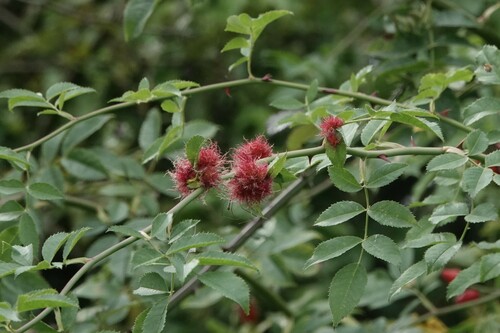
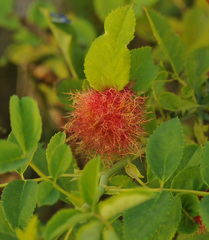
Diplolepis rosae is a gall wasp which causes a gall known as the rose bedeguar gall, robin's pincushion, mossy rose gall, or simply moss gall. The gall develops as a chemically induced distortion of an unopened leaf axillary or terminal bud, mostly on field rose (Rosa arvensis) or dog rose (Rosa canina) shrubs. The female wasp lays up to 60 eggs within each leaf bud using her ovipositor. The grubs develop within the gall, and the wasps emerge in spring; the wasp is parthenogenetic with fewer than one percent being males.

A similar gall is caused by Diplolepis mayri, but this is much less common. Being so prominent and interesting in appearance, this gall has more folklore attached to it than most. The term 'Bedeguar, Bedegar or Bedequar' comes from a French word, bédégar, and is ultimately from the Persian, bād-āwar, meaning 'wind-brought'. Robin in Robin's pincushion refers to the woodland sprite of English folklore, Robin Goodfellow.

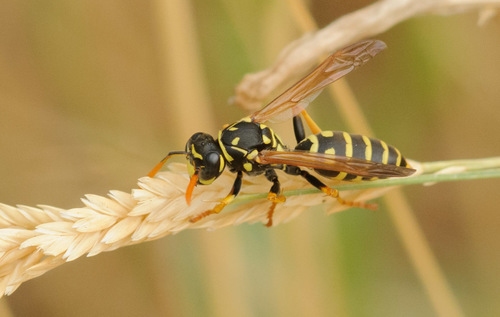
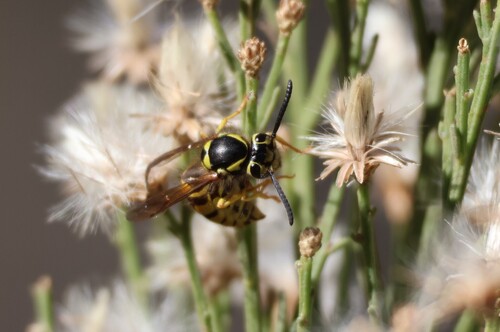
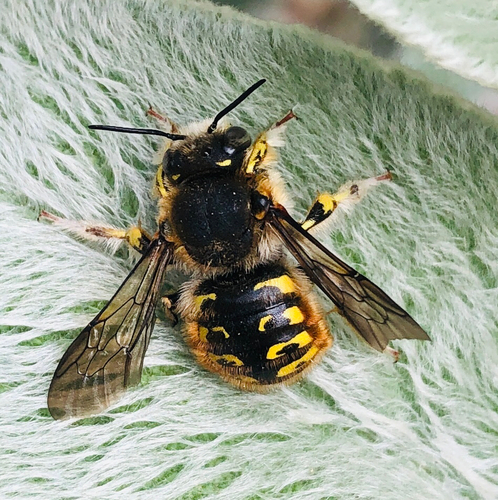
The female is about 4 mm (0.16 in) long. Parts of the abdomen and legs are yellow-red, while the rest of the body is black. The male is black and lacks the hypopygium structure which clearly identifies the species... Wikipedia →
Global Distribution

Parks Where Found

# Park Country Daily sighting probability
1 Aigüestortes National Park 🇪🇸 Spain
~20%
2 Fertő-Hanság National Park 🇭🇺 Hungary
~10%
3 Sierra Nevada National Park 🇪🇸 Spain
~10%
4 Ordesa y Monte Perdido National Park 🇪🇸 Spain
~10%
5 Ecrins National Park 🇫🇷 France
~10%
6 Picos de Europa National Park 🇪🇸 Spain
~10%
7 Snowdonia National Park 🇬🇧 United Kingdom
~10%
8 Redwood National Park 🇺🇸 United States
~10%
9 Sierra de Guadarrama National Park 🇪🇸 Spain
~10%
10 Cévennes National Park 🇫🇷 France
~10%
11 Triglav National Park 🇸🇮 Slovenia
~10%
12 Mercantour National Park 🇫🇷 France
~10%
13 Pyrénées National Park 🇫🇷 France
~10%
14 Wadden Sea National Park 🇩🇪 Germany
~10%
15 Cairngorms National Park 🇬🇧 United Kingdom
~10%
16 Bavarian Forest National Park 🇩🇪 Germany
~10%

Cities Where Found

# City Country Daily sighting probability
1 London 🇬🇧 United Kingdom
~10%
2 Prague 🇨🇿 Czechia
~10%
3 Birmingham 🇬🇧 United Kingdom
~10%
4 Copenhagen 🇩🇰 Denmark
~10%
5 Berlin 🇩🇪 Germany
~10%
6 Salt Lake City 🇺🇸 United States
~10%
7 Liverpool 🇬🇧 United Kingdom
~10%
8 Vienna 🇦🇹 Austria
~10%
9 Cologne 🇩🇪 Germany
~10%
10 Sofia 🇧🇬 Bulgaria
~10%

Before you go

What are the chances of seeing a Mossy Rose Gall Wasp in Denver?

Rare

Under 5% of wildlife watchers report a Mossy Rose Gall Wasp sighting in Denver on a given day, based on 6 verified sightings from GBIF citizen-science data. It is the 384th most-seen of the 461 insects we can rate there. Over three days the chance rises to about 10%, and over a week to about 20%, if each day is a fresh chance.

When is the best time to see a Mossy Rose Gall Wasp in Denver?

Any time of year

In every month with enough records, under 5% of wildlife watchers report a Mossy Rose Gall Wasp in Denver on a given day, so our monthly data shows no clear season.

What time of day is best to see a Mossy Rose Gall Wasp?

Between 10 am and 1 pm

Across all the parks we cover, that three-hour window holds the most Mossy Rose Gall Wasp sightings with a recorded time, and about 9 in 10 of them come between 6 am and 6 pm: it is a daytime animal.

Is Denver the best place to see a Mossy Rose Gall Wasp?

33rd of 34

Of the 34 cities where we can rate Mossy Rose Gall Wasp sightings, Denver ranks 33rd at under 5%. The best odds are in London (United Kingdom, about 10%), Prague (Czechia, about 10%) and Birmingham (United Kingdom, about 10%).

Where does the Mossy Rose Gall Wasp sighting chance come from?

GBIF citizen-science records

It is estimated from how often the Mossy Rose Gall Wasp is recorded against all the insects logged in Denver (6 verified sightings), calibrated against known sighting rates. Figures are rounded to the nearest 10% because citizen-science data supports honest approximations, not decimals, and months with records from fewer than five people show "—". How it works.

← Back to Denver