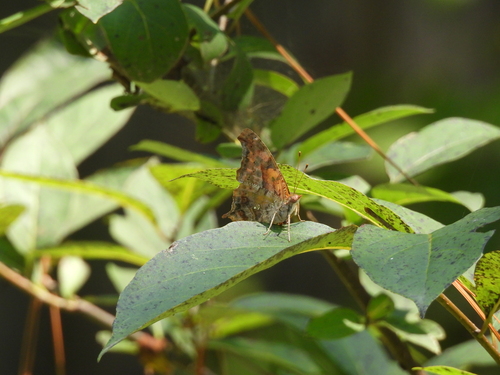
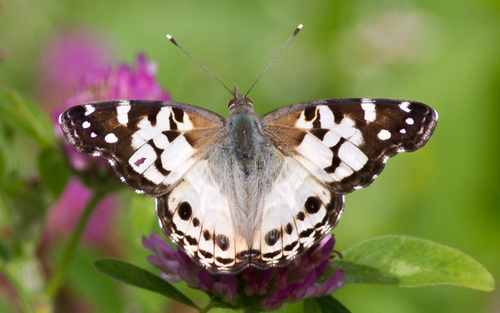
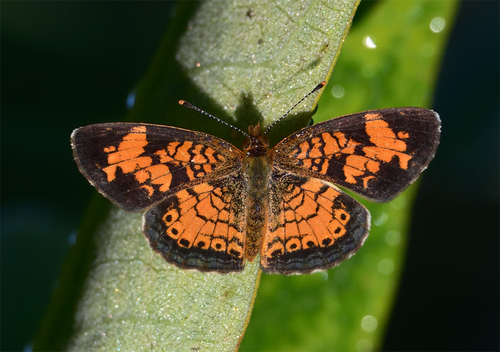
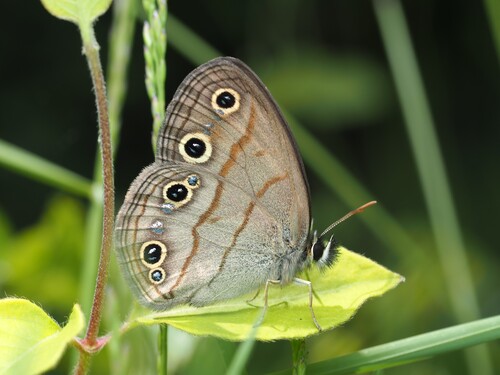
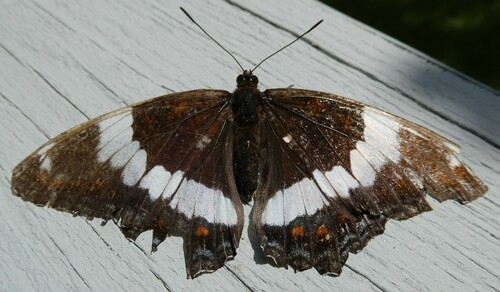
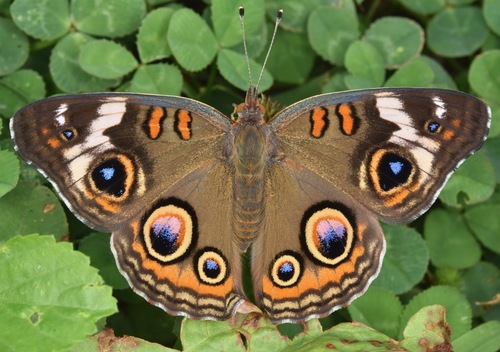
Common Buckeye
Daily sighting probability ~10% · With luck
at Detroit

In 3 days ~20% in a week ~40%

20 Verified sightings at Detroit
975 In all 10 parks From 2019 to 2026
October Best month
☀️ Diurnal When it's spotted

About the Common Buckeye

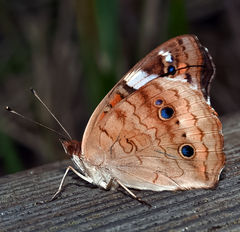
Junonia coenia, known as the common buckeye or buckeye, is a butterfly in the family Nymphalidae. It is found as a resident or vagrant across much of North America and Central America, as well as in parts of northern South America. This includes most of the eastern half of the US, the lower to middle Midwest, the Southwest (including most of California), southern Canada, and Mexico. Its habitat includes fields, dunes and scrub, typically in sunny environments up to 1,300 metres (4,300 ft) in altitude. It can be found in open areas with low vegetation and some bare ground. Its original ancestry has been traced to Africa, which then experienced divergence in Asia. The species Junonia grisea, the gray buckeye, is found west of the Rocky Mountains and was formerly a subspecies of Junonia coenia.

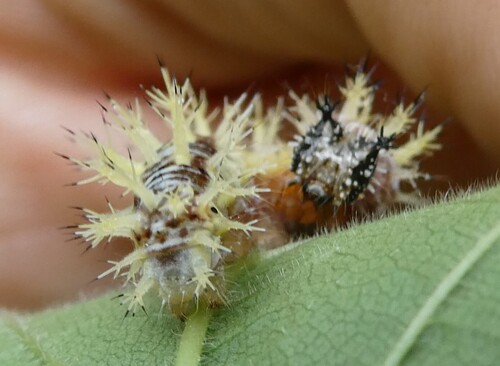
Caterpillars of these butterflies appear to prefer plants that produce iridoid glycosides, which are bitter compounds that release a hormone called gastrin that activates the digestive system (i.e. hunger); therefore, iridoid glycoside producing plants stimulate and attract their appetites particularly when found in plants like Plantago lanceolata. In fact, the presence of these metabolites may trigger oviposition behaviors in female butterflies so that descendant larval bodies may better incorporate iridoid glycosides. Iridoid glycolyside metabolites appear to have a growth-stimulating effect on caterpillars but a growth-reducing effect on predators. Predators like ants, wasps, birds, and small animals prefer to feed on iridoid glycoside poor caterpillars rather than iridoid glycoside rich larvae, potentially due to these effects. Therefore, immunity of J. coenia larvae to predators like ants appears to be strongly related to the concentration of iridoid glycosides sequestered in their bodies. However, too much iridoid glycosides in the diet can negatively affect the immune response of these larvae and lead to increased susceptibility to parasitism.

Adult butterflies feed on flowers with certain pollinator cues: yellow flowers that are "pre-change", or flowers whose color has not been changed due to insect visitation or other factors. Common buckeye caterpillars feed in isolation rather than relying upon grouping behaviors. Vulnerability to the Junonia coenia densovirus is another concern for survivorship of common buckeye larvae. Wikipedia →
Global Distribution

Parks Where Found

# Park Country Daily sighting probability
1 Padre Island National Seashore 🇺🇸 United States
~40%
2 Congaree National Park 🇺🇸 United States
~20%
3 Big Cypress National Preserve 🇺🇸 United States
~20%
4 Great Smoky Mountains National Park 🇺🇸 United States
~20%
5 Merritt Island National Wildlife Refuge 🇺🇸 United States
~20%
6 Point Pelee National Park 🇨🇦 Canada
~20%
7 Big Bend National Park 🇺🇸 United States
~20%
8 Everglades National Park 🇺🇸 United States
~20%
9 Shenandoah National Park 🇺🇸 United States
~10%
10 Cumbres de Monterrey National Park 🇲🇽 Mexico
~10%

Cities Where Found

# City Country Daily sighting probability
1 Dallas 🇺🇸 United States
~20%
2 Austin 🇺🇸 United States
~20%
3 San Antonio 🇺🇸 United States
~20%
4 Baltimore 🇺🇸 United States
~20%
5 Houston 🇺🇸 United States
~20%
6 Washington 🇺🇸 United States
~10%
7 Chicago 🇺🇸 United States
~10%
8 Philadelphia 🇺🇸 United States
~10%
9 Puebla 🇲🇽 México
~10%
10 New York City 🇺🇸 United States
~10%

Before you go

What are the chances of seeing a Common Buckeye in Detroit?

With luck

About 10% of wildlife watchers report a Common Buckeye sighting in Detroit on a given day, based on 20 verified sightings from GBIF citizen-science data. It is the 96th most-seen of the 268 insects we can rate there. Over three days the chance rises to about 20%, and over a week to about 40%, if each day is a fresh chance.

When is the best time to see a Common Buckeye in Detroit?

October

In that month about 20% of wildlife watchers report a Common Buckeye in Detroit on a given day, against under 5% in November to July, the lowest months.

What time of day is best to see a Common Buckeye?

Between noon and 3 pm

Across all the parks we cover, that three-hour window holds the most Common Buckeye sightings with a recorded time, and nearly all of them come between 6 am and 6 pm: it is a daytime animal.

Is Detroit the best place to see a Common Buckeye?

11th of 19

Of the 19 cities where we can rate Common Buckeye sightings, Detroit ranks 11th at about 10%. The best odds are in Dallas (United States, about 20%), Austin (United States, about 20%) and San Antonio (United States, about 20%).

Which relatives of the Common Buckeye live in Detroit?

Same family: Nymphalidae

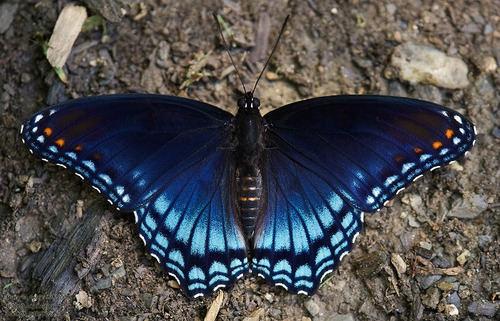
The closest relatives of the Common Buckeye that you can see in Detroit (family Nymphalidae, Brush-footed Butterflies) are Monarch (about 40%), Red Admiral (about 30%) and Question Mark (about 10%), with each one's daily chance of a sighting.

Where does the Common Buckeye sighting chance come from?

GBIF citizen-science records

It is estimated from how often the Common Buckeye is recorded against all the insects logged in Detroit (20 verified sightings), calibrated against known sighting rates. Figures are rounded to the nearest 10% because citizen-science data supports honest approximations, not decimals, and months with records from fewer than five people show "—". How it works.

← Back to Detroit