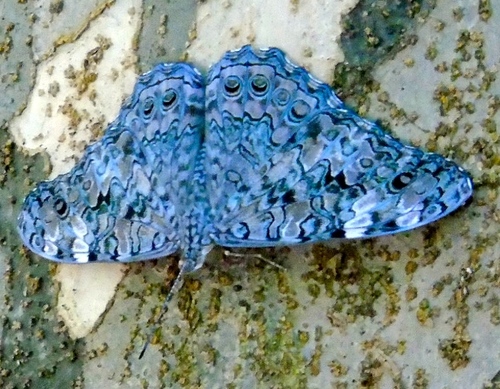
Mexican Fritillary

Mexican Fritillary

Euptoieta hegesia

Daily sighting probability ~10% · With luck
at Guadalajara

In 3 days ~20% in a week ~30%

21 Verified sightings at Guadalajara
190 In all 14 parks From 2019 to 2026
September Best month
☀️ Diurnal When it's spotted

About the Mexican Fritillary

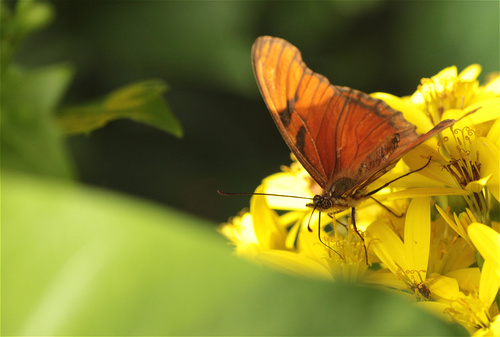
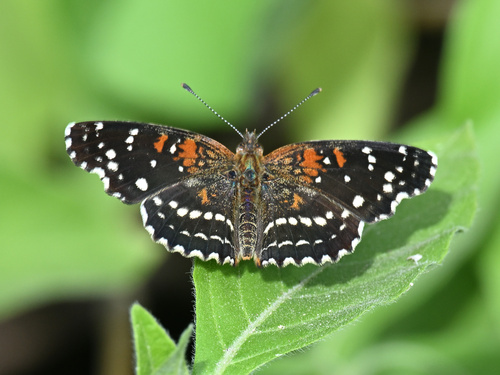
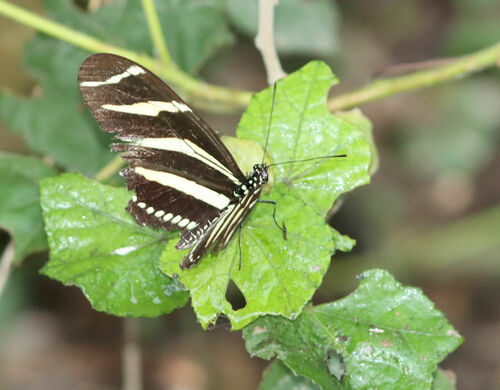
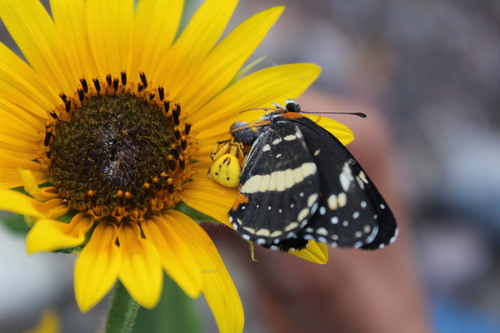
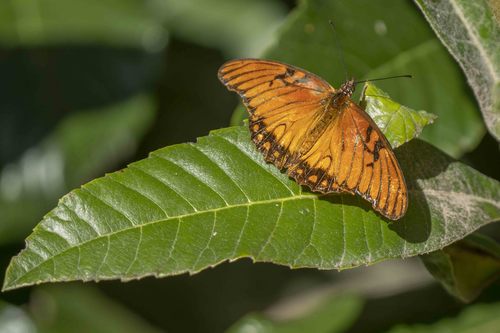
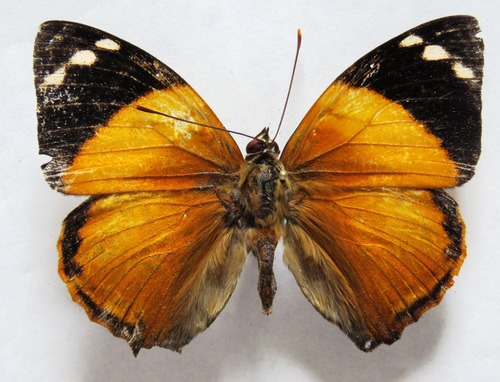
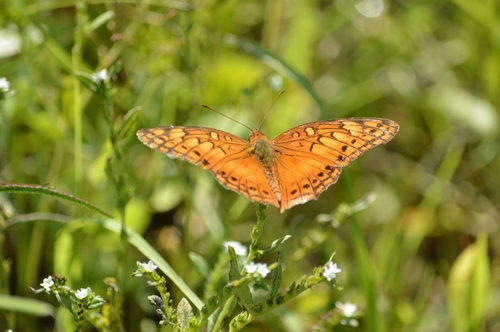
Euptoieta hegesia, the Mexican fritillary, is a North and South American butterfly in the family Nymphalidae. The upperside of the wings is bright orange with the basal part of the hindwing unmarked. There is a row of submarginal black spots on both the forewing and the hindwing. The underside of the wings is yellow orange with no submarginal black spots. It has a wingspan of 2.5 to 3 inches.

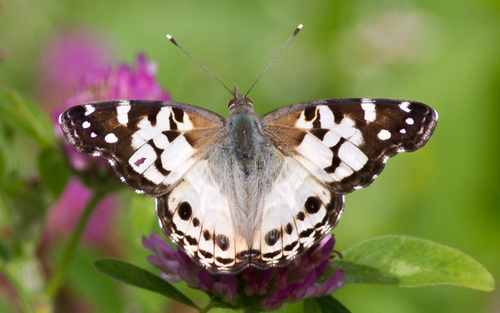
The only similar species in the Mexican fritillary's range is the variegated fritillary (Euptoieta claudia). The variegated fritillary has black median lines on the upperside of the hindwing, and on the underside of the hindwing it has a pale postmedian band.

The Mexican fritillary may be seen from mid-June to November in Arizona, from July to December in Texas and year-round in Mexico. This species may be encountered in a wide range of open habitats and gardens. The larva is shiny red, with middorsal silver spots edged with black. It has a subdorsal row of white spots ringed with black, a spiracular silver line with black edges, and six rows of black spines. The red head has two long black spines with clubbed ends... Wikipedia →

Global Distribution

Parks Where Found

# Park Country Daily sighting probability
1 Cabo Pulmo National Park 🇲🇽 Mexico
~50%
2 Jaragua National Park 🇩🇴 Dominican Republic
~30%
3 Ostional Wildlife Refuge 🇨🇷 Costa Rica
~30%
4 Anavilhanas National Park 🇧🇷 Brazil
~20%
5 Santa Rosa National Park 🇨🇷 Costa Rica
~20%
6 Rincón de la Vieja National Park 🇨🇷 Costa Rica
~20%
7 Bahía de Loreto National Park 🇲🇽 Mexico
~10%
8 Biotopo Cerro Cahuí 🇬🇹 Guatemala
~10%
9 Marino Ballena National Park 🇨🇷 Costa Rica
~10%
10 Las Baulas Marine National Park 🇨🇷 Costa Rica
~10%
11 Corcovado National Park 🇨🇷 Costa Rica
~10%
12 Cañón del Sumidero National Park 🇲🇽 Mexico
~10%
13 Cumbres de Monterrey National Park 🇲🇽 Mexico
~10%
14 Parque Natural Metropolitano 🇵🇦 Panama
~10%

Cities Where Found

# City Country Daily sighting probability
1 São Luís 🇧🇷 Brazil
~50%
2 Natal 🇧🇷 Brazil
~40%
3 Salvador 🇧🇷 Brazil
~40%
4 Goiânia 🇧🇷 Brazil
~30%
5 Fortaleza 🇧🇷 Brazil
~30%
6 João Pessoa 🇧🇷 Brazil
~30%
7 Recife 🇧🇷 Brazil
~30%
8 Manaus 🇧🇷 Brazil
~20%
9 Maceió 🇧🇷 Brazil
~20%
10 Vitória 🇧🇷 Brazil
~20%

Before you go

What are the chances of seeing a Mexican Fritillary in Guadalajara?

With luck

About 10% of wildlife watchers report a Mexican Fritillary sighting in Guadalajara on a given day, based on 21 verified sightings from GBIF citizen-science data. It is the 79th most-seen of the 229 insects we can rate there. Over three days the chance rises to about 20%, and over a week to about 30%, if each day is a fresh chance.

When is the best time to see a Mexican Fritillary in Guadalajara?

September to January

In those months about 10% of wildlife watchers report a Mexican Fritillary in Guadalajara on a given day, against under 5% in February to August, the lowest months.

What time of day is best to see a Mexican Fritillary?

Between 11 am and 2 pm

Across all the parks we cover, that three-hour window holds the most Mexican Fritillary sightings with a recorded time, and nearly all of them come between 6 am and 6 pm: it is a daytime animal.

Is Guadalajara the best place to see a Mexican Fritillary?

22nd of 25

Of the 25 cities where we can rate Mexican Fritillary sightings, Guadalajara ranks 22nd at about 10%. The best odds are in São Luís (Brazil, about 50%), Natal (Brazil, about 40%) and Salvador (Brazil, about 40%).

Which relatives of the Mexican Fritillary live in Guadalajara?

Same family: Nymphalidae

The closest relatives of the Mexican Fritillary that you can see in Guadalajara (family Nymphalidae, Brush-footed Butterflies) are Monarch (about 30%), Juno Silverspot (about 10%) and Gulf Fritillary (about 10%), with each one's daily chance of a sighting.

Where does the Mexican Fritillary sighting chance come from?

GBIF citizen-science records

It is estimated from how often the Mexican Fritillary is recorded against all the insects logged in Guadalajara (21 verified sightings), calibrated against known sighting rates. Figures are rounded to the nearest 10% because citizen-science data supports honest approximations, not decimals, and months with records from fewer than five people show "—". How it works.
← Back to Guadalajara