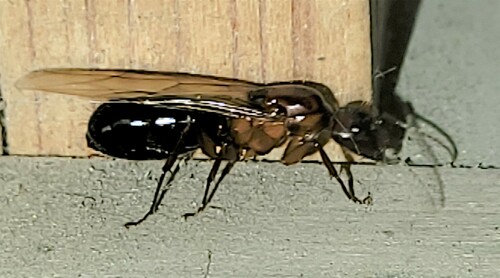
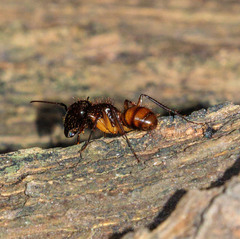
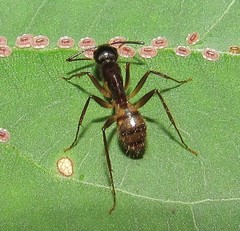
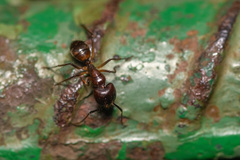
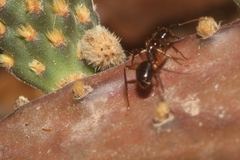
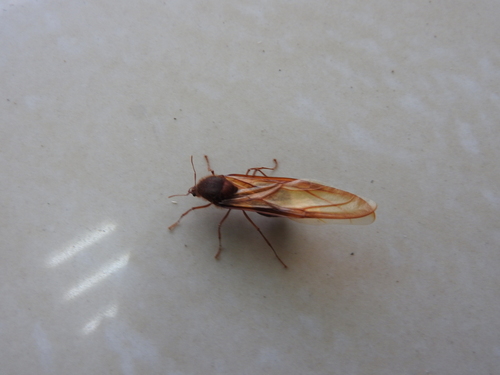
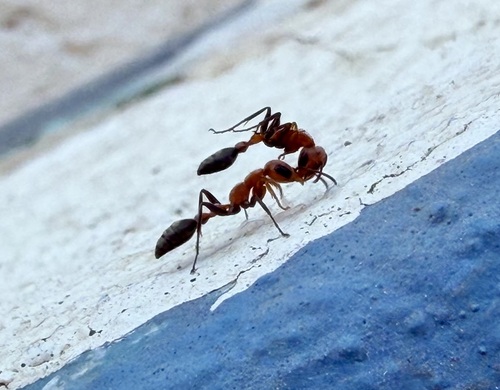
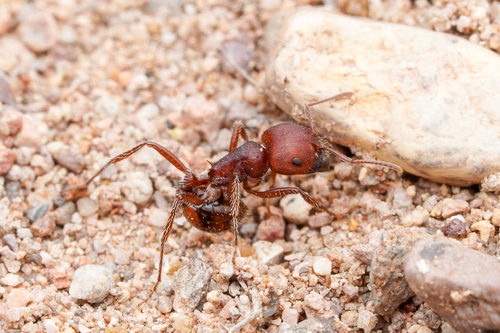
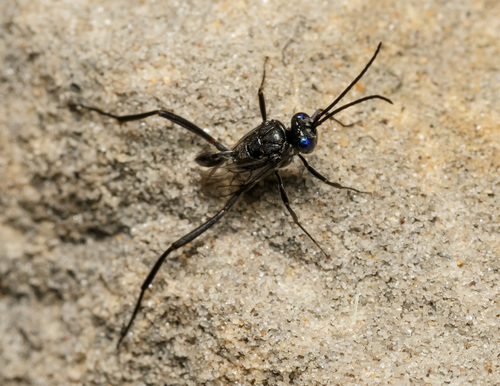
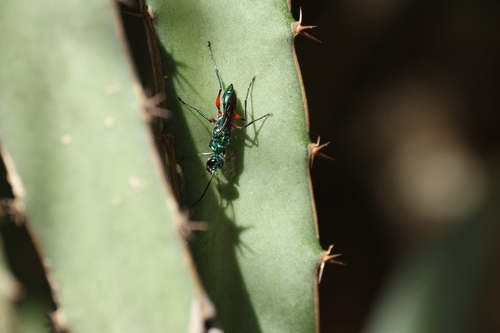
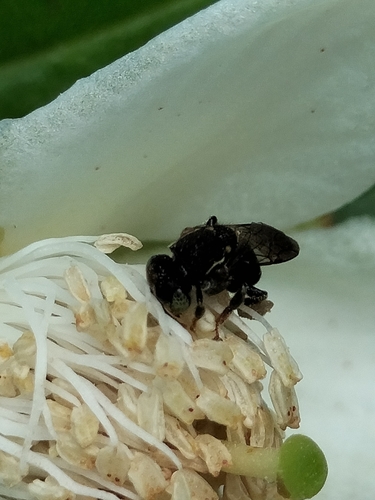
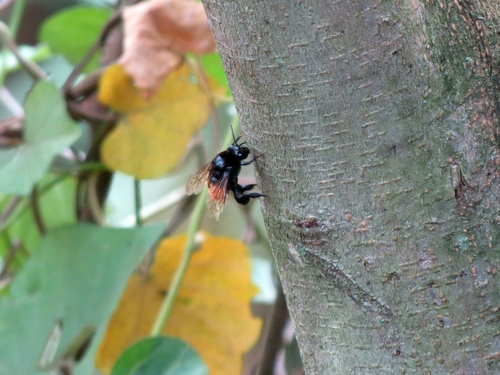
Tropical Carpenter Ant

Tropical Carpenter Ant

Camponotus atriceps

Daily sighting probability <5% · Rare
at Guadalajara

In 3 days ~10% in a week ~30%

14 Verified sightings at Guadalajara
84 In all 8 parks From 2019 to 2026
June Best month
🌙 Nocturnal When it's spotted

About the Tropical Carpenter Ant

Camponotus atriceps, previously referred to as C. abdominalis, is a species of carpenter ant, endemic to the Americas. In the Amazon region, C. atriceps has been seen attacking colonies of stingless bees of the genus Melipona, especially M. flavolineata and M. fasciculata. It destroys hives and eats brood when food is low. Field research at Embrapa Amazônia Oriental in Brazil discovered that ants can be attracted to empty hive "trap boxes," offering an efficient non-chemical alternative for safeguarding managed bee colonies. Utilization of trap boxes in communal shelters of stingless bee colonies can serve as a non-chemical method for controlling tracuá carpenter ants (C. atriceps). Wikipedia →

Global Distribution

Parks Where Found

# Park Country Daily sighting probability
1 Main Ridge Forest Reserve 🇹🇹 Trinidad and Tobago
~20%
2 Yasuní National Park 🇪🇨 Ecuador
~10%
3 Braulio Carrillo National Park 🇨🇷 Costa Rica
~10%
4 Monteverde Cloud Forest Reserve 🇨🇷 Costa Rica
~10%
5 Soberanía National Park 🇵🇦 Panama
~10%
6 Cumbres de Monterrey National Park 🇲🇽 Mexico
~10%
7 Arenal Volcano National Park 🇨🇷 Costa Rica
<5%
8 Tijuca National Park 🇧🇷 Brazil
<5%

Cities Where Found

# City Country Daily sighting probability
1 Fortaleza 🇧🇷 Brazil
~20%
2 San José 🇨🇷 Costa Rica
~10%
3 Caracas 🇻🇪 Venezuela
~10%
4 São Paulo 🇧🇷 Brazil
~10%
5 Guadalajara 🇲🇽 México
<5%
6 Monterrey 🇲🇽 México
<5%
7 Rio de Janeiro 🇧🇷 Brazil
<5%

Before you go

What are the chances of seeing a Tropical Carpenter Ant in Guadalajara?

Rare

Under 5% of wildlife watchers report a Tropical Carpenter Ant sighting in Guadalajara on a given day, based on 14 verified sightings from GBIF citizen-science data. It is the 117th most-seen of the 229 insects we can rate there. Over three days the chance rises to about 10%, and over a week to about 30%, if each day is a fresh chance.

When is the best time to see a Tropical Carpenter Ant in Guadalajara?

February and June–July

In those months about 10% of wildlife watchers report a Tropical Carpenter Ant in Guadalajara on a given day, against under 5% in March–May and August–January, the lowest months. Those are among Guadalajara's wettest months, with about 120 mm of rain a month against almost none in April.

What time of day is best to see a Tropical Carpenter Ant?

Between 9 pm and midnight

Across all the parks we cover, that three-hour window holds the most Tropical Carpenter Ant sightings with a recorded time, and about 8 in 10 of them come between 6 pm and 6 am: it is mostly seen at night.

Is Guadalajara the best place to see a Tropical Carpenter Ant?

5th of 7

Of the 7 cities where we can rate Tropical Carpenter Ant sightings, Guadalajara ranks 5th at under 5%. The best odds are in Fortaleza (Brazil, about 20%), San José (Costa Rica, about 10%) and Caracas (Venezuela, about 10%).

Which relatives of the Tropical Carpenter Ant live in Guadalajara?

Same family: Formicidae

The closest relatives of the Tropical Carpenter Ant that you can see in Guadalajara (family Formicidae, Ants) are Chicatana Leafcutter Ant (about 20%), Graceful Twig Ant (about 10%) and Yellow Crazy Ant (about 10%), with each one's daily chance of a sighting.

Where does the Tropical Carpenter Ant sighting chance come from?

GBIF citizen-science records

It is estimated from how often the Tropical Carpenter Ant is recorded against all the insects logged in Guadalajara (14 verified sightings), calibrated against known sighting rates. Figures are rounded to the nearest 10% because citizen-science data supports honest approximations, not decimals, and months with records from fewer than five people show "—". How it works.

← Back to Guadalajara