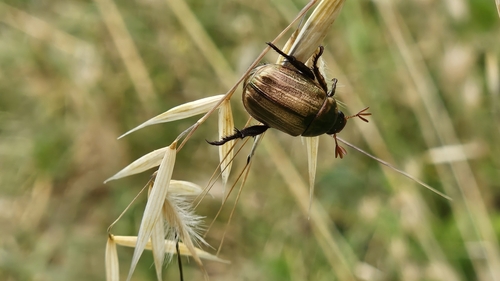
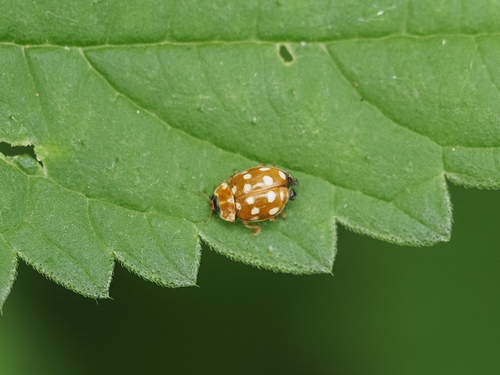
Copper Chafer

Copper Chafer

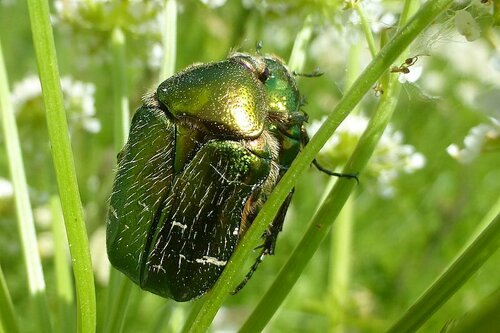
Protaetia cuprea

Daily sighting probability <5% · Rare
at Hamburg

In 3 days ~10% in a week ~20%

6 Verified sightings at Hamburg
195 In all 14 parks From 2019 to 2026
October Best month
☀️ Diurnal When it's spotted

About the Copper Chafer

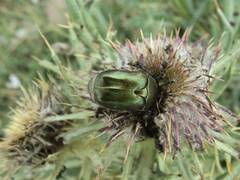
Protaetia cuprea, also known as the copper chafer, is a species of chafer in the family Scarabaeidae. This species is also known as the rose chafer and has a wide geographic distribution, extending from Canary Islands, Portugal, and Spain to the east towards Vladivostok in the Russian Far East, Mongolia, and North China. This species forages for pollen from flowers and fruits, such as apples, from trees. However, since fruit is scarce in the spring and winter, they only transition from a diet of pollen to a diet of fruits in the summer. Since pollen is richer in proteins and lipids than carbohydrates, while fruit is richer in carbohydrates, they are able to travel longer when on a fruit diet; this is due to their increased aerobic performance when fueled by high-carbohydrate content.

This beetle is well-known for its flight ability, a skill that supports its foraging behavior. It has swift maneuvering ability and strong precision when landing on flowers and plants; it is able to do this due to the elasticity and mechanisms this beetle's wings possess.

The beetle species P. cuprea has an extensive geographic distribution across various regions, showcasing its adaptability... Wikipedia →
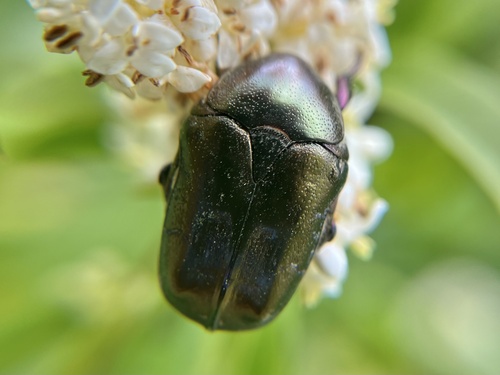
Global Distribution

Parks Where Found

# Park Country Daily sighting probability
1 Mercantour National Park 🇫🇷 France
~30%
2 Hohe Tauern National Park 🇦🇹 Austria
~20%
3 Biebrza National Park 🇵🇱 Poland
~20%
4 Ecrins National Park 🇫🇷 France
~10%
5 Vanoise National Park 🇫🇷 France
~10%
6 Białowieża National Park 🇵🇱 Poland
~10%
7 Triglav National Park 🇸🇮 Slovenia
~10%
8 Bavarian Forest National Park 🇩🇪 Germany
~10%
9 Cévennes National Park 🇫🇷 France
~10%
10 Sierra Nevada National Park 🇪🇸 Spain
~10%
11 Fertő-Hanság National Park 🇭🇺 Hungary
~10%
12 Cairngorms National Park 🇬🇧 United Kingdom
~10%
13 Pyrénées National Park 🇫🇷 France
<5%
14 Wadden Sea National Park 🇩🇪 Germany
<5%

Cities Where Found

# City Country Daily sighting probability
1 Ramallah 🇵🇸 Palestine
~20%
2 Jerusalem 🇮🇱 Israel
~20%
3 Tel Aviv 🇮🇱 Israel
~20%
4 Yerevan 🇦🇲 Armenia
~20%
5 Athens 🇬🇷 Greece
~10%
6 Izmir 🇹🇷 Turkey
~10%
7 Vienna 🇦🇹 Austria
~10%
8 Budapest 🇭🇺 Hungary
~10%
9 Berlin 🇩🇪 Germany
~10%
10 Prague 🇨🇿 Czechia
~10%

Before you go

What are the chances of seeing a Copper Chafer in Hamburg?

Rare

Under 5% of wildlife watchers report a Copper Chafer sighting in Hamburg on a given day, based on 6 verified sightings from GBIF citizen-science data. It is the 326th most-seen of the 423 insects we can rate there. Over three days the chance rises to about 10%, and over a week to about 20%, if each day is a fresh chance.

When is the best time to see a Copper Chafer in Hamburg?

April–May and October

In those months about 10% of wildlife watchers report a Copper Chafer in Hamburg on a given day, against under 5% in June–September and November–March, the lowest months.

What time of day is best to see a Copper Chafer?

Between 11 am and 2 pm

Across all the parks we cover, that three-hour window holds the most Copper Chafer sightings with a recorded time, and about 9 in 10 of them come between 6 am and 6 pm: it is a daytime animal.

Is Hamburg the best place to see a Copper Chafer?

15th of 18

Of the 18 cities where we can rate Copper Chafer sightings, Hamburg ranks 15th at under 5%. The best odds are in Ramallah (Palestine, about 20%), Jerusalem (Israel, about 20%) and Tel Aviv (Israel, about 20%).

Which relatives of the Copper Chafer live in Hamburg?

Same family: Scarabaeidae

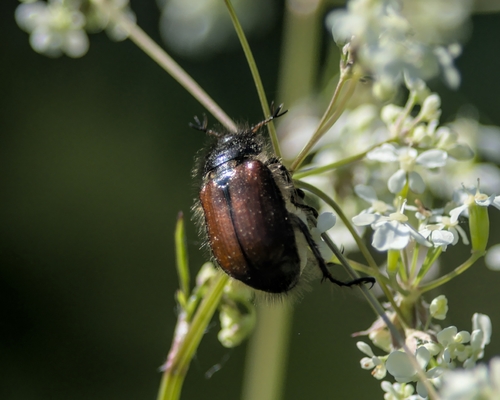
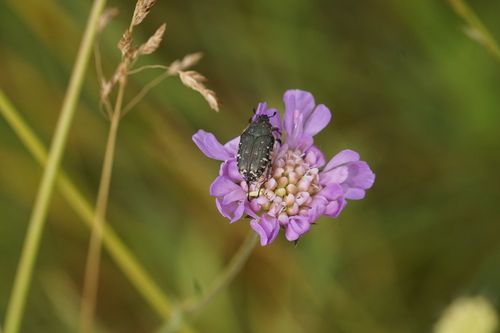
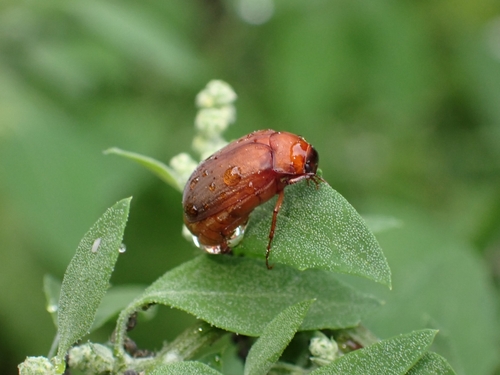
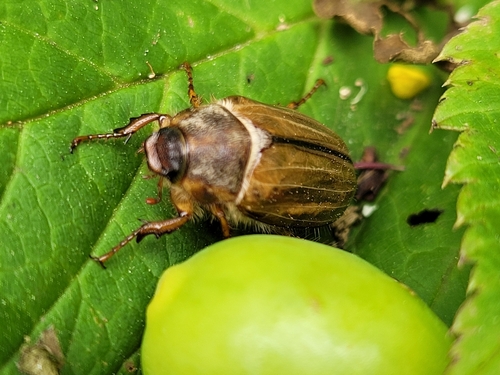
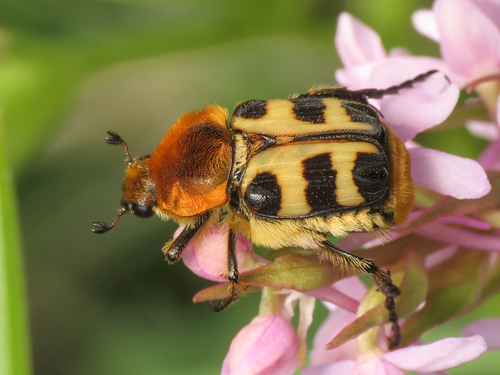
The closest relatives of the Copper Chafer that you can see in Hamburg (family Scarabaeidae, Scarabs) are Garden Chafer (about 10%), Mediterranean Spotted Chafer (about 10%) and Brown Chafer (about 10%), with each one's daily chance of a sighting.

Where does the Copper Chafer sighting chance come from?

GBIF citizen-science records

It is estimated from how often the Copper Chafer is recorded against all the insects logged in Hamburg (6 verified sightings), calibrated against known sighting rates. Figures are rounded to the nearest 10% because citizen-science data supports honest approximations, not decimals, and months with records from fewer than five people show "—". How it works.

← Back to Hamburg