


Completed
Western Roe Deer
Capreolus capreolus
Silhouette: Steven Traver · PhyloPic
- KingdomAnimalia (Animals)
- PhylumChordata (Chordates)
- ClassMammalia (Mammals)
- OrderArtiodactyla (Even-toed Ungulates and Cetaceans)
- FamilyCervidae (Deer)
- GenusCapreolus (Roe Deer)
- SpeciesCapreolus capreolus (Western Roe Deer)
In 3 days ~80% in a week >90%
364 Verified sightings at Helsinki
1,106 In all 20 parks From 2019 to 2026
November Best month
🌅 Crepuscular When it's spotted
About the Western Roe Deer
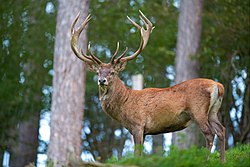
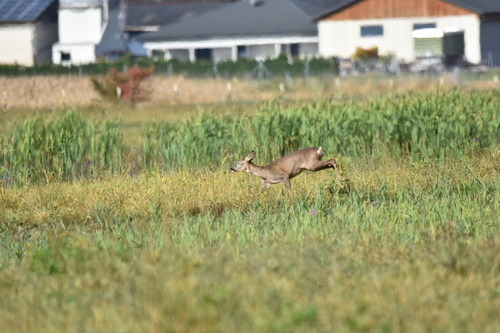
The roe deer (Capreolus capreolus), also known as the roe, western roe deer, or European roe, is a species of deer. The male of the species is sometimes referred to as a roebuck. The roe is a small deer, reddish and grey-brown, and well-adapted to cold environments. The species is widespread in Europe, from the Mediterranean to Scandinavia, from Scotland to the Caucasus, and east as far as northern Iran.
The English roe is from the Old English rā or rāha, from Proto-Germanic *raihô, cognate with Old Norse rá, Old Saxon rēho, Middle Dutch and Dutch ree, Old High German rēh, rēho, rēia, German Reh. It is perhaps ultimately derived from a PIE root *rei-, meaning "streaked, spotted or striped".
The word is attested on the 5th-century Caistor-by-Norwich astragalus – a roe deer talus bone, written in Elder Futhark as ᚱᚨᛇᚺᚨᚾ, transliterated as raïhan. In the English language, this deer was originally simply called a 'roe', but over time the word 'roe' has become a qualifier, and it is now usually called 'roe deer'.
The Koiné Greek name πύγαργος, transliterated pygargos, mentioned in the Septuagint and the works of various writers such as Hesychius, Herodotus and later Pliny... Wikipedia →
Recent sightings of Western Roe Deer in Helsinki
LIVEiNaturalistGlobal Distribution
Parks Where Found
| # | Park | Country | Daily sighting probability |
|---|---|---|---|
| 1 | Biebrza National Park | 🇵🇱 Poland | |
| 2 | Kiskunság National Park | 🇭🇺 Hungary | |
| 3 | Białowieża National Park | 🇵🇱 Poland | |
| 4 | Cairngorms National Park | 🇬🇧 United Kingdom | |
| 5 | Fertő-Hanság National Park | 🇭🇺 Hungary | |
| 6 | Triglav National Park | 🇸🇮 Slovenia | |
| 7 | Hohe Tauern National Park | 🇦🇹 Austria | |
| 8 | Hortobágy National Park | 🇭🇺 Hungary | |
| 9 | Aigüestortes National Park | 🇪🇸 Spain | |
| 10 | Bavarian Forest National Park | 🇩🇪 Germany | |
| 11 | Cévennes National Park | 🇫🇷 France | |
| 12 | Mercantour National Park | 🇫🇷 France | |
| 13 | Pyrénées National Park | 🇫🇷 France | |
| 14 | Wadden Sea National Park | 🇩🇪 Germany | |
| 15 | Ecrins National Park | 🇫🇷 France | |
| 16 | Tatra National Park | 🇸🇰 Slovakia | |
| 17 | Ordesa y Monte Perdido National Park | 🇪🇸 Spain | |
| 18 | Vanoise National Park | 🇫🇷 France | |
| 19 | Sierra de Guadarrama National Park | 🇪🇸 Spain | |
| 20 | Picos de Europa National Park | 🇪🇸 Spain |
Zoos & Centres Where Found
Closest Relatives at Helsinki








Before you go
What are the chances of seeing a Western Roe Deer in Helsinki?
Likely
About 40% of wildlife watchers report a Western Roe Deer sighting in Helsinki on a given day, based on 364 verified sightings from GBIF citizen-science data. It is the 3rd most-seen of the 23 mammals we can rate there. Over three days the chance rises to about 80%, and over a week to over 90%, if each day is a fresh chance.
When is the best time to see a Western Roe Deer in Helsinki?
November
In that month about 60% of wildlife watchers report a Western Roe Deer in Helsinki on a given day, against about 30% in June–July and September, the lowest months.
What time of day is best to see a Western Roe Deer?
Between 5 and 8 pm
Across all the parks we cover, that three-hour window holds the most Western Roe Deer sightings with a recorded time, and about 7 in 10 of them come between 6 am and 6 pm: it is most active around dawn and dusk.
Is Helsinki the best place to see a Western Roe Deer?
2nd of 18
Of the 18 cities where we can rate Western Roe Deer sightings, Helsinki ranks 2nd at about 40%. The best odds are in Hamburg (Germany, about 50%).
Where does the Western Roe Deer sighting chance come from?
GBIF citizen-science records
It is estimated from how often the Western Roe Deer is recorded against all the mammals logged in Helsinki (364 verified sightings), calibrated against known sighting rates. Figures are rounded to the nearest 10% because citizen-science data supports honest approximations, not decimals, and months with records from fewer than five people show "—". How it works.
