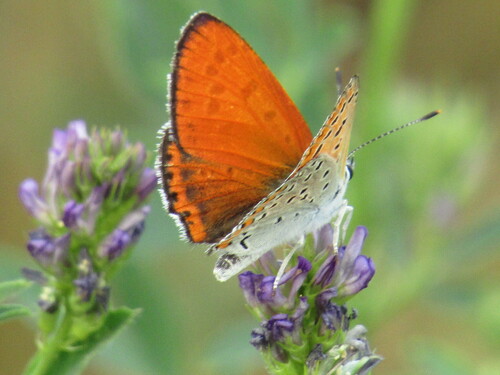
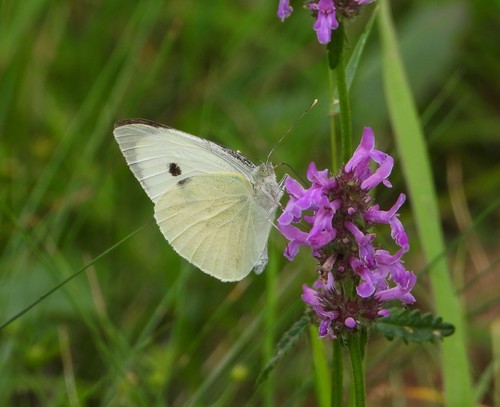
Large White
Daily sighting probability ~20% · Possible
at Jerusalem

In 3 days ~60% in a week ~80%

22 Verified sightings at Jerusalem
970 In all 14 parks From 2019 to 2026
December Best month
☀️ Diurnal When it's spotted

About the Large White

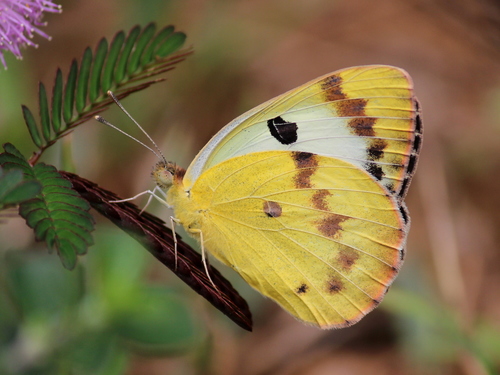
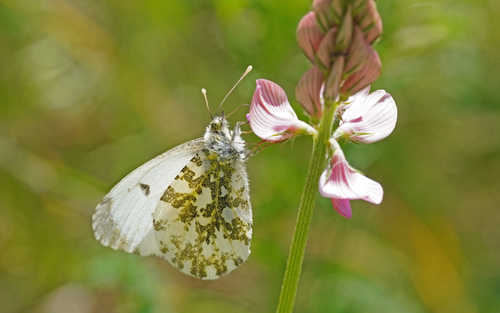
Pieris brassicae, the large white, also called cabbage butterfly, cabbage white, cabbage moth (erroneously), or in India the large cabbage white, is a butterfly in the family Pieridae. It is a close relative of the small white, Pieris rapae.

The large white is common throughout Europe, North Africa and Asia. The large white is common throughout Europe, north Africa, and Asia to the Himalayas often in agricultural areas, meadows and parkland. It has managed to establish a population in South Africa and in 1995 it was predicted to spread to Australia and New Zealand.

The large white is a strong flier and the British population has been reinforced in most years by migrations from the continent. Scattered reports of the large white from the north-eastern United States (New York, Rhode Island and Maine) over the past century are of a dubious nature and indicate either accidental transport or intentional release. Such introductions threaten to establish this agricultural pest in North America.

In 2010 the butterfly was found in Nelson, New Zealand where it is known as the great white butterfly. It is classed as an unwanted pest due to the potential effect on crops. For... Wikipedia →
Global Distribution

Parks Where Found

# Park Country Daily sighting probability
1 Aigüestortes National Park 🇪🇸 Spain
~30%
2 Table Mountain National Park 🇿🇦 South Africa
~20%
3 Snowdonia National Park 🇬🇧 United Kingdom
~20%
4 Mercantour National Park 🇫🇷 France
~20%
5 Sierra de Guadarrama National Park 🇪🇸 Spain
~20%
6 Sierra Nevada National Park 🇪🇸 Spain
~20%
7 Bavarian Forest National Park 🇩🇪 Germany
~10%
8 Ordesa y Monte Perdido National Park 🇪🇸 Spain
~10%
9 Cévennes National Park 🇫🇷 France
~10%
10 Pyrénées National Park 🇫🇷 France
~10%
11 Triglav National Park 🇸🇮 Slovenia
~10%
12 Garden Route National Park 🇿🇦 South Africa
~10%
13 Wadden Sea National Park 🇩🇪 Germany
~10%
14 Doñana National Park 🇪🇸 Spain
~10%

Cities Where Found

# City Country Daily sighting probability
1 Yerevan 🇦🇲 Armenia
~30%
2 Liverpool 🇬🇧 United Kingdom
~30%
3 Athens 🇬🇷 Greece
~30%
4 Cape Town 🇿🇦 South Africa
~30%
5 Jerusalem 🇮🇱 Israel
~20%
6 Birmingham 🇬🇧 United Kingdom
~20%
7 Santiago 🇨🇱 Chile
~20%
8 Antalya 🇹🇷 Turkey
~20%
9 Manchester 🇬🇧 United Kingdom
~20%
10 London 🇬🇧 United Kingdom
~20%

Before you go

What are the chances of seeing a Large White in Jerusalem?

Possible

About 20% of wildlife watchers report a Large White sighting in Jerusalem on a given day, based on 22 verified sightings from GBIF citizen-science data. It is the 16th most-seen of the 137 insects we can rate there. Over three days the chance rises to about 60%, and over a week to about 80%, if each day is a fresh chance.

When is the best time to see a Large White in Jerusalem?

May and December–January

In those months about 40% of wildlife watchers report a Large White in Jerusalem on a given day, against under 5% in March, July–August and October, the lowest months. Those are among Jerusalem's wettest months, with about 60 mm of rain a month against almost none in August.

What time of day is best to see a Large White?

Between 11 am and 2 pm

Across all the parks we cover, that three-hour window holds the most Large White sightings with a recorded time, and about 9 in 10 of them come between 6 am and 6 pm: it is a daytime animal.

Is Jerusalem the best place to see a Large White?

5th of 52

Of the 52 cities where we can rate Large White sightings, Jerusalem ranks 5th at about 20%. The best odds are in Yerevan (Armenia, about 30%), Liverpool (United Kingdom, about 30%) and Athens (Greece, about 30%).

Where does the Large White sighting chance come from?

GBIF citizen-science records

It is estimated from how often the Large White is recorded against all the insects logged in Jerusalem (22 verified sightings), calibrated against known sighting rates. Figures are rounded to the nearest 10% because citizen-science data supports honest approximations, not decimals, and months with records from fewer than five people show "—". How it works.

← Back to Jerusalem