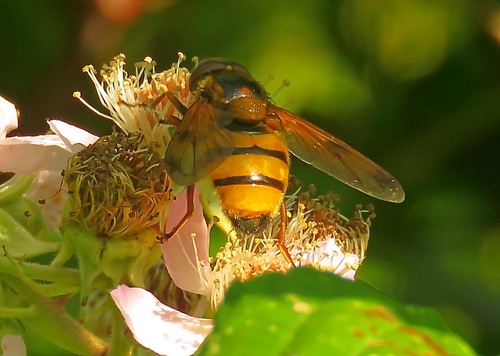
Migrant Hover Fly

Migrant Hover Fly

Eupeodes corollae

Daily sighting probability ~10% · With luck
at Leeds

In 3 days ~20% in a week ~40%

17 Verified sightings at Leeds
204 In all 10 parks From 2019 to 2026
June Best month
☀️ Diurnal When it's spotted

About the Migrant Hover Fly

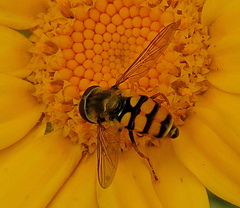
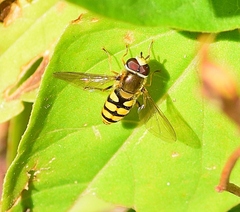
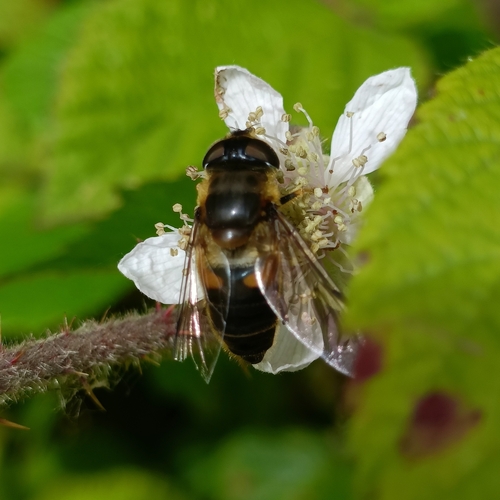
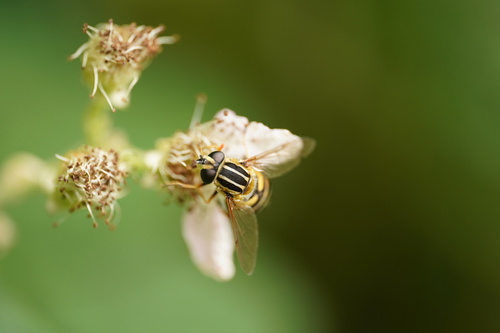
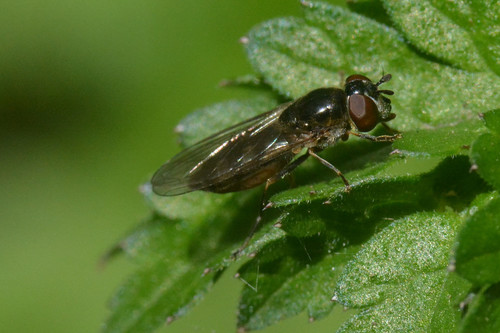
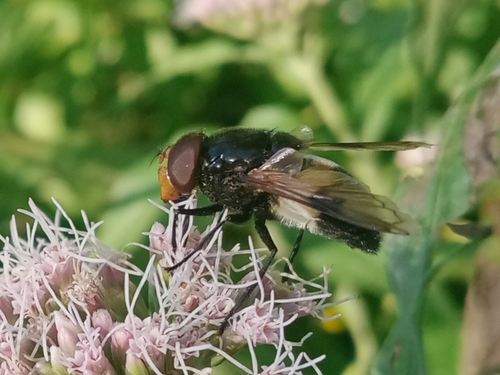
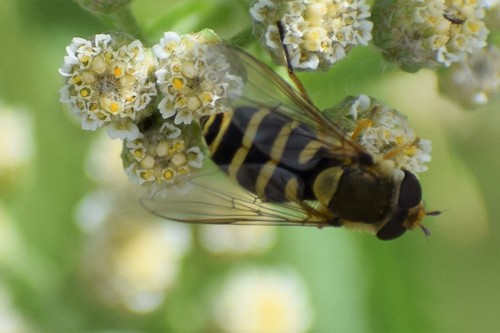
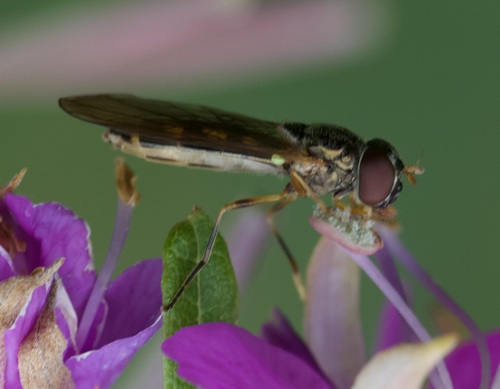
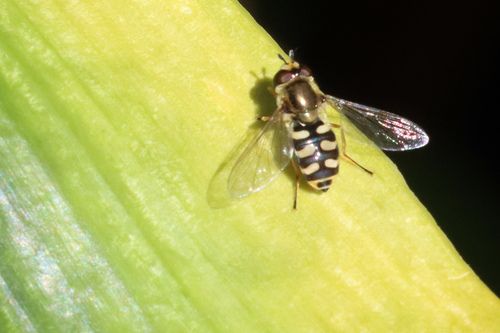
Eupeodes corollae is a very common European species of hoverfly. Adults are 6–11 millimetres (0.24–0.43 in) in body length. Males and females have different marking on the abdomen; males have square commas on tergites 3 and 4, whereas females have narrow commas. Larvae feed on aphids. This species has been used experimentally in glasshouses as a method of aphid control, and to control scale insects and aphids in fruit plantations.

E. corollae is found across Europe, North Africa and Asia. Adults are often migratory. External images For terms see Morphology of Diptera Wing length 5-8·25 mm. Male abdomen with pre-genital segment very large and conspicuous. Genitalia large. Yellow spots reach the side margin of tergites 3 and 4.Scutellum mainly yellow-haired. Female frons with white dust spots and junction between black ground colour and yellow spots straight.

The species is distributed in Afghanistan, Africa (as a whole), Bhutan, China, Japan, Pakistan, Europe (as a whole) and India. In India, the species is primarily distributed in the northern and north-eastern part of the country, comprising Assam, Arunachal Pradesh, Chhattisgarh, Himachal... Wikipedia →
Global Distribution

Parks Where Found

# Park Country Daily sighting probability
1 Sierra Nevada National Park 🇪🇸 Spain
~10%
2 Camargue 🇫🇷 France
~10%
3 Pyrénées National Park 🇫🇷 France
~10%
4 Wadden Sea National Park 🇩🇪 Germany
~10%
5 Sierra de Guadarrama National Park 🇪🇸 Spain
~10%
6 Addo Elephant National Park 🇿🇦 South Africa
~10%
7 Snowdonia National Park 🇬🇧 United Kingdom
~10%
8 Cévennes National Park 🇫🇷 France
~10%
9 Table Mountain National Park 🇿🇦 South Africa
<5%
10 Garden Route National Park 🇿🇦 South Africa
<5%

Cities Where Found

# City Country Daily sighting probability
1 Jerusalem 🇮🇱 Israel
~20%
2 Birmingham 🇬🇧 United Kingdom
~20%
3 Algiers 🇩🇿 Algeria
~20%
4 Kuwait City 🇰🇼 Kuwait
~10%
5 Liverpool 🇬🇧 United Kingdom
~10%
6 London 🇬🇧 United Kingdom
~10%
7 Tel Aviv 🇮🇱 Israel
~10%
8 Copenhagen 🇩🇰 Denmark
~10%
9 Tehran 🇮🇷 Iran
~10%
10 Madrid 🇪🇸 Spain
~10%

Before you go

What are the chances of seeing a Migrant Hover Fly in Leeds?

With luck

About 10% of wildlife watchers report a Migrant Hover Fly sighting in Leeds on a given day, based on 17 verified sightings from GBIF citizen-science data. It is the 108th most-seen of the 284 insects we can rate there. Over three days the chance rises to about 20%, and over a week to about 40%, if each day is a fresh chance.

When is the best time to see a Migrant Hover Fly in Leeds?

April and June–July

In those months about 10% of wildlife watchers report a Migrant Hover Fly in Leeds on a given day, against under 5% in May and August–March, the lowest months.

What time of day is best to see a Migrant Hover Fly?

Between 10 am and 1 pm

Across all the parks we cover, that three-hour window holds the most Migrant Hover Fly sightings with a recorded time, and about 9 in 10 of them come between 6 am and 6 pm: it is a daytime animal.

Is Leeds the best place to see a Migrant Hover Fly?

17th of 43

Of the 43 cities where we can rate Migrant Hover Fly sightings, Leeds ranks 17th at about 10%. The best odds are in Jerusalem (Israel, about 20%), Birmingham (United Kingdom, about 20%) and Algiers (Algeria, about 20%).

Where does the Migrant Hover Fly sighting chance come from?

GBIF citizen-science records

It is estimated from how often the Migrant Hover Fly is recorded against all the insects logged in Leeds (17 verified sightings), calibrated against known sighting rates. Figures are rounded to the nearest 10% because citizen-science data supports honest approximations, not decimals, and months with records from fewer than five people show "—". How it works.

← Back to Leeds