Peppered Moth

Peppered Moth

Biston betularia

Daily sighting probability ~20% · Possible
at Liverpool

In 3 days ~40% in a week ~70%

69 Verified sightings at Liverpool
383 In all 14 parks From 2019 to 2026
July Best month
🌅 Crepuscular When it's spotted

About the Peppered Moth

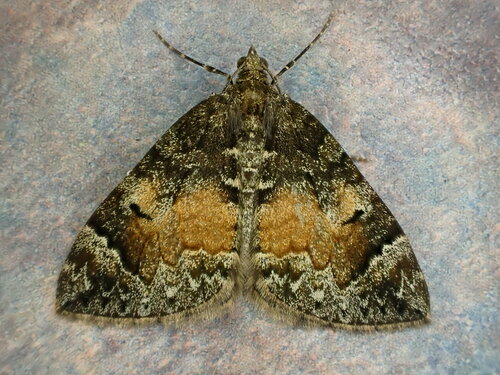
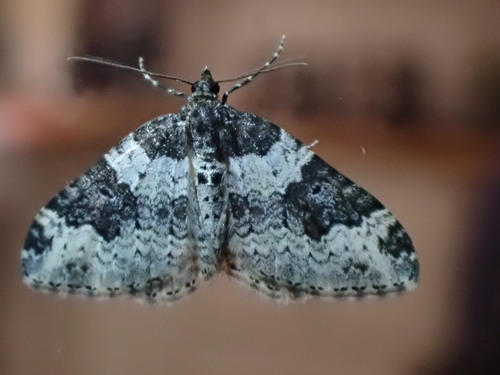
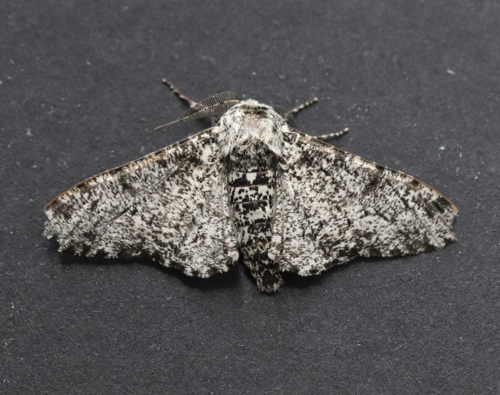
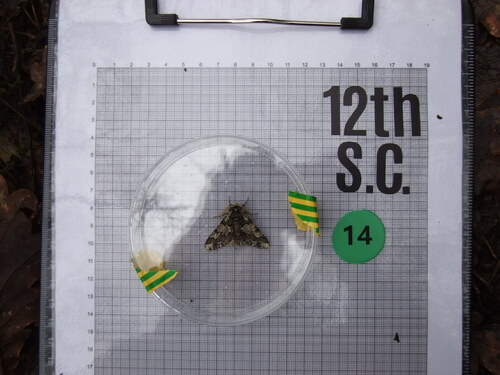
The peppered moth (Biston betularia) is a moth of the family Geometridae. It is night flying, and found mainly in temperate regions of the northern hemisphere. Peppered moth evolution is an example of population genetics and natural selection.

The caterpillars of the peppered moth not only mimic the form but also the colour of a twig. Recent research indicates that the caterpillars can sense the twig's colour with their skin and match their body colour to the background to protect themselves from predators.

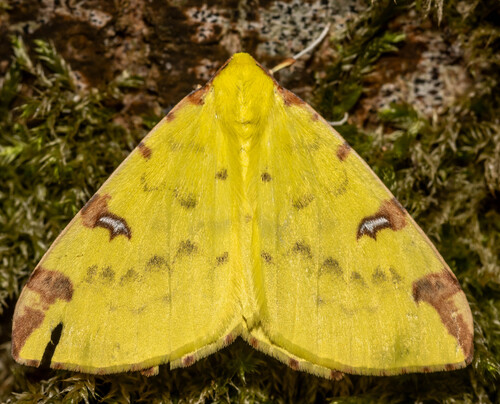
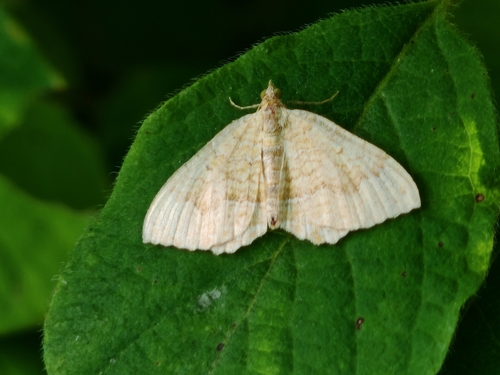
The wingspan ranges from 45 to 62 mm (1.8 to 2.4 in) with a median of 55 mm (2.2 in). It is relatively stout-bodied, with forewings relatively narrow-elongate. The wings are white, "peppered" with black, and with more-or-less distinct cross lines, also black. These transverse wing lines and "peppered" maculation (spotting) can also, in rare instances, be grey or brown; the spotting pattern, in particularly very rare cases, is sometimes a combination of brown and black/grey. The black speckling varies in amount, in some examples it is almost absent, whilst in others it is so dense that the wings appear to be black sprinkled with white. The antennae of males are strongly... Wikipedia →
Global Distribution

Parks Where Found

# Park Country Daily sighting probability
1 Snowdonia National Park 🇬🇧 United Kingdom
~20%
2 Nikko National Park 🇯🇵 Japan
~20%
3 Great Bear Rainforest 🇨🇦 Canada
~10%
4 Gros Morne National Park 🇨🇦 Canada
~10%
5 Wadden Sea National Park 🇩🇪 Germany
~10%
6 Vanoise National Park 🇫🇷 France
~10%
7 Pacific Rim National Park Reserve 🇨🇦 Canada
~10%
8 Bavarian Forest National Park 🇩🇪 Germany
~10%
9 Cairngorms National Park 🇬🇧 United Kingdom
~10%
10 Great Smoky Mountains National Park 🇺🇸 United States
~10%
11 Jasper National Park 🇨🇦 Canada
~10%
12 Shenandoah National Park 🇺🇸 United States
~10%
13 Acadia National Park 🇺🇸 United States
~10%
14 Pyrénées National Park 🇫🇷 France
~10%

Cities Where Found

# City Country Daily sighting probability
1 Liverpool 🇬🇧 United Kingdom
~20%
2 Birmingham 🇬🇧 United Kingdom
~10%
3 Manchester 🇬🇧 United Kingdom
~10%
4 Essen 🇩🇪 Germany
~10%
5 London 🇬🇧 United Kingdom
~10%
6 Berlin 🇩🇪 Germany
<5%
7 Helsinki 🇫🇮 Finland
<5%
8 Nizhny Novgorod 🇷🇺 Russia
<5%
9 Munich 🇩🇪 Germany
<5%
10 Copenhagen 🇩🇰 Denmark
<5%

Before you go

What are the chances of seeing a Peppered Moth in Liverpool?

Possible

About 20% of wildlife watchers report a Peppered Moth sighting in Liverpool on a given day, based on 69 verified sightings from GBIF citizen-science data. It is the 121st most-seen of the 632 insects we can rate there. Over three days the chance rises to about 40%, and over a week to about 70%, if each day is a fresh chance.

When is the best time to see a Peppered Moth in Liverpool?

June and July

In those months about 30% of wildlife watchers report a Peppered Moth in Liverpool on a given day, against under 5% in August to April, the lowest months.

What time of day is best to see a Peppered Moth?

Between 6 and 9 am

Across all the parks we cover, that three-hour window holds the most Peppered Moth sightings with a recorded time, and about 6 in 10 of them come between 6 am and 6 pm: it is most active around dawn and dusk.

Is Liverpool the best place to see a Peppered Moth?

Yes

Of the 17 cities where we can rate Peppered Moth sightings, Liverpool has the highest daily chance: about 20%. Next come Birmingham (United Kingdom, about 10%) and Manchester (United Kingdom, about 10%).

Where does the Peppered Moth sighting chance come from?

GBIF citizen-science records

It is estimated from how often the Peppered Moth is recorded against all the insects logged in Liverpool (69 verified sightings), calibrated against known sighting rates. Figures are rounded to the nearest 10% because citizen-science data supports honest approximations, not decimals, and months with records from fewer than five people show "—". How it works.

← Back to Liverpool