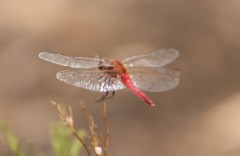
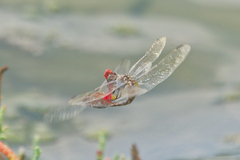
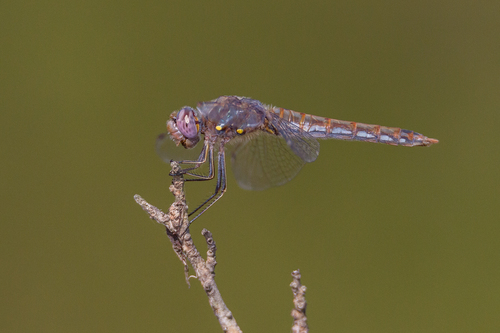
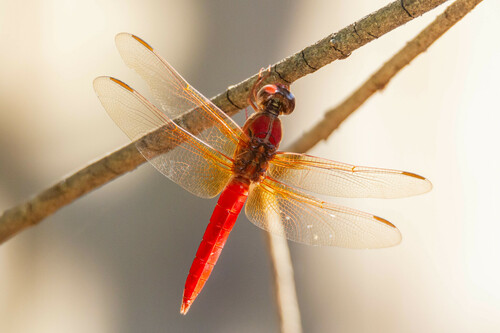
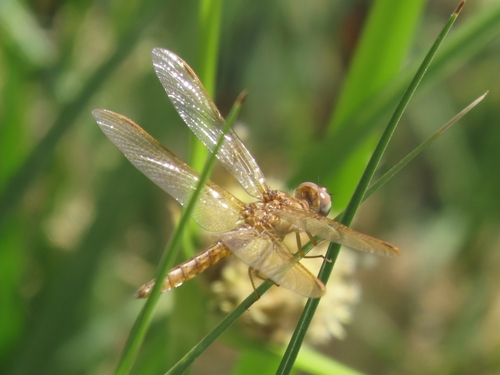
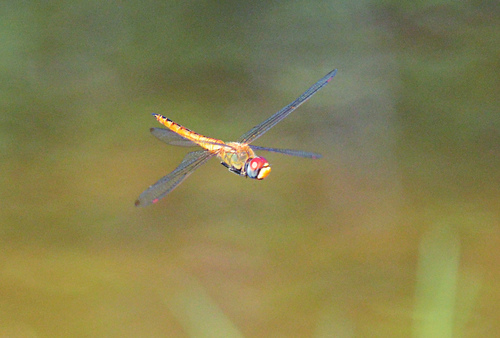
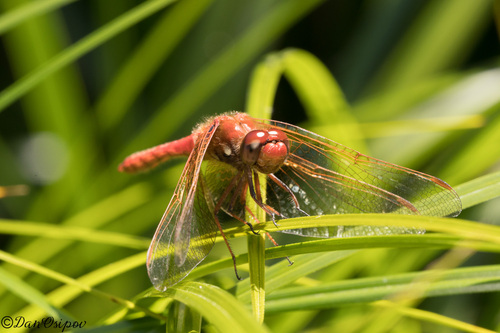
Red-Tailed Pennant

Red-Tailed Pennant

Brachymesia furcata

Daily sighting probability <5% · Rare
at Los Angeles

In 3 days ~10% in a week ~30%

187 Verified sightings at Los Angeles
41 In all 4 parks From 2019 to 2026
August Best month
☀️🌙 Day & Night When it's spotted

About the Red-Tailed Pennant

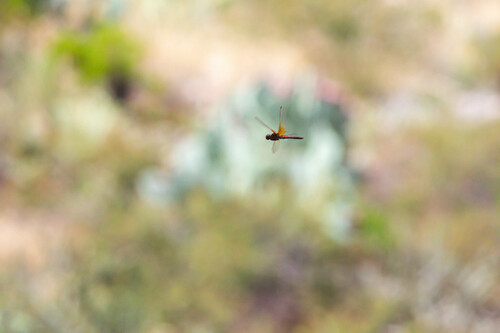
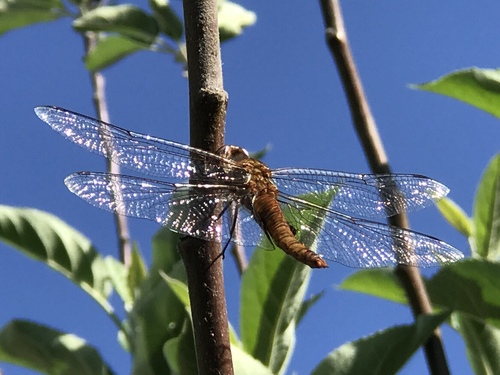
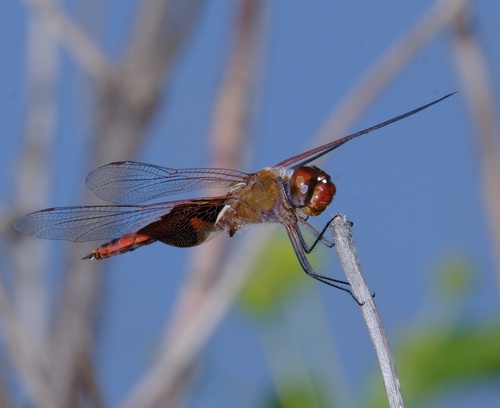
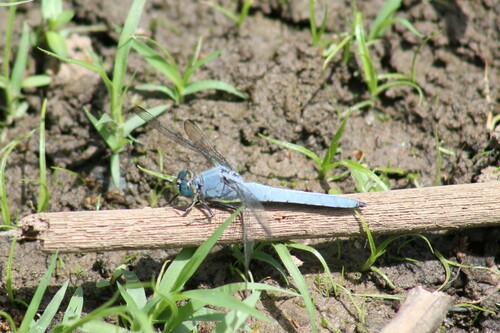
Brachymesia furcata, commonly known as the red-tailed pennant, is part of the dragonfly order Odonata. It is a species of skimmer belonging to Libellulidae, one of the largest dragonfly families in the world. Along with Brachymesia gravida and B. herbida, two closely related species within the same genus, B. furcata is often found in semi-aquatic habitats distributed throughout the Caribbean, the Americas, Argentina, West India, Mexico, and Puerto Rico. Current populations of B. furcata are stable. The IUCN conservation status of B. furcata designates the species as "least concern" as last reviewed in 2017.

Similar to other dragonflies, B. furcata has a life cycle consisting of three primary stages: egg, nymph, and adult. Its eggs are laid in still-water conditions on submerged aquatic plants or directly into the water depending on the environmental conditions. Marshes, ponds, lakes, and other mildly saline aquatic habitats are all potential locations for dragonflies to colonize. Bottom debris and aquatic vegetation provide both sustenance as well as hiding spots for the newly hatched dragonfly nymphs. After undergoing a few molts, the nymph transitions... Wikipedia →
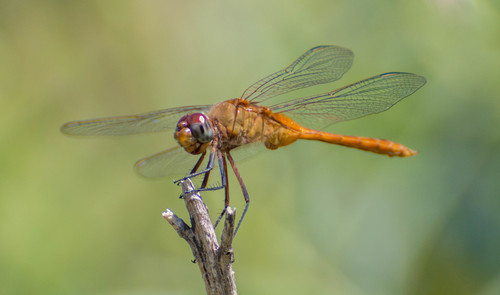

Global Distribution

Parks Where Found

# Park Country Daily sighting probability
1 Cerro Azul Meámbar National Park 🇭🇳 Honduras
~10%
2 Lago de Yojoa 🇭🇳 Honduras
~10%
3 Soberanía National Park 🇵🇦 Panama
~10%
4 Manu National Park 🇵🇪 Peru
~10%

Cities Where Found

# City Country Daily sighting probability
1 Santo Domingo 🇩🇴 Dominican Republic
~20%
2 Mesa 🇺🇸 United States
~20%
3 Lima 🇵🇪 Peru
~10%
4 Phoenix 🇺🇸 United States
~10%
5 Austin 🇺🇸 United States
~10%
6 Vitória 🇧🇷 Brazil
~10%
7 Buenos Aires 🇦🇷 Argentina
<5%
8 Houston 🇺🇸 United States
<5%
9 Los Angeles 🇺🇸 United States
<5%
10 San Diego 🇺🇸 United States
<5%

Before you go

What are the chances of seeing a Red-Tailed Pennant in Los Angeles?

Rare

Under 5% of wildlife watchers report a Red-Tailed Pennant sighting in Los Angeles on a given day, based on 187 verified sightings from GBIF citizen-science data. It is the 118th most-seen of the 851 insects we can rate there. Over three days the chance rises to about 10%, and over a week to about 30%, if each day is a fresh chance.

When is the best time to see a Red-Tailed Pennant in Los Angeles?

July to September

In those months about 10% of wildlife watchers report a Red-Tailed Pennant in Los Angeles on a given day, against under 5% in October to June, the lowest months. Those are among Los Angeles's driest months, with almost no rain against 75 mm in February.

What time of day is best to see a Red-Tailed Pennant?

Between 11 am and 2 pm

Across all the parks we cover, that three-hour window holds the most Red-Tailed Pennant sightings with a recorded time, and about 7 in 10 of them come between 6 am and 6 pm: it is seen both by day and at night.

Is Los Angeles the best place to see a Red-Tailed Pennant?

9th of 13

Of the 13 cities where we can rate Red-Tailed Pennant sightings, Los Angeles ranks 9th at under 5%. The best odds are in Santo Domingo (Dominican Republic, about 20%), Mesa (United States, about 20%) and Lima (Peru, about 10%).

Which relatives of the Red-Tailed Pennant live in Los Angeles?

Same family: Libellulidae

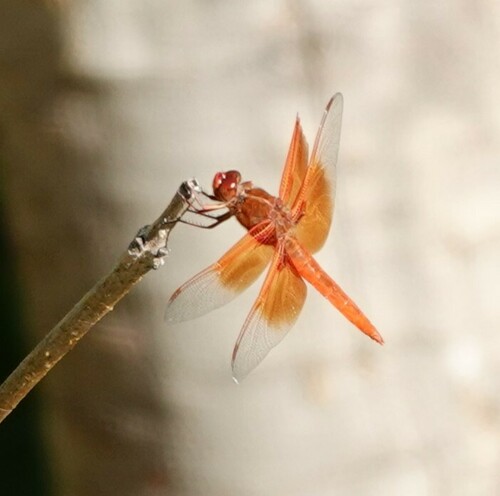
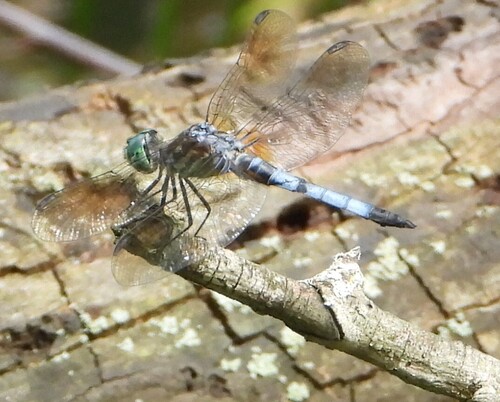
The closest relatives of the Red-Tailed Pennant that you can see in Los Angeles (family Libellulidae, Skimmers) are Flame Skimmer (about 10%), Blue Dasher (about 10%) and Variegated Meadowhawk (about 10%), with each one's daily chance of a sighting.

Where does the Red-Tailed Pennant sighting chance come from?

GBIF citizen-science records

It is estimated from how often the Red-Tailed Pennant is recorded against all the insects logged in Los Angeles (187 verified sightings), calibrated against known sighting rates. Figures are rounded to the nearest 10% because citizen-science data supports honest approximations, not decimals, and months with records from fewer than five people show "—". How it works.

← Back to Los Angeles