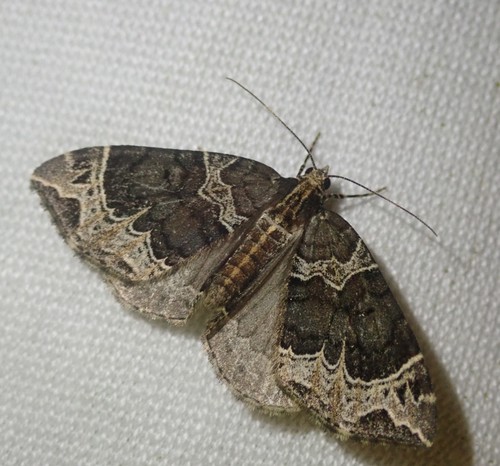
Silver-Ground Carpet

Silver-Ground Carpet

Xanthorhoe montanata

Daily sighting probability ~10% · With luck
at Manchester

In 3 days ~30% in a week ~50%

34 Verified sightings at Manchester
185 In all 11 parks From 2019 to 2026
June Best month
☀️🌙 Day & Night When it's spotted

About the Silver-Ground Carpet

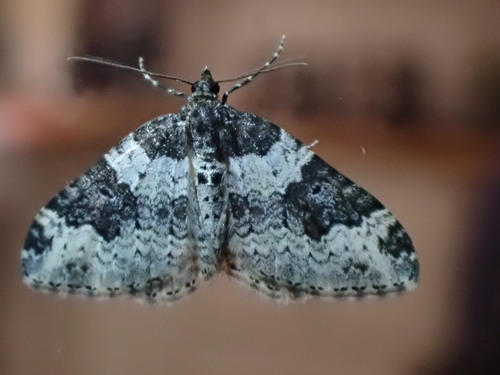
The silver-ground carpet (Xanthorhoe montanata) is a moth of the family Geometridae. The species was first described by Michael Denis and Ignaz Schiffermüller in 1775. It is common throughout the Palearctic region (from Ireland to the Russian Far East but not Japan) including the Near East and North Africa.It is found in a variety of different habitats and occurs, for example, in humid forests, moorland and shore areas, on embankments or on unimproved grass meadows and heathlands as well as in gardens.

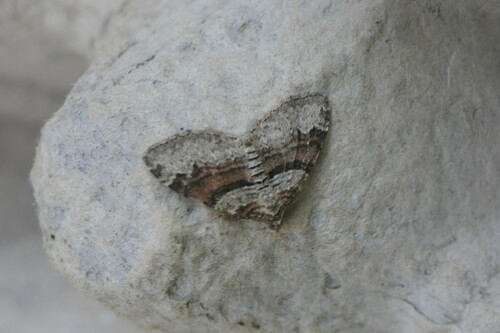
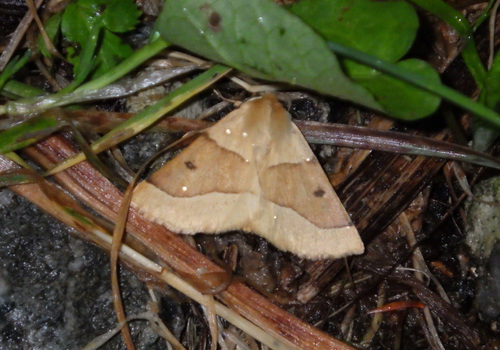
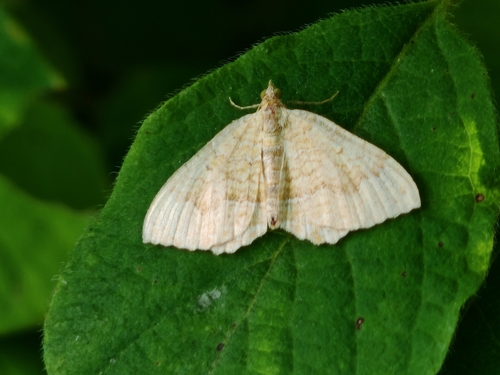
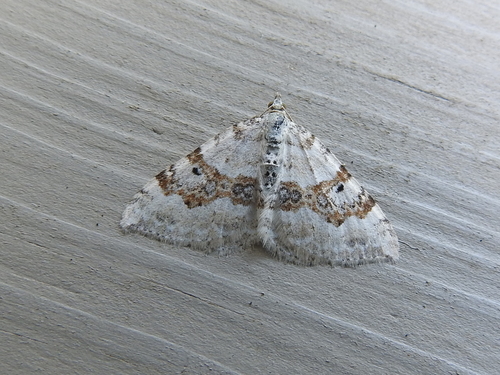
The wingspan is 29–33 mm although some northern races may be smaller. The forewings are white with a broad shaded band which varies from pale grey to almost black. The hindwings are also white with pale fascia and a small black discal spot.

In The Macrolepidoptera of the World Louis Beethoven Prout wrote: Another very variable species. In the typical form the median band is pale-centred and the distal area rather weakly marked. - In ab. fuscomarginata Stgr. both are broadly fuscous-margined, containing a distinct white subterminal line. In ab. continuata Krulik the median band is solid, brown or blackish, not interrupted by any white patch. — In ab. degenerata Prout the median area is narrowed and broken into two parts, a larger anterior and a smaller posterior.- ab. costimaculata Rbl. shows only the anterior half of the band. - ab. limbaria Hbn.is a more extreme development, with the band reduced to a very small patch on the discocellulars. - ab. unicolor Rbl. has the wings entirely suffused with smoky black, the median band of the forewing faintly indicated. Taken in S. Yorkshire.In addition to these casual aberrations montanata shows a strong tendency to the formation of local races. Staudinger considers fuscomarginata as such in the Pyrenees, Alps, etc. But in any case the following appear noteworthly: iberica Stgr. high elevations in the mountains of Castile and Andalusia, with the forewing white-yellowish, with less markings and these less distinct, the median band narrowed and more fuscous. - lapponica Stgr. from Northern Scandinavia and N. E. Siberia, a smaller, paler form with the markings (except the discal dot) quite weak. - ab. albicans Strand merely indicates the extreme specimens of lapponica, with the markings (except the discal dot) not or scarcely visible - shetlandica Weir, from the Shetland Islands, is of the same average size as lapponica, but forms a striking contrast to it. Wikipedia →
Global Distribution

Parks Where Found

# Park Country Daily sighting probability
1 Mercantour National Park 🇫🇷 France
~20%
2 Vanoise National Park 🇫🇷 France
~20%
3 Hohe Tauern National Park 🇦🇹 Austria
~20%
4 Cairngorms National Park 🇬🇧 United Kingdom
~10%
5 Aigüestortes National Park 🇪🇸 Spain
~10%
6 Snowdonia National Park 🇬🇧 United Kingdom
~10%
7 Ecrins National Park 🇫🇷 France
~10%
8 Triglav National Park 🇸🇮 Slovenia
~10%
9 Pyrénées National Park 🇫🇷 France
~10%
10 Bavarian Forest National Park 🇩🇪 Germany
~10%
11 Wadden Sea National Park 🇩🇪 Germany
<5%

Cities Where Found

# City Country Daily sighting probability
1 Manchester 🇬🇧 United Kingdom
~10%
2 Liverpool 🇬🇧 United Kingdom
~10%
3 Leeds 🇬🇧 United Kingdom
~10%
4 Helsinki 🇫🇮 Finland
<5%
5 Birmingham 🇬🇧 United Kingdom
<5%
6 London 🇬🇧 United Kingdom
<5%
7 Moscow 🇷🇺 Russia
<5%

Before you go

What are the chances of seeing a Silver-Ground Carpet in Manchester?

With luck

About 10% of wildlife watchers report a Silver-Ground Carpet sighting in Manchester on a given day, based on 34 verified sightings from GBIF citizen-science data. It is the 129th most-seen of the 458 insects we can rate there. Over three days the chance rises to about 30%, and over a week to about 50%, if each day is a fresh chance.

When is the best time to see a Silver-Ground Carpet in Manchester?

May and June

In those months about 20% of wildlife watchers report a Silver-Ground Carpet in Manchester on a given day, against under 5% in July to April, the lowest months.

What time of day is best to see a Silver-Ground Carpet?

Between 10 pm and 1 am

Across all the parks we cover, that three-hour window holds the most Silver-Ground Carpet sightings with a recorded time, and about 6 in 10 of them come between 6 am and 6 pm: it is seen both by day and at night.

Is Manchester the best place to see a Silver-Ground Carpet?

Yes

Of the 7 cities where we can rate Silver-Ground Carpet sightings, Manchester has the highest daily chance: about 10%. Next come Liverpool (United Kingdom, about 10%) and Leeds (United Kingdom, about 10%).

Which relatives of the Silver-Ground Carpet live in Manchester?

Same genus: Xanthorhoe

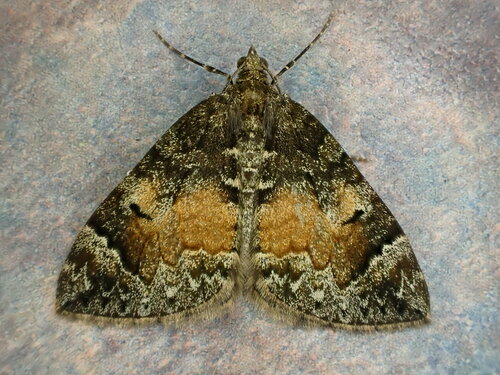
The closest relatives of the Silver-Ground Carpet that you can see in Manchester (genus Xanthorhoe) are Garden Carpet (about 10%) and Flame Carpet (about 10%), with each one's daily chance of a sighting.

Where does the Silver-Ground Carpet sighting chance come from?

GBIF citizen-science records

It is estimated from how often the Silver-Ground Carpet is recorded against all the insects logged in Manchester (34 verified sightings), calibrated against known sighting rates. Figures are rounded to the nearest 10% because citizen-science data supports honest approximations, not decimals, and months with records from fewer than five people show "—". How it works.

← Back to Manchester