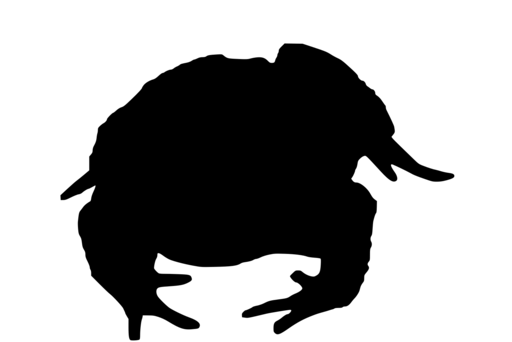
Red-spotted Toad

Red-spotted Toad

Anaxyrus punctatus

Silhouette: Michael Scroggie, from original photograph by Gary M. Stolz, USFWS (original photograph in public domain). · PhyloPic

LCLeast ConcernNTVUENCR
Daily sighting probability ~10% · With luck
at Mesa

In 3 days ~20% in a week ~40%

11 Verified sightings at Mesa
708 In all 10 parks From 2019 to 2026
May Best month
🌙 Nocturnal When it's spotted

About the Red-spotted Toad

The red-spotted toad (Anaxyrus punctatus), formerly Bufo punctatus, is a toad in the family Bufonidae found in the southwestern United States and northwestern Mexico. It is a small toad species growing to 3.7 to 7.5 cm (1.5 to 3.0 in) in length. It has a flattened head and body, and a light grey, olive or reddish brown dorsum with reddish or orange skin glands. It has a whitish or buff venter with or without faint dark spotting, and round parotoid glands. The snout is pointed. The juvenile toad looks similar to the adult, but has more prominent ventral spotting and the undersides of its feet are yellow. The male red-spotted toad has a dusky throat and develops nuptial pads during the breeding season.

It may hybridize with the western toad (Anaxyrus boreas) in some locations, possibly with other toad species too. It is docile and easily handled with little or no skin gland secretions. This toad is native to the southwestern United States and northwestern Mexico, especially Baja California. It occurs primarily along rocky streams and riverbeds, often in arid or semi-arid regions. It is very localized on the coastal slope, but widespread... Wikipedia →

Sounds

Recording0:24

United States · 2021

© Chris Harrison · iNaturalist · CC BY-NC 4.0

Recording1:08

United States · 2024

© ocnchikergirl · iNaturalist · CC BY-NC 4.0

Recording0:19

Mexico · 2022

© Bill Levine · iNaturalist · CC BY 4.0

Global Distribution

Parks Where Found

# Park Country Daily sighting probability
1 Saguaro National Park 🇺🇸 United States
~30%
2 Joshua Tree National Park 🇺🇸 United States
~30%
3 Grand Canyon National Park 🇺🇸 United States
~30%
4 Big Bend National Park 🇺🇸 United States
~30%
5 Guadalupe Mountains National Park 🇺🇸 United States
~20%
6 Death Valley National Park 🇺🇸 United States
~20%
7 El Vizcaíno Biosphere Reserve 🇲🇽 Mexico
~20%
8 Bahía de Loreto National Park 🇲🇽 Mexico
~10%
9 Zion National Park 🇺🇸 United States
~10%
10 Cumbres de Monterrey National Park 🇲🇽 Mexico
~10%

Cities Where Found

# City Country Daily sighting probability
1 Mesa 🇺🇸 United States
~10%
2 Phoenix 🇺🇸 United States
<5%

Zoos & Centres Where Found

# Zoo / Centre Country
1 Phoenix Zoo 🇺🇸 United States In captivity
2 Arizona-Sonora Desert Museum 🇺🇸 United States In captivity
3 The Living Planet Aquarium 🇺🇸 United States In captivity

Before you go

What are the chances of seeing a Red-spotted Toad in Mesa?

With luck

About 10% of wildlife watchers report a Red-spotted Toad sighting in Mesa on a given day, based on 11 verified sightings from GBIF citizen-science data. It is the 4th most-seen of the 6 amphibians we can rate there. Over three days the chance rises to about 20%, and over a week to about 40%, if each day is a fresh chance.

When is the best time to see a Red-spotted Toad in Mesa?

May–June, August–September and December

In those months about 10% of wildlife watchers report a Red-spotted Toad in Mesa on a given day, against under 5% in January–April, July and October–November, the lowest months.

What time of day is best to see a Red-spotted Toad?

Between 8 and 11 pm

Across all the parks we cover, that three-hour window holds the most Red-spotted Toad sightings with a recorded time, and about 8 in 10 of them come between 6 pm and 6 am: it is mostly seen at night.

Is Mesa the best place to see a Red-spotted Toad?

Yes

Of the 2 cities where we can rate Red-spotted Toad sightings, Mesa has the highest daily chance: about 10%. Next come Phoenix (United States, under 5%).

Where does the Red-spotted Toad sighting chance come from?

GBIF citizen-science records

It is estimated from how often the Red-spotted Toad is recorded against all the amphibians logged in Mesa (11 verified sightings), calibrated against known sighting rates. Figures are rounded to the nearest 10% because citizen-science data supports honest approximations, not decimals, and months with records from fewer than five people show "—". How it works.

← Back to Mesa