About the Blue-Fronted Dancer
The blue-fronted dancer (Argia apicalis) is a species of damselfly in the family Coenagrionidae, native to parts of North America. It was first described by the American zoologist Thomas Say in 1840. It is a common species with a wide range and the International Union for Conservation of Nature has assessed its conservation status as being of "least concern".
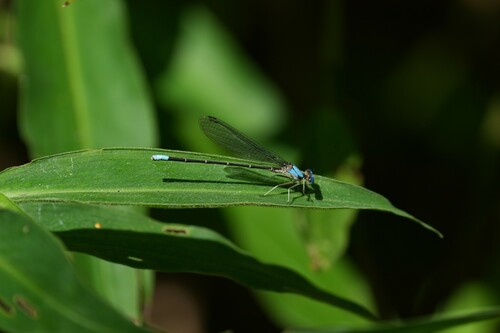
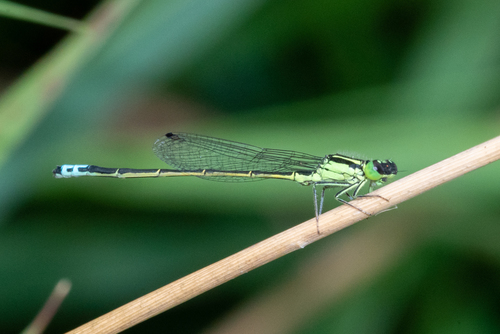
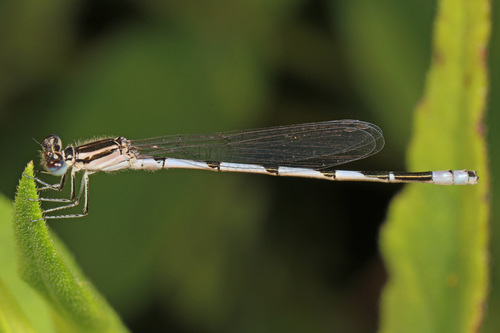
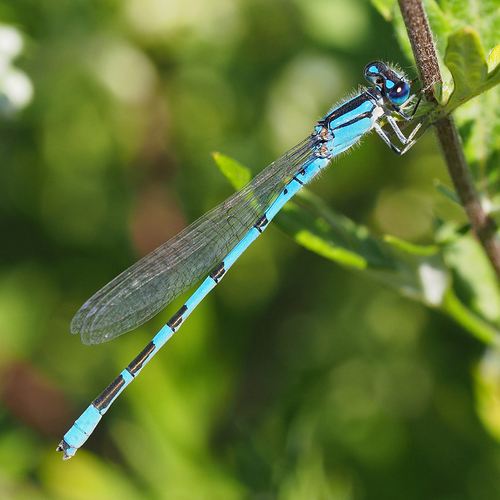
This damselfly ranges in length between about 33 and 40 mm (1.3 and 1.6 in). Most males have a blue thorax, the plates being separated by a few black lines, and also have a color-tipped abdomen, segments eight, nine and ten being bright blue. The remaining segments are dark brown. However the color of the thorax of Argia apicalis is variable and some males can be greyish-black rather than blue. They can change from one phase to the other and back again over the course of several days, with several intervening variations on the way; neither color phase seems to be particularly related to age or sexual maturity.
Females exhibit three thoracic color phases: brown, turquoise and grayish-black. Again the phase change often takes place in steps, and none of the phases seems to be associated with a particular age or... Wikipedia →