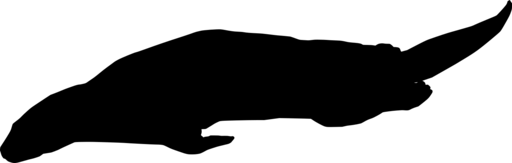
Northern River Otter

Northern River Otter

Lontra canadensis

Silhouette: Margot Michaud · PhyloPic

LCLeast ConcernNTVUENCR
Daily sighting probability ~10% · With luck
at Portland

In 3 days ~30% in a week ~50%

90 Verified sightings at Portland
644 In all 20 parks From 2019 to 2026
October Best month
☀️ Diurnal When it's spotted

About the Northern River Otter

The North American river otter (Lontra canadensis), also known as the northern river otter and river otter, is a semiaquatic mammal that is endemic to the North American continent throughout most of Canada and along the coasts of the United States and its inland waterways. An adult North American river otter can weigh between 5 and 14 kilograms (11–31 lb). The river otter is protected and insulated by a thick, water-repellent coat of fur.

The North American river otter, a member of the subfamily Lutrinae in the weasel family (Mustelidae), is equally versatile in the water and on land. It establishes a burrow close to the water's edge in river, lake, swamp, coastal shoreline, tidal flat, or estuary ecosystems. The den typically has many tunnel openings, one of which generally allows the otter to enter and exit the body of water. Females give birth in these burrows, producing litters of one to six young.

North American river otters, like most predators, prey upon the most readily accessible species. Fish is a favored food among the otters, but they also consume various amphibians (such as salamanders and frogs), freshwater clams, mussels, snails, small turtles, and crayfish. The most common fish consumed are perch, suckers, and catfish. Occasional reports also show the river otter eating other small animals, such as mice, squirrels, birds, and even dogs that they have attacked and drowned.

The range of the North American river otter has been significantly reduced by habitat loss, beginning with the European colonization of the Americas. In some regions, though, their population is controlled to allow the trapping and harvesting of otters for their fur. North American river otters are very susceptible to the effects of environmental pollution, which is a likely factor in the continued decline of their numbers. A number of reintroduction projects have been initiated to help halt the reduction in their overall population. Wikipedia →

Sounds

Chirps0:33

United States · 2025

© Valerie Heemstra · XC1056570 · CC BY-NC-SA 4.0

Recording0:20

United States · 2023

© Isaac Capp · iNaturalist · CC BY-NC 4.0

Recording0:16

Canada · 2025

© le0p0ld_d · iNaturalist · CC BY 4.0

Global Distribution

Parks Where Found

# Park Country Daily sighting probability
1 Isle Royale National Park 🇺🇸 United States
~40%
2 Redwood National Park 🇺🇸 United States
~30%
3 Voyageurs National Park 🇺🇸 United States
~30%
4 Congaree National Park 🇺🇸 United States
~30%
5 Great Bear Rainforest 🇨🇦 Canada
~30%
6 Pacific Rim National Park Reserve 🇨🇦 Canada
~20%
7 Olympic National Park 🇺🇸 United States
~20%
8 Gros Morne National Park 🇨🇦 Canada
~20%
9 Great Smoky Mountains National Park 🇺🇸 United States
~20%
10 Riding Mountain National Park 🇨🇦 Canada
~10%
11 Grand Teton National Park 🇺🇸 United States
~10%
12 Acadia National Park 🇺🇸 United States
~10%
13 Yellowstone National Park 🇺🇸 United States
~10%
14 Jasper National Park 🇨🇦 Canada
~10%
15 Merritt Island National Wildlife Refuge 🇺🇸 United States
~10%
16 Big Cypress National Preserve 🇺🇸 United States
~10%
17 Banff National Park 🇨🇦 Canada
~10%
18 Rocky Mountain National Park 🇺🇸 United States
~10%
19 Yosemite National Park 🇺🇸 United States
~10%
20 Everglades National Park 🇺🇸 United States
<5%

Cities Where Found

# City Country Daily sighting probability
1 Baltimore 🇺🇸 United States
~20%
2 Anchorage 🇺🇸 United States
~20%
3 Vancouver 🇨🇦 Canada
~10%
4 Seattle 🇺🇸 United States
~10%
5 Sacramento 🇺🇸 United States
~10%
6 Portland 🇺🇸 United States
~10%
7 Minneapolis [Saint Paul] 🇺🇸 United States
~10%
8 Orlando 🇺🇸 United States
~10%
9 Washington 🇺🇸 United States
<5%
10 Miami 🇺🇸 United States
<5%

Zoos & Centres Where Found

# Zoo / Centre Country
1 Busch Gardens Tampa 🇺🇸 United States In captivity
2 San Diego Zoo 🇺🇸 United States In captivity
3 Prague Zoo 🇨🇿 Czechia In captivity
4 National Zoological Park 🇺🇸 United States In captivity
5 Cleveland Metroparks Zoo 🇺🇸 United States In captivity
6 North Carolina Zoo 🇺🇸 United States In captivity
7 Tulsa Zoo 🇺🇸 United States In captivity
8 Ecomuseum Zoo 🇨🇦 Canada In captivity
9 Northwest Trek Wildlife Park 🇺🇸 United States In captivity
10 Zoo Sauvage de St-Félicien 🇨🇦 Canada In captivity
11 Zoo Miami 🇺🇸 United States In captivity
12 Toronto Zoo 🇨🇦 Canada In captivity
13 Minnesota Zoo 🇺🇸 United States In captivity
14 Columbus Zoo and Aquarium 🇺🇸 United States In captivity
15 Kansas City Zoo 🇺🇸 United States In captivity
16 Squam Lakes Natural Science Center 🇺🇸 United States In captivity
17 Brookfield Zoo 🇺🇸 United States In captivity
18 Omaha’s Henry Doorly Zoo and Aquarium 🇺🇸 United States In captivity
19 Milwaukee County Zoo 🇺🇸 United States In captivity
20 Shubenacadie Wildlife Park 🇨🇦 Canada In captivity
21 Cheyenne Mountain Zoo 🇺🇸 United States In captivity
22 Bearizona 🇺🇸 United States In captivity
23 Oakland Zoo 🇺🇸 United States In captivity
24 Slimbridge Wetland Centre 🇬🇧 United Kingdom In captivity
25 The Maryland Zoo 🇺🇸 United States In captivity
26 Detroit Zoo 🇺🇸 United States In captivity
27 Cape May County Park & Zoo 🇺🇸 United States In captivity
28 Central Florida Zoo and Botanical Gardens 🇺🇸 United States In captivity
29 Birmingham Zoo 🇺🇸 United States In captivity
30 Bear Country USA 🇺🇸 United States In captivity
31 Audubon Zoo 🇺🇸 United States In captivity
32 Dakota Zoo 🇺🇸 United States In captivity
33 Oklahoma City Zoo and Botanical Garden 🇺🇸 United States In captivity
34 ABQ BioPark: Zoo, Aquarium, Botanic Garden 🇺🇸 United States In captivity
35 West Virginia State Wildlife Center 🇺🇸 United States In captivity
36 Caldwell Zoo 🇺🇸 United States In captivity
37 Woodland Park Zoo 🇺🇸 United States In captivity
38 Calgary Zoo 🇨🇦 Canada In captivity
39 San Francisco Zoo 🇺🇸 United States In captivity
40 Tanganyika Wildlife Park 🇺🇸 United States In captivity
41 ZooTampa 🇺🇸 United States In captivity
42 Dickerson Park Zoo 🇺🇸 United States In captivity
43 Fort Worth Zoo 🇺🇸 United States In captivity
44 Oregon Zoo 🇺🇸 United States In captivity
45 Zoo Knoxville 🇺🇸 United States In captivity
46 Houston Zoo 🇺🇸 United States In captivity
47 Arizona-Sonora Desert Museum 🇺🇸 United States In captivity
48 Fort Wayne Children's Zoo 🇺🇸 United States In captivity
49 ABQ BioPark Zoo 🇺🇸 United States In captivity
50 Riverview Park & Zoo 🇨🇦 Canada In captivity

Before you go

What are the chances of seeing a Northern River Otter in Portland?

With luck

About 10% of wildlife watchers report a Northern River Otter sighting in Portland on a given day, based on 90 verified sightings from GBIF citizen-science data. It is the 13th most-seen of the 27 mammals we can rate there. Over three days the chance rises to about 30%, and over a week to about 50%, if each day is a fresh chance.

When is the best time to see a Northern River Otter in Portland?

September to November

In those months about 20% of wildlife watchers report a Northern River Otter in Portland on a given day, against under 5% in February and May, the lowest months.

What time of day is best to see a Northern River Otter?

Between 8 and 11 am

Across all the parks we cover, that three-hour window holds the most Northern River Otter sightings with a recorded time, and about 8 in 10 of them come between 6 am and 6 pm: it is a daytime animal.

Is Portland the best place to see a Northern River Otter?

6th of 14

Of the 14 cities where we can rate Northern River Otter sightings, Portland ranks 6th at about 10%. The best odds are in Baltimore (United States, about 20%), Anchorage (United States, about 20%) and Vancouver (Canada, about 10%).

Which relatives of the Northern River Otter live in Portland?

Same order: Carnivora

The closest relatives of the Northern River Otter that you can see in Portland (order Carnivora, Carnivorans) are Common Raccoon (about 20%), Coyote (about 20%) and Striped Skunk (about 10%), with each one's daily chance of a sighting.

Where does the Northern River Otter sighting chance come from?

GBIF citizen-science records

It is estimated from how often the Northern River Otter is recorded against all the mammals logged in Portland (90 verified sightings), calibrated against known sighting rates. Figures are rounded to the nearest 10% because citizen-science data supports honest approximations, not decimals, and months with records from fewer than five people show "—". How it works.

← Back to Portland