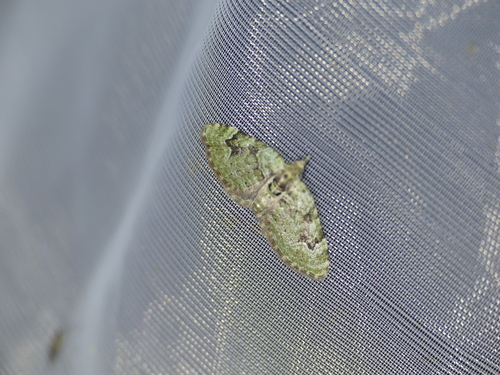
Double-Striped Pug

Double-Striped Pug

Gymnoscelis rufifasciata

Daily sighting probability ~20% · Possible
at Porto

In 3 days ~60% in a week ~90%

375 Verified sightings at Porto
214 In all 9 parks From 2019 to 2026
October Best month
☀️🌙 Day & Night When it's spotted

About the Double-Striped Pug

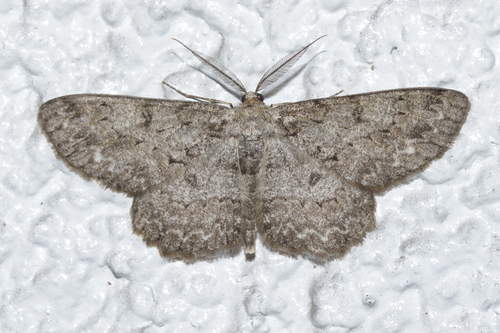
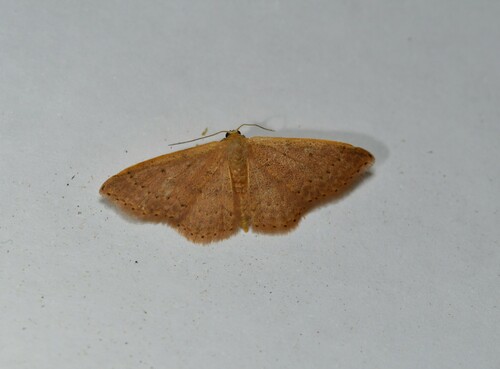
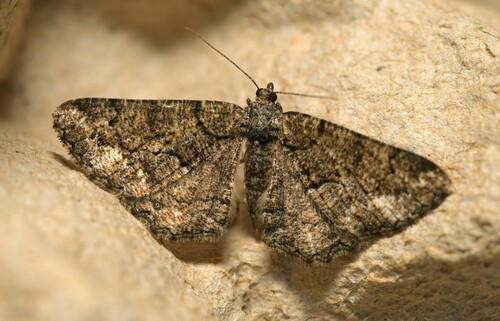
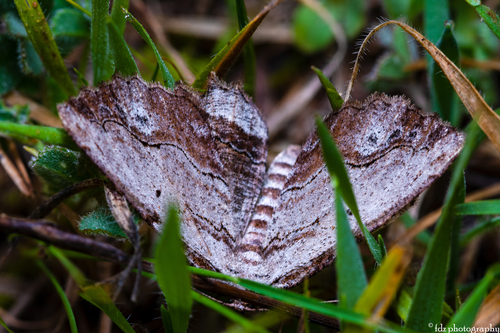
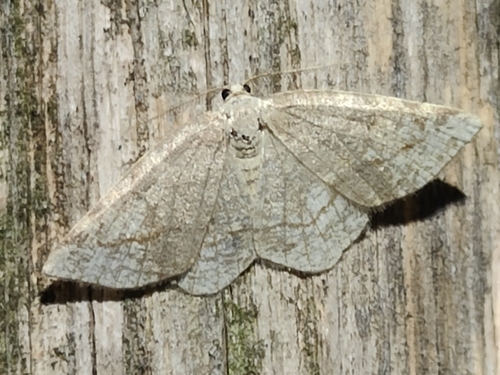
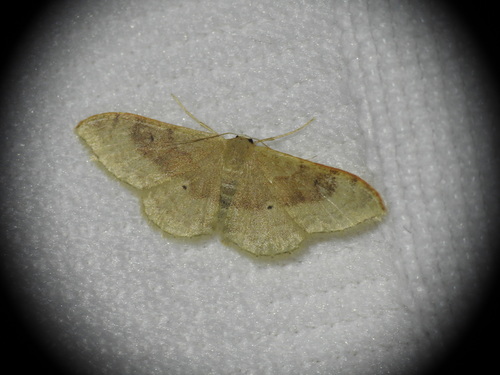
The double-striped pug (Gymnoscelis rufifasciata) is a moth of the family Geometridae. It is a widespread and common species, being found throughout the Palearctic region, including the Near East and North Africa. This is a variable species but always easy to recognize due to the two prominent dark fascia across each forewing which give the species its common name. The forewing ground colour ranges from light to dark reddish brown. The crosslines are distinct. The inner margin of the pale white sub-marginal line bears black marks. The hindwings are pale grey with darker fringes, darker lines and a small black discal spot. There is a dark band across the basal segments of the abdomen. The wingspan is 15–19 mm.

The caterpillars reach a length of up to 17 millimeters and have a very variable basic colouration. It ranges from whitish to yellowish green, brown, red to purple. On the back there is a pale band marked with a series of dark diamonds or triangles. The drawing resembles a rear-facing trident, is sometimes crow-foot-like and can occasionally be only weakly formed. The head is yellowish brown.

Two, sometimes three, broods are produced each year and the adults are on the wing in April and May (sometimes earlier), July and August, and sometimes later in the autumn. Later broods are more heavily marked. It flies at night and is attracted to light and flowers, both of its food plants and others.

The larva feeds on the flowers of a huge range of plants (see list below) and has also been known to feed on the larvae of other lepidoptera. The species overwinters as a pupa. Wikipedia →

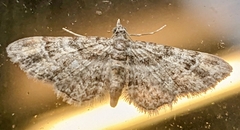
Global Distribution

Parks Where Found

# Park Country Daily sighting probability
1 Snowdonia National Park 🇬🇧 United Kingdom
~20%
2 Sierra Nevada National Park 🇪🇸 Spain
~20%
3 Cévennes National Park 🇫🇷 France
~10%
4 Mercantour National Park 🇫🇷 France
~10%
5 Pyrénées National Park 🇫🇷 France
~10%
6 Wadden Sea National Park 🇩🇪 Germany
~10%
7 Cairngorms National Park 🇬🇧 United Kingdom
~10%
8 Bavarian Forest National Park 🇩🇪 Germany
~10%
9 Sierra de Guadarrama National Park 🇪🇸 Spain
<5%

Cities Where Found

# City Country Daily sighting probability
1 Liverpool 🇬🇧 United Kingdom
~30%
2 Porto 🇵🇹 Portugal
~20%
3 London 🇬🇧 United Kingdom
~20%
4 Valencia 🇪🇸 Spain
~20%
5 Madrid 🇪🇸 Spain
~10%
6 Essen 🇩🇪 Germany
~10%
7 Birmingham 🇬🇧 United Kingdom
~10%
8 Izmir 🇹🇷 Turkey
~10%
9 Rome 🇮🇹 Italy
~10%
10 Copenhagen 🇩🇰 Denmark
~10%

Before you go

What are the chances of seeing a Double-Striped Pug in Porto?

Possible

About 20% of wildlife watchers report a Double-Striped Pug sighting in Porto on a given day, based on 375 verified sightings from GBIF citizen-science data. It is the 3rd most-seen of the 498 insects we can rate there. Over three days the chance rises to about 60%, and over a week to about 90%, if each day is a fresh chance.

When is the best time to see a Double-Striped Pug in Porto?

February and June–October

In those months about 30% of wildlife watchers report a Double-Striped Pug in Porto on a given day, against about 10% in March and December–January, the lowest months.

What time of day is best to see a Double-Striped Pug?

Between 10 pm and 1 am

Across all the parks we cover, that three-hour window holds the most Double-Striped Pug sightings with a recorded time, and about half of them come between 6 am and 6 pm: it is seen both by day and at night.

Is Porto the best place to see a Double-Striped Pug?

2nd of 35

Of the 35 cities where we can rate Double-Striped Pug sightings, Porto ranks 2nd at about 20%. The best odds are in Liverpool (United Kingdom, about 30%).

Which relatives of the Double-Striped Pug live in Porto?

Same family: Geometridae

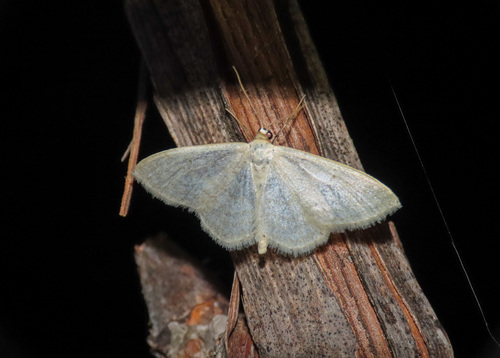
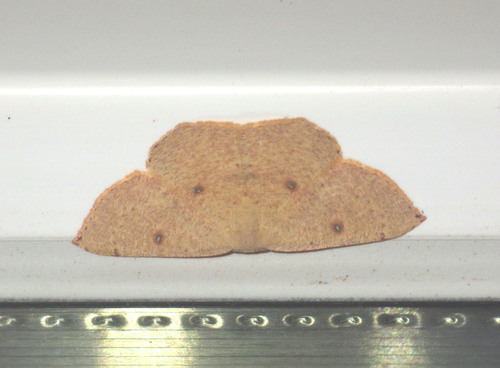
The closest relatives of the Double-Striped Pug that you can see in Porto (family Geometridae, Geometer Moths) are Vestal (about 20%), Pale Oak Beauty (about 20%) and Riband Wave (about 20%), with each one's daily chance of a sighting.

Where does the Double-Striped Pug sighting chance come from?

GBIF citizen-science records

It is estimated from how often the Double-Striped Pug is recorded against all the insects logged in Porto (375 verified sightings), calibrated against known sighting rates. Figures are rounded to the nearest 10% because citizen-science data supports honest approximations, not decimals, and months with records from fewer than five people show "—". How it works.

← Back to Porto