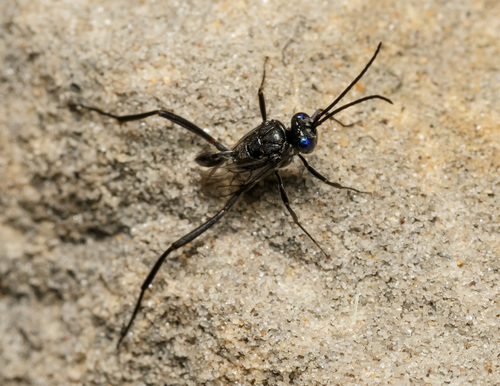
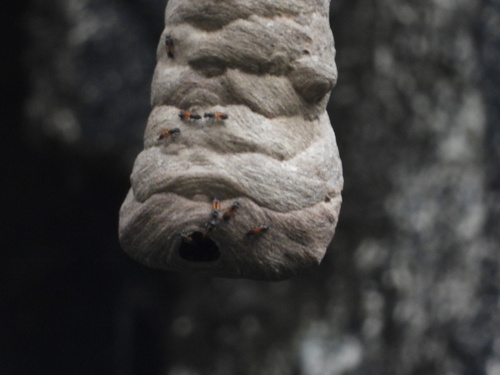
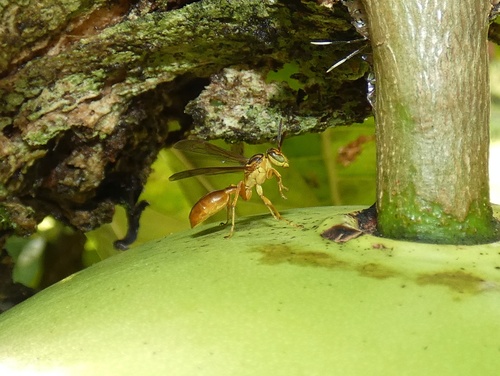
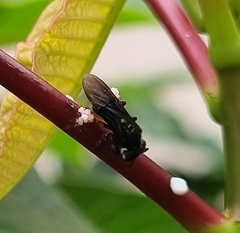
Spiny-Legged Stingless Bee

Spiny-Legged Stingless Bee

Trigona spinipes

Daily sighting probability ~10% · With luck
at Rio de Janeiro

In 3 days ~30% in a week ~60%

47 Verified sightings at Rio de Janeiro
79 In all 6 parks From 2019 to 2026
July Best month
☀️ Diurnal When it's spotted

About the Spiny-Legged Stingless Bee

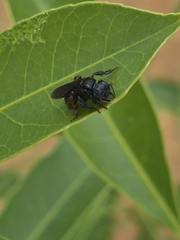
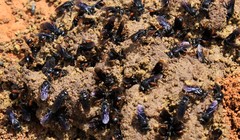
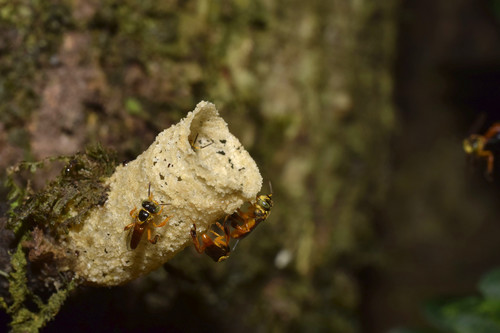
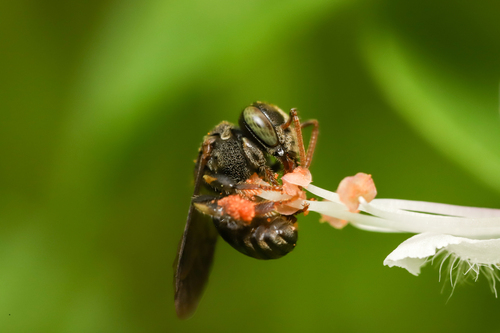
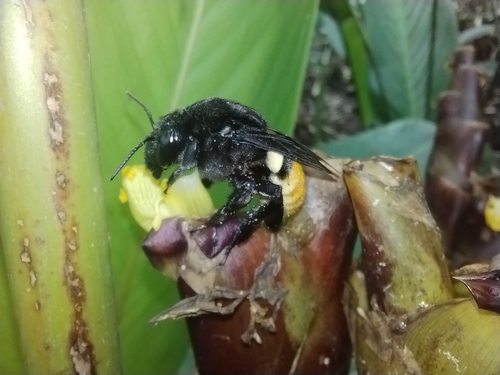
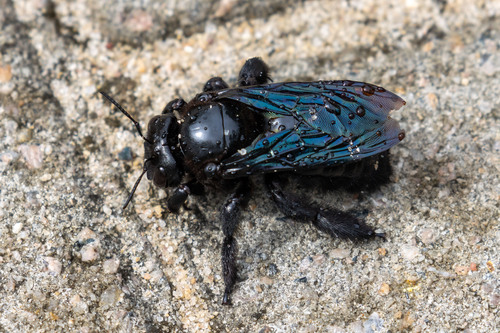
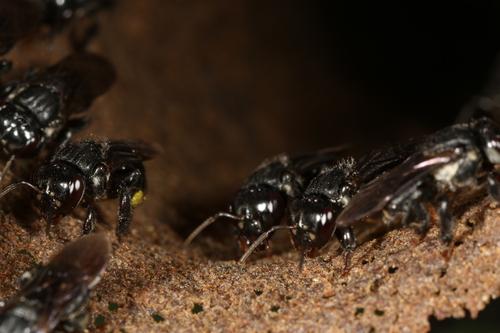
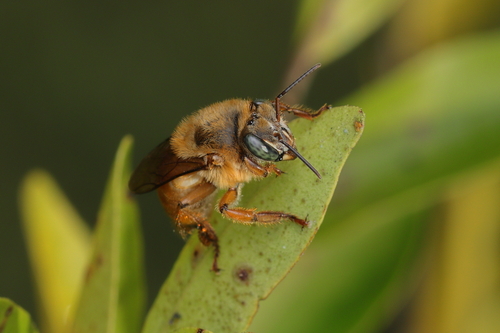
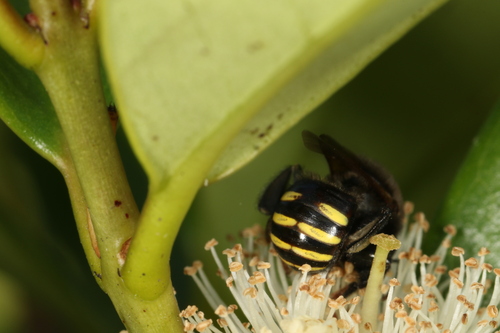
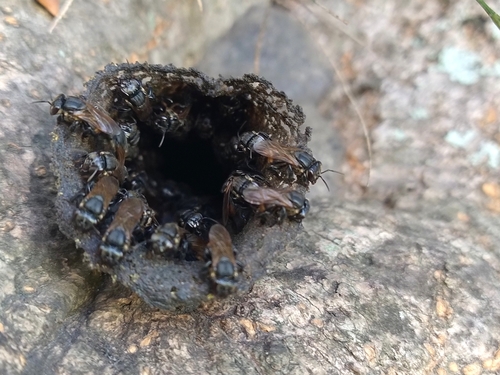
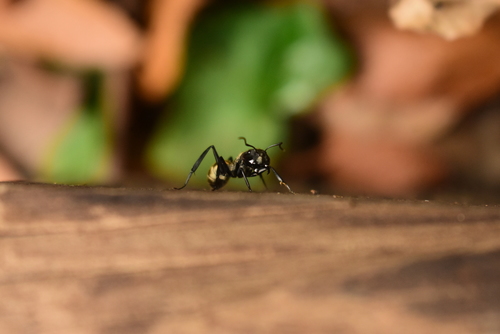
Trigona spinipes is a species of stingless bee. It occurs in Brazil, where it is called arapuá, aripuá, irapuá, japurá or abelha-cachorro ("dog-bee"). The species name means "spiny feet" in Latin. Trigona spinipes builds its nest on trees (or on buildings and other human structures), out of mud, resin, wax, and assorted debris, including dung. Therefore, its honey is not fit for consumption, even though it is reputed to be of good quality by itself, and is used in folk medicine. Colonies may have from 5,000 to over 100,000 workers.

T. spinipes will attack in swarms when they feel the nest is threatened. They cannot sting, and their bite is not very effective. Their main weapon against predatory animals, including human beings, is to entangle themselves in the victim's hair and buzz loudly. They will also aggressively penetrate human bodily openings such as nasal and auditory orifices when in attack mode.

T. spinipes uses odor trails, sometimes extending several hundred metres, in order to lead nestmates from the hive to a food source. Moreover, it can "eavesdrop" on chemical signals used by other bee species (such as carpenter bees, Africanized honeybees and other stingless bees) for the same purpose, killing them or driving them away to take over their food source.

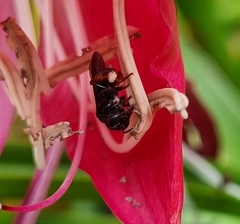
The bee has been considered an agricultural pest for some crops, such as passion fruit, because it damages leaves and flowers while collecting nest materials, and tunnels through the unopened flowers to collect the nectar (thus frustrating their normal pollinators). On the other hand, they are significant pollinators on their own, e.g. for onions. Wikipedia →
Global Distribution

Parks Where Found

# Park Country Daily sighting probability
1 Chapada Diamantina National Park 🇧🇷 Brazil
~20%
2 Serra dos Órgãos National Park 🇧🇷 Brazil
~20%
3 Itatiaia National Park 🇧🇷 Brazil
~10%
4 Tijuca National Park 🇧🇷 Brazil
~10%
5 Iguazú National Park 🇦🇷 Argentina
~10%
6 Iguaçu National Park 🇧🇷 Brazil
~10%

Cities Where Found

# City Country Daily sighting probability
1 Fortaleza 🇧🇷 Brazil
~30%
2 Salvador 🇧🇷 Brazil
~30%
3 Recife 🇧🇷 Brazil
~30%
4 Curitiba 🇧🇷 Brazil
~30%
5 São Paulo 🇧🇷 Brazil
~20%
6 Niterói 🇧🇷 Brazil
~20%
7 Brasilia 🇧🇷 Brazil
~20%
8 João Pessoa 🇧🇷 Brazil
~20%
9 Maceió 🇧🇷 Brazil
~20%
10 Goiânia 🇧🇷 Brazil
~10%

Before you go

What are the chances of seeing a Spiny-Legged Stingless Bee in Rio de Janeiro?

With luck

About 10% of wildlife watchers report a Spiny-Legged Stingless Bee sighting in Rio de Janeiro on a given day, based on 47 verified sightings from GBIF citizen-science data. It is the 9th most-seen of the 169 insects we can rate there. Over three days the chance rises to about 30%, and over a week to about 60%, if each day is a fresh chance.

When is the best time to see a Spiny-Legged Stingless Bee in Rio de Janeiro?

June and July

In those months about 20% of wildlife watchers report a Spiny-Legged Stingless Bee in Rio de Janeiro on a given day, against about 10% in August to May, the lowest months. Those are among Rio de Janeiro's driest months, with about 45 mm of rain a month against 230 mm in December.

What time of day is best to see a Spiny-Legged Stingless Bee?

Between 8 and 11 am

Across all the parks we cover, that three-hour window holds the most Spiny-Legged Stingless Bee sightings with a recorded time, and about 9 in 10 of them come between 6 am and 6 pm: it is a daytime animal.

Is Rio de Janeiro the best place to see a Spiny-Legged Stingless Bee?

11th of 15

Of the 15 cities where we can rate Spiny-Legged Stingless Bee sightings, Rio de Janeiro ranks 11th at about 10%. The best odds are in Fortaleza (Brazil, about 30%), Salvador (Brazil, about 30%) and Recife (Brazil, about 30%).

Which relatives of the Spiny-Legged Stingless Bee live in Rio de Janeiro?

Same family: Apidae

The closest relatives of the Spiny-Legged Stingless Bee that you can see in Rio de Janeiro (family Apidae, Honey Bees, Bumble Bees, and Allies) are Narrow Stingless Bee (about 20%), Nannotrigona testaceicornis (about 10%) and Belted Orchid Bee (about 10%), with each one's daily chance of a sighting.

Where does the Spiny-Legged Stingless Bee sighting chance come from?

GBIF citizen-science records

It is estimated from how often the Spiny-Legged Stingless Bee is recorded against all the insects logged in Rio de Janeiro (47 verified sightings), calibrated against known sighting rates. Figures are rounded to the nearest 10% because citizen-science data supports honest approximations, not decimals, and months with records from fewer than five people show "—". How it works.

← Back to Rio de Janeiro