

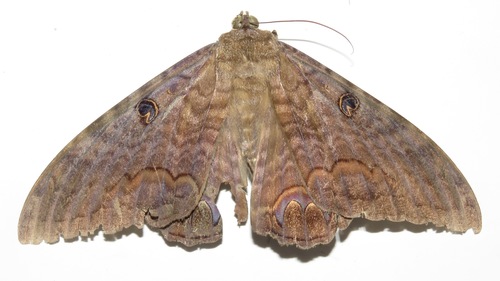

Arizona Mantis

Arizona Mantis

Stagmomantis limbata

Daily sighting probability ~10% · With luck
at San Luis Potosí

In 3 days ~20% in a week ~50%

9 Verified sightings at San Luis Potosí
123 In all 5 parks From 2019 to 2026
April Best month
☀️ Diurnal When it's spotted

About the Arizona Mantis

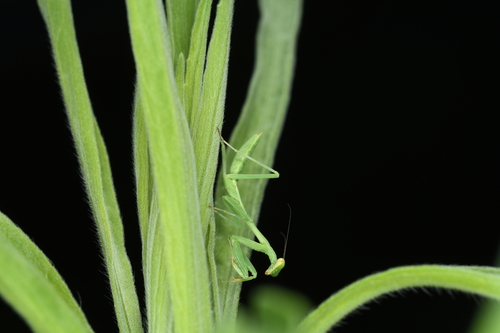
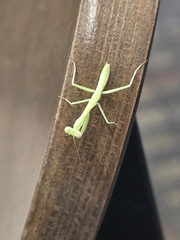
Stagmomantis limbata, common name bordered mantis, bosque mantis, Arizona mantis, or New Mexico praying mantis, is a species of praying mantis native to North America, most prevalent in the south-western United States. This beneficial insect is green or beige in color and grows up to around 3 inches long.

Stagmomantis limbata are attracted to lights, and males often fly to lights in numbers, but females are unable to fly. S. limbata is one of the largest mantids native to North America, though it is much smaller than some African and Asian mantids such as species in the genera Sphodromantis and Hierodula. Females grow to 3 inches in body length, while males grow to about 2 inches. This makes them larger than other species in their genus, such as S. carolina. The facial plate (below and between antennae) is about twice as wide as it is long, typical of the genus, though the eyes are not as protruding as the Carolina Mantid's. Both males and females of this species are separated by nearly all others in Stagmomantis (except for S. montana) by their blue labrum.

Females are most often fairly plain green (often with a yellowish abdomen), but sometimes gray... Wikipedia →

Global Distribution

Parks Where Found

# Park Country Daily sighting probability
1 Guadalupe Mountains National Park 🇺🇸 United States
~20%
2 Sequoia and Kings Canyon National Parks 🇺🇸 United States
~10%
3 Saguaro National Park 🇺🇸 United States
~10%
4 Zion National Park 🇺🇸 United States
~10%
5 Big Bend National Park 🇺🇸 United States
~10%

Cities Where Found

# City Country Daily sighting probability
1 Sacramento 🇺🇸 United States
~30%
2 Los Angeles 🇺🇸 United States
~30%
3 San Diego 🇺🇸 United States
~10%
4 San Francisco 🇺🇸 United States
~10%
5 San Luis Potosí 🇲🇽 México
~10%
6 Puebla 🇲🇽 México
~10%
7 Mexico City 🇲🇽 México
~10%
8 Denver 🇺🇸 United States
<5%
9 Phoenix 🇺🇸 United States
<5%
10 San Antonio 🇺🇸 United States
<5%

Before you go

What are the chances of seeing an Arizona Mantis in San Luis Potosí?

With luck

About 10% of wildlife watchers report an Arizona Mantis sighting in San Luis Potosí on a given day, based on 9 verified sightings from GBIF citizen-science data. It is the 47th most-seen of the 91 insects we can rate there. Over three days the chance rises to about 20%, and over a week to about 50%, if each day is a fresh chance.

When is the best time to see an Arizona Mantis in San Luis Potosí?

April and November

In those months about 20% of wildlife watchers report an Arizona Mantis in San Luis Potosí on a given day, against under 5% in January–March and June–August, the lowest months. Those are among San Luis Potosí's driest months, with about 10 mm of rain a month against 110 mm in July.

What time of day is best to see an Arizona Mantis?

Between 9 am and noon

Across all the parks we cover, that three-hour window holds the most Arizona Mantis sightings with a recorded time, and about 7 in 10 of them come between 6 am and 6 pm: it is a daytime animal.

Is San Luis Potosí the best place to see an Arizona Mantis?

5th of 12

Of the 12 cities where we can rate Arizona Mantis sightings, San Luis Potosí ranks 5th at about 10%. The best odds are in Sacramento (United States, about 30%), Los Angeles (United States, about 30%) and San Diego (United States, about 10%).

Where does the Arizona Mantis sighting chance come from?

GBIF citizen-science records

It is estimated from how often the Arizona Mantis is recorded against all the insects logged in San Luis Potosí (9 verified sightings), calibrated against known sighting rates. Figures are rounded to the nearest 10% because citizen-science data supports honest approximations, not decimals, and months with records from fewer than five people show "—". How it works.

← Back to San Luis Potosí