West Coast Lady

West Coast Lady

Vanessa annabella

Daily sighting probability ~20% · Possible
at San Luis Potosí

In 3 days ~40% in a week ~70%

24 Verified sightings at San Luis Potosí
186 In all 10 parks From 2019 to 2026
November Best month
☀️ Diurnal When it's spotted

About the West Coast Lady

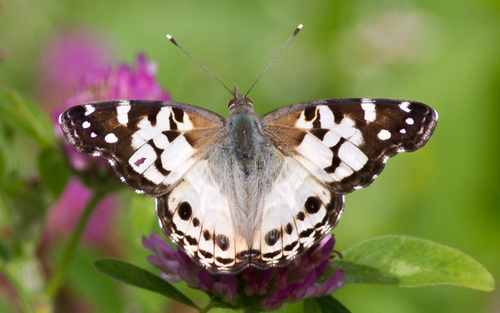
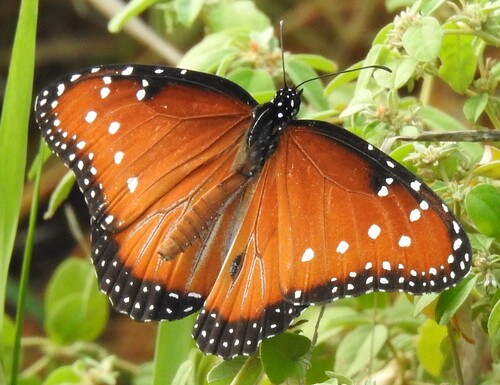
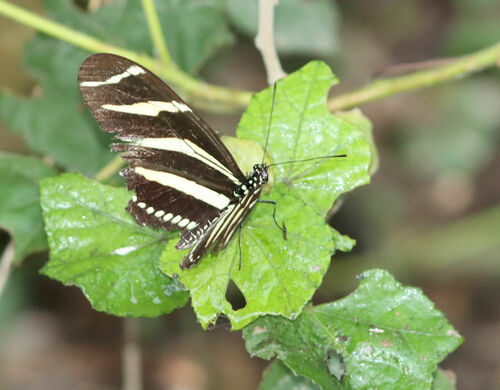
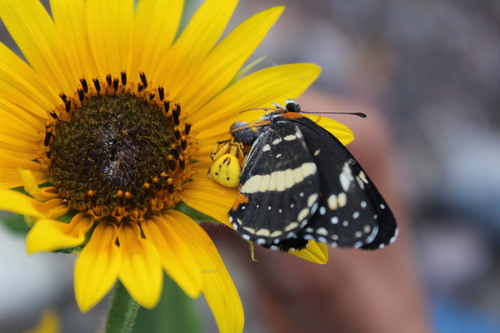
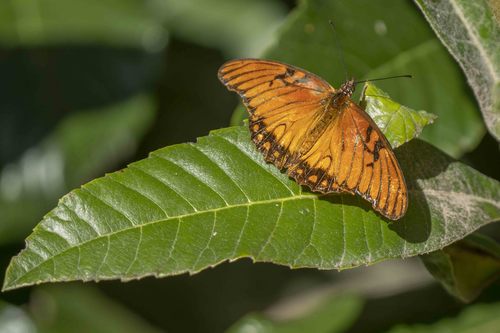
The West Coast lady (Vanessa annabella) is one of three North American species of brush-footed butterflies known colloquially as the "painted ladies". V. annabella occurs throughout much of the western US and southwestern Canada. The other two species are the cosmopolitan Vanessa cardui (painted lady) and the eastern Vanessa virginiensis (American painted lady). This species has also been considered a subspecies of the South American Vanessa carye and is frequently misspelled as "anabella".

Aside from general differences in distribution, V. annabella can be distinguished from the other two painted ladies of North America as follows: Most conspicuously, it lacks obvious ventral eyespots on the hindwings; there are two large ones on V. virginiensis and four small ones on V. cardui. Like the latter, it also lacks a white dot in the pinkish-orange subapical field of the ventral and dorsal forewings. Its upperwing coloration has the purest orange of the three; the American painted lady is usually quite reddish.

A less reliable indicator is the row of black eyespots on the dorsal submarginal hindwing. These are usually of roughly equal size in V. cardui and... Wikipedia →

Global Distribution

Parks Where Found

# Park Country Daily sighting probability
1 Channel Islands National Park 🇺🇸 United States
~30%
2 Reserva de la Biosfera Mariposa Monarca 🇲🇽 Mexico
~20%
3 Grand Canyon National Park 🇺🇸 United States
~10%
4 Death Valley National Park 🇺🇸 United States
~10%
5 Sequoia and Kings Canyon National Parks 🇺🇸 United States
~10%
6 Redwood National Park 🇺🇸 United States
~10%
7 Joshua Tree National Park 🇺🇸 United States
~10%
8 Yosemite National Park 🇺🇸 United States
~10%
9 Saguaro National Park 🇺🇸 United States
<5%
10 Olympic National Park 🇺🇸 United States
<5%

Cities Where Found

# City Country Daily sighting probability
1 Toluca 🇲🇽 México
~40%
2 Puebla 🇲🇽 México
~30%
3 Tijuana 🇲🇽 México
~20%
4 Mexico City 🇲🇽 México
~20%
5 San Francisco 🇺🇸 United States
~20%
6 San Luis Potosí 🇲🇽 México
~20%
7 Ciudad Juárez 🇲🇽 México
~10%
8 San Diego 🇺🇸 United States
~10%
9 Mesa 🇺🇸 United States
~10%
10 Los Angeles 🇺🇸 United States
~10%

Before you go

What are the chances of seeing a West Coast Lady in San Luis Potosí?

Possible

About 20% of wildlife watchers report a West Coast Lady sighting in San Luis Potosí on a given day, based on 24 verified sightings from GBIF citizen-science data. It is the 10th most-seen of the 91 insects we can rate there. Over three days the chance rises to about 40%, and over a week to about 70%, if each day is a fresh chance.

When is the best time to see a West Coast Lady in San Luis Potosí?

October and November

In those months about 30% of wildlife watchers report a West Coast Lady in San Luis Potosí on a given day, against under 5% in April–June and December–February, the lowest months. Those are among San Luis Potosí's driest months, with about 25 mm of rain a month against 110 mm in July.

What time of day is best to see a West Coast Lady?

Between 11 am and 2 pm

Across all the parks we cover, that three-hour window holds the most West Coast Lady sightings with a recorded time, and about 9 in 10 of them come between 6 am and 6 pm: it is a daytime animal.

Is San Luis Potosí the best place to see a West Coast Lady?

6th of 20

Of the 20 cities where we can rate West Coast Lady sightings, San Luis Potosí ranks 6th at about 20%. The best odds are in Toluca (México, about 40%), Puebla (México, about 30%) and Tijuana (México, about 20%).

Where does the West Coast Lady sighting chance come from?

GBIF citizen-science records

It is estimated from how often the West Coast Lady is recorded against all the insects logged in San Luis Potosí (24 verified sightings), calibrated against known sighting rates. Figures are rounded to the nearest 10% because citizen-science data supports honest approximations, not decimals, and months with records from fewer than five people show "—". How it works.

← Back to San Luis Potosí