

Completed
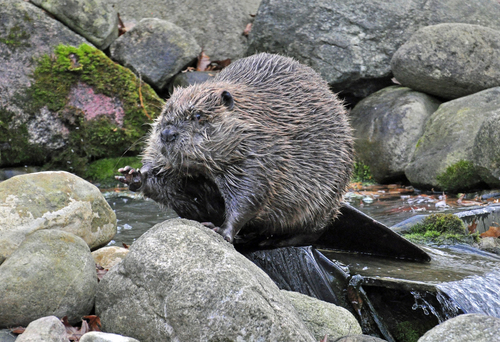


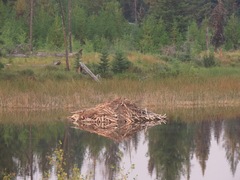

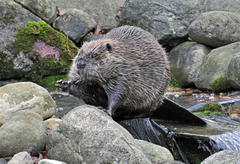
American Beaver
Castor canadensis
Silhouette: PhyloPic
- KingdomAnimalia (Animals)
- PhylumChordata (Chordates)
- ClassMammalia (Mammals)
- OrderRodentia (Rodents)
- FamilyCastoridae (Beavers)
- GenusCastor (Beavers)
- SpeciesCastor canadensis (American Beaver)
In 3 days ~60% in a week ~90%
931 Verified sightings at Seattle
1,175 In all 25 parks From 2019 to 2026
May Best month
🌅 Crepuscular When it's spotted
About the American Beaver
The North American beaver (Castor canadensis) is one of two extant beaver species, along with the Eurasian beaver (Castor fiber). It is native to North America and has been introduced in South America (Patagonia) and Europe (primarily Finland and Karelia). The North American beaver is one of the national symbols of Canada and the official state mammal of Oregon and New York. North American beavers are widespread across the continental United States, Canada, southern Alaska, and some parts of northern Mexico.
In Canada and the United States, the North American beaver is often referred to simply as "beaver", although this can cause some confusion because another distantly related rodent, Aplodontia rufa, is often called the "mountain beaver". Other vernacular names, including American beaver and Canadian beaver, distinguish this species from the other extant beaver species, Castor fiber, which is native to Eurasia.
The first fossil records of beavers are 10 to 12 million years old in Germany, and they are thought to have migrated to North America across the Bering land bridge. During the mid to late Pleistocene epoch, giant beavers weighing up to 200 pounds... Wikipedia →
Sounds
Recording0:03
United States · 2018
© Thomas Koffel · iNaturalist · CC BY 4.0
Recording1:50
United States · 2022
© Betty Bastai · iNaturalist · CC BY-NC 4.0
Recording0:05
United States · 2024
© Nate Marchessault · iNaturalist · CC BY-NC 4.0
Recent sightings of American Beaver in Seattle
LIVEiNaturalistGlobal Distribution
Parks Where Found
Cities Where Found
| # | City | Country | Daily sighting probability |
|---|---|---|---|
| 1 | Seattle | 🇺🇸 United States | |
| 2 | Calgary | 🇨🇦 Canada | |
| 3 | Edmonton | 🇨🇦 Canada | |
| 4 | Vancouver | 🇨🇦 Canada | |
| 5 | Portland | 🇺🇸 United States | |
| 6 | Washington | 🇺🇸 United States | |
| 7 | Toronto | 🇨🇦 Canada | |
| 8 | Minneapolis [Saint Paul] | 🇺🇸 United States | |
| 9 | Sacramento | 🇺🇸 United States | |
| 10 | Denver | 🇺🇸 United States |
Zoos & Centres Where Found
Closest Relatives at Seattle





Before you go
What are the chances of seeing an American Beaver in Seattle?
Possible
About 30% of wildlife watchers report an American Beaver sighting in Seattle on a given day, based on 931 verified sightings from GBIF citizen-science data. It is the 4th most-seen of the 25 mammals we can rate there. Over three days the chance rises to about 60%, and over a week to about 90%, if each day is a fresh chance.
When is the best time to see an American Beaver in Seattle?
February–August and November–December
In those months about 30% of wildlife watchers report an American Beaver in Seattle on a given day, against about 20% in January and September–October, the lowest months.
What time of day is best to see an American Beaver?
Between 6 and 9 pm
Across all the parks we cover, that three-hour window holds the most American Beaver sightings with a recorded time, and about 6 in 10 of them come between 6 pm and 6 am: it is most active around dawn and dusk.
Is Seattle the best place to see an American Beaver?
Yes
Of the 24 cities where we can rate American Beaver sightings, Seattle has the highest daily chance: about 30%. Next come Calgary (Canada, about 30%) and Edmonton (Canada, about 30%).
Which relatives of the American Beaver live in Seattle?
Same order: Rodentia
The closest relatives of the American Beaver that you can see in Seattle (order Rodentia, Rodents) are Eastern Gray Squirrel (about 40%), Douglas' Squirrel (about 10%) and Brown Rat (about 10%), with each one's daily chance of a sighting.
Where does the American Beaver sighting chance come from?
GBIF citizen-science records
It is estimated from how often the American Beaver is recorded against all the mammals logged in Seattle (931 verified sightings), calibrated against known sighting rates. Figures are rounded to the nearest 10% because citizen-science data supports honest approximations, not decimals, and months with records from fewer than five people show "—". How it works.
