

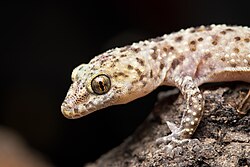

Completed

Common Wall Lizard
Podarcis muralis
Silhouette: Titouan Montessuit · PhyloPic
- KingdomAnimalia (Animals)
- PhylumChordata (Chordates)
- ClassSquamata
- FamilyLacertidae (Wall Lizards)
- GenusPodarcis
- SpeciesPodarcis muralis (Common Wall Lizard)
In 3 days ~50% in a week ~80%
366 Verified sightings at Vienna
3,905 In all 14 parks From 2019 to 2026
July Best month
☀️ Diurnal When it's spotted
About the Common Wall Lizard
The common wall lizard (Podarcis muralis) is a species of lizard with a large distribution in Europe and well-established introduced populations in North America, where it is also called the European wall lizard. It can grow to about 20 cm (7.9 in) in total length. The animal has shown variation in the places it has been introduced to. Fossils have been found in a cave in Greece dating to the early part of the Holocene.
The common wall lizard is a small, thin lizard whose small scales are highly variable in colour and pattern. Its coloration is generally brownish or greyish, and may occasionally be tinged with green. In some individuals, the row of spots along their backs may form a line, while others may have a reticulated pattern with dark spots on the side and scattered white spots that can be blue in the shoulder region. The tail is brown, grey or rust in colour, and may also have light bars on the sides. The belly region has six rows of larger rectangular scales that are generally reddish, pink, or orangish. Common wall lizards may also have dark markings on the throat. This lizard has six distinct morphological forms which are identified by the colouration of... Wikipedia →
Recent sightings of Common Wall Lizard in Vienna
LIVEiNaturalistGlobal Distribution
Parks Where Found
| # | Park | Country | Daily sighting probability |
|---|---|---|---|
| 1 | Aigüestortes National Park | 🇪🇸 Spain | |
| 2 | Picos de Europa National Park | 🇪🇸 Spain | |
| 3 | Ordesa y Monte Perdido National Park | 🇪🇸 Spain | |
| 4 | Triglav National Park | 🇸🇮 Slovenia | |
| 5 | Pyrénées National Park | 🇫🇷 France | |
| 6 | Cévennes National Park | 🇫🇷 France | |
| 7 | Bavarian Forest National Park | 🇩🇪 Germany | |
| 8 | Ecrins National Park | 🇫🇷 France | |
| 9 | Mercantour National Park | 🇫🇷 France | |
| 10 | Plitvice Lakes National Park | 🇭🇷 Croatia | |
| 11 | Vanoise National Park | 🇫🇷 France | |
| 12 | Sierra de Guadarrama National Park | 🇪🇸 Spain | |
| 13 | Hohe Tauern National Park | 🇦🇹 Austria | |
| 14 | Camargue | 🇫🇷 France |
Zoos & Centres Where Found
| # | Zoo / Centre | Country | |
|---|---|---|---|
| 1 | Wilhelma | 🇩🇪 Germany | |
| 2 | Opel-Zoo | 🇩🇪 Germany | |
| 3 | Zoological Garden of Monaco | 🇲🇨 Monaco | |
| 4 | Lake Tisza Ecocentre | 🇭🇺 Hungary |
Closest Relatives at Vienna



Before you go
What are the chances of seeing a Common Wall Lizard in Vienna?
Possible
About 20% of wildlife watchers report a Common Wall Lizard sighting in Vienna on a given day, based on 366 verified sightings from GBIF citizen-science data. It is the 6th most-seen of the 12 reptiles we can rate there. Over three days the chance rises to about 50%, and over a week to about 80%, if each day is a fresh chance.
When is the best time to see a Common Wall Lizard in Vienna?
July and August
In those months about 30% of wildlife watchers report a Common Wall Lizard in Vienna on a given day, against under 5% in December, the lowest month. Those are among Vienna's wettest months, with about 85 mm of rain a month against 40 mm in February.
What time of day is best to see a Common Wall Lizard?
Between 1 and 4 pm
Across all the parks we cover, that three-hour window holds the most Common Wall Lizard sightings with a recorded time, and nearly all of them come between 6 am and 6 pm: it is a daytime animal.
Is Vienna the best place to see a Common Wall Lizard?
13th of 16
Of the 16 cities where we can rate Common Wall Lizard sightings, Vienna ranks 13th at about 20%. The best odds are in Turin (Italy, about 70%), Budapest (Hungary, about 60%) and Milan (Italy, about 60%).
Where does the Common Wall Lizard sighting chance come from?
GBIF citizen-science records
It is estimated from how often the Common Wall Lizard is recorded against all the reptiles logged in Vienna (366 verified sightings), calibrated against known sighting rates. Figures are rounded to the nearest 10% because citizen-science data supports honest approximations, not decimals, and months with records from fewer than five people show "—". How it works.
