

Terek Sandpiper

Terek Sandpiper

Xenus cinereus

Silhouette: Sheatherius · PhyloPic

LCLeast ConcernNTVUENCR
Daily sighting probability <5% · Rare
at Yekaterinburg

In 3 days ~10% in a week ~20%

9 Verified sightings at Yekaterinburg
329 In all 9 parks From 2019 to 2026
August Best month
☀️ Diurnal When it's spotted

About the Terek Sandpiper

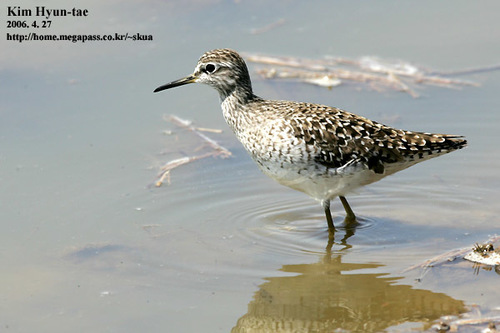
The Terek sandpiper (Xenus cinereus) is a small migratory Palearctic wader species and is the only member of the genus Xenus. It is named after the Terek River which flows into the west of the Caspian Sea, as it was first observed around this area.

The Terek sandpiper was formally described and illustrated in 1775 by the German naturalist Johann Anton Güldenstädt under the binomial name Scolopax cinerea. He reported that he had seen pairs breeding at the mouth of the Terek River where it flows into the Caspian Sea. It is now the only species placed in the genus Xenus that was introduced in 1829 by the German naturalist Johann Jakob Kaup. The genus name Xenus is from Ancient Greek xenos meaning "stranger"; the specific epithet cinereus is Latin for "ash-grey" from cinis, cineris, "ashes". The species is considered to be monotypic, no subspecies are recognised.

Among the Scolopacidae, Xenus is part of the shank-tattler-phalarope clade and less closely related to the calidrid sandpipers. Based on the degree of DNA sequence divergence and putative shank and phalarope fossils from around the Oligocene/Miocene boundary some 23–22 million years ago, the Terek sandpiper presumably... Wikipedia →

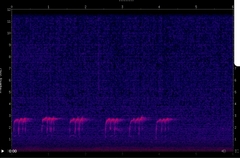
Sounds

Call0:29

Russian Federation · 2020

© Albert Lastukhin · XC580779 · CC BY-NC-SA 4.0

Song0:15

Finland · 2012

© Tero Linjama · XC342913 · CC BY-NC-SA 4.0

Call0:33

Oman · 2013

© R. Martin · XC135150 · CC BY-NC-SA 3.0

Global Distribution

Parks Where Found

# Park Country Daily sighting probability
1 Bako National Park 🇲🇾 Malaysia
~20%
2 Sundarbans National Park 🇮🇳 India
~10%
3 West Coast National Park 🇿🇦 South Africa
~10%
4 Bali Barat National Park 🇮🇩 Indonesia
~10%
5 Rottnest Island 🇦🇺 Australia
<5%
6 iSimangaliso Wetland Park 🇿🇦 South Africa
<5%
7 Raja Ampat 🇮🇩 Indonesia
<5%
8 Amboseli National Park 🇰🇪 Kenya
<5%
9 Wadden Sea National Park 🇩🇪 Germany
<5%

Cities Where Found

# City Country Daily sighting probability
1 Kuwait City 🇰🇼 Kuwait
~30%
2 Zanzibar City 🇹🇿 Tanzania
~30%
3 Maputo 🇲🇿 Mozambique
~20%
4 Manama 🇧🇭 Bahrain
~10%
5 Makassar 🇮🇩 Indonesia
~10%
6 Kozhikode 🇮🇳 India
~10%
7 Kazan 🇷🇺 Russia
~10%
8 Naha 🇯🇵 Japan
~10%
9 Davao City 🇵🇭 Philippines
<5%
10 Dar es-Salaam 🇹🇿 Tanzania
<5%

Before you go

What are the chances of seeing a Terek Sandpiper in Yekaterinburg?

Rare

Under 5% of wildlife watchers report a Terek Sandpiper sighting in Yekaterinburg on a given day, based on 9 verified sightings from GBIF citizen-science data. It is the 71st most-seen of the 116 birds we can rate there. Over three days the chance rises to about 10%, and over a week to about 20%, if each day is a fresh chance.

When is the best time to see a Terek Sandpiper in Yekaterinburg?

May and August

In those months about 10% of wildlife watchers report a Terek Sandpiper in Yekaterinburg on a given day, against under 5% in June–July and September–April, the lowest months.

What time of day is best to see a Terek Sandpiper?

Between 9 am and noon

Across all the parks we cover, that three-hour window holds the most Terek Sandpiper sightings with a recorded time, and about 8 in 10 of them come between 6 am and 6 pm: it is a daytime animal.

Is Yekaterinburg the best place to see a Terek Sandpiper?

11th of 36

Of the 36 cities where we can rate Terek Sandpiper sightings, Yekaterinburg ranks 11th at under 5%. The best odds are in Kuwait City (Kuwait, about 30%), Zanzibar City (Tanzania, about 30%) and Maputo (Mozambique, about 20%).

Where does the Terek Sandpiper sighting chance come from?

GBIF citizen-science records

It is estimated from how often the Terek Sandpiper is recorded against all the birds logged in Yekaterinburg (9 verified sightings), calibrated against known sighting rates. Figures are rounded to the nearest 10% because citizen-science data supports honest approximations, not decimals, and months with records from fewer than five people show "—". How it works.

← Back to Yekaterinburg