

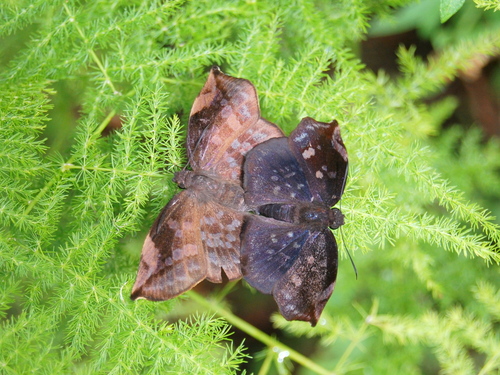
Surinam Cockroach

Surinam Cockroach

Pycnoscelus surinamensis

Daily sighting probability ~10% · With luck
at Cumbres de Monterrey National Park

In 3 days ~20% in a week ~40%

18 Verified sightings at Cumbres de Monterrey National Park From 2019 to 2026
89 In all 7 parks
September Best month
☀️🌙 Day & Night When it's spotted

About the Surinam Cockroach

The Surinam cockroach or greenhouse cockroach (Pycnoscelus surinamensis) is a species of burrowing cockroach. It is a common plant pest endemic to the Indomalayan realm that has spread to tropical and into subtropical regions around the world, and in isolated populations to temperate climates where protective habitat such as greenhouses provide shelter for individuals inadvertently shipped in the soil of plants. Its populations are almost exclusively female, and it reproduces through parthenogenesis, having evolved several clonal strains from its sexual progenitor P. indicus.

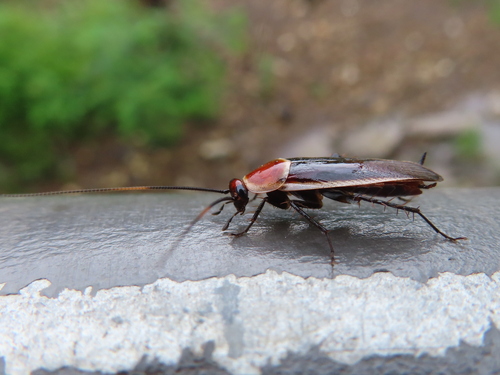
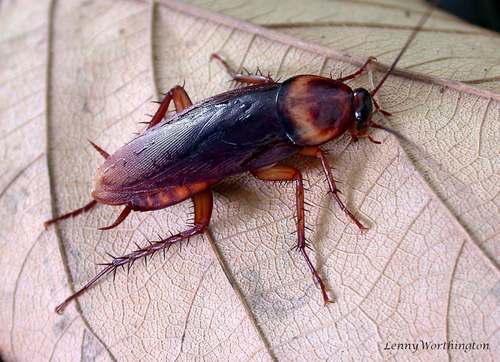
Adults are around 18–25 mm (0.71–0.98 in) in length, and have dark brown to black bodies with shiny paler brown wings. The front edge of the pronotum (head shield) has a pale white band. While males are rarely produced, male adults have longer wings than females, completely covering the abdomen, although both sexes are poor flyers.

Nymphs are around 4.5 mm (0.18 in) long at birth, translucent white with orange-brown mandibles and spines, and darker eye spots than the rest of the head. The exoskeleton gradually hardens on exposure to air, becoming a glossy brown in 5 to 6 hours, while its underside... Wikipedia →

Global Distribution

Parks Where Found

# Park Country Daily sighting probability
1 Ría Lagartos Biosphere Reserve 🇲🇽 Mexico
~10%
2 Big Cypress National Preserve 🇺🇸 United States
~10%
3 Everglades National Park 🇺🇸 United States
~10%
4 Galápagos Islands 🇪🇨 Ecuador
~10%
5 Cumbres de Monterrey National Park 🇲🇽 Mexico
~10%
6 Tijuca National Park 🇧🇷 Brazil
~10%
7 Merritt Island National Wildlife Refuge 🇺🇸 United States
<5%

Cities Where Found

# City Country Daily sighting probability
1 Tel Aviv 🇮🇱 Israel
~20%
2 Goiânia 🇧🇷 Brazil
~20%
3 Fortaleza 🇧🇷 Brazil
~20%
4 São Luís 🇧🇷 Brazil
~20%
5 Valencia 🇻🇪 Venezuela
~20%
6 San Pedro Sula 🇭🇳 Honduras
~20%
7 Niterói 🇧🇷 Brazil
~20%
8 León 🇲🇽 México
~10%
9 Managua 🇳🇮 Nicaragua
~10%
10 Lima 🇵🇪 Peru
~10%

Before you go

What are the chances of seeing a Surinam Cockroach in Cumbres de Monterrey National Park?

With luck

About 10% of wildlife watchers report a Surinam Cockroach sighting in Cumbres de Monterrey National Park on a given day, based on 18 verified sightings from GBIF citizen-science data from 2019 to 2026. It is the 145th most-seen of the 431 insects we can rate there. Over three days the chance rises to about 20%, and over a week to about 40%, if each day is a fresh chance.

When is the best time to see a Surinam Cockroach in Cumbres de Monterrey National Park?

July and September–November

In those months about 10% of wildlife watchers report a Surinam Cockroach in Cumbres de Monterrey National Park on a given day, against under 5% in August and December–June, the lowest months.

What time of day is best to see a Surinam Cockroach?

Between 10 am and 1 pm

Across all the parks we cover, that three-hour window holds the most Surinam Cockroach sightings with a recorded time, and about 6 in 10 of them come between 6 am and 6 pm: it is seen both by day and at night.

Is Cumbres de Monterrey National Park the best place to see a Surinam Cockroach?

Among the best

Of the 7 parks where we can rate Surinam Cockroach sightings, Cumbres de Monterrey National Park ranks 5th at about 10%, level with the leaders once rounded. The best odds are in Ría Lagartos Biosphere Reserve (Mexico, about 10%), Big Cypress National Preserve (United States, about 10%) and Everglades National Park (United States, about 10%).

Which relatives of the Surinam Cockroach live in Cumbres de Monterrey National Park?

Same order: Blattodea

The closest relatives of the Surinam Cockroach that you can see in Cumbres de Monterrey National Park (order Blattodea, Cockroaches and Termites) are Pale-Bordered Field Cockroach (about 10%) and American Cockroach (about 10%), with each one's daily chance of a sighting.

Where does the Surinam Cockroach sighting chance come from?

GBIF citizen-science records

It is estimated from how often the Surinam Cockroach is recorded against all the insects logged in Cumbres de Monterrey National Park (18 verified sightings from 2019 to 2026), calibrated against known sighting rates. Figures are rounded to the nearest 10% because citizen-science data supports honest approximations, not decimals, and months with records from fewer than five people show "—". How it works.

← Back to Cumbres de Monterrey National Park