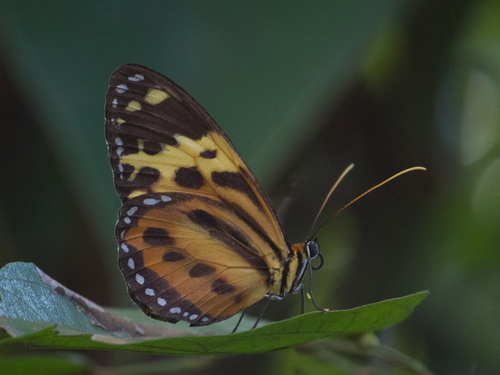
Tiger Leafwing

Tiger Leafwing

Consul fabius

Daily sighting probability ~10% · With luck
at Iguaçu National Park

In 3 days ~20% in a week ~50%

10 Verified sightings at Iguaçu National Park From 2019 to 2026
77 In all 9 parks
February Best month
☀️ Diurnal When it's spotted

About the Tiger Leafwing

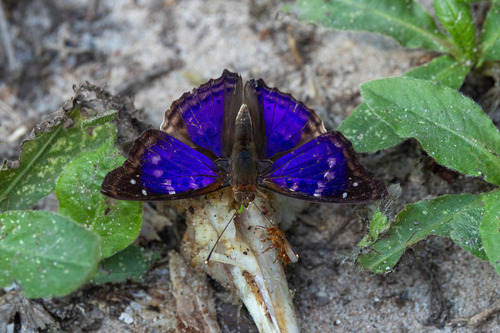
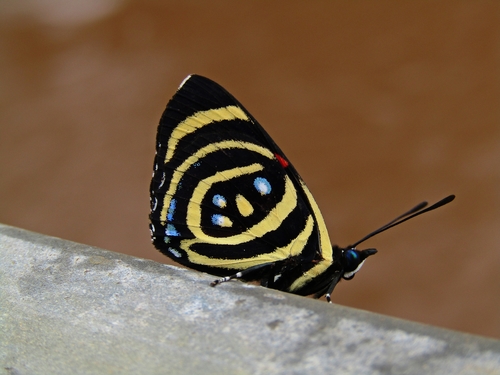
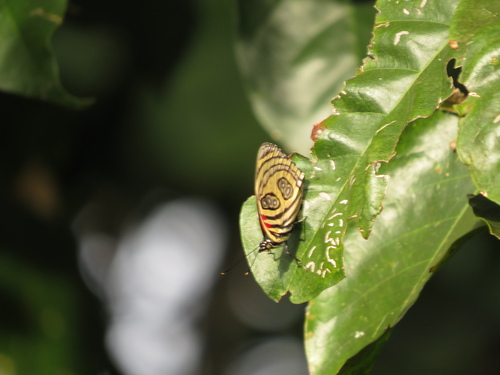
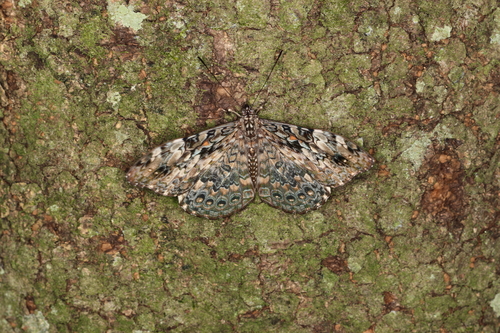
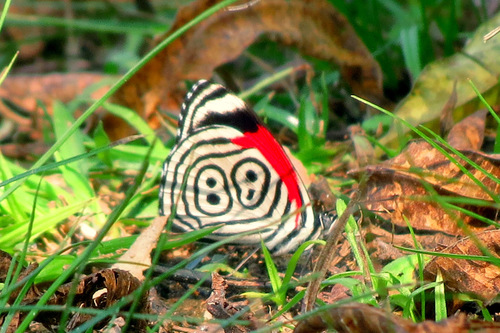
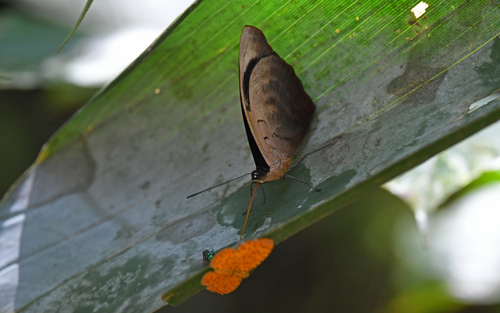
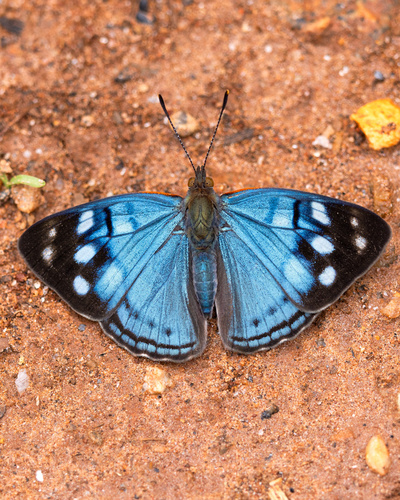
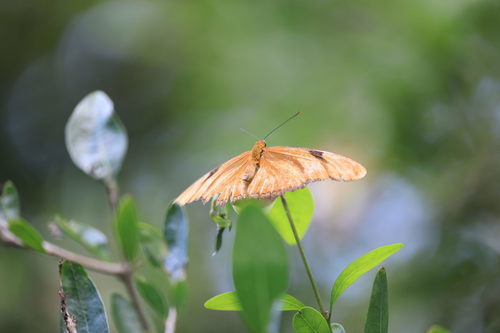
Consul fabius, the tiger leafwing, is the most common and well known species of the genus Consul of subfamily Charaxinae in the brush-footed butterfly family (Nymphalidae). It is found all over the Neotropics. The length of the forewings reaches about 30–40 millimetres (1.2–1.6 in). The uppersides of the wings have a bright orange and black pattern, with two yellow bands across the angular forewings. The hindwings are tailed. This butterfly is part of a mimicry ring, as a matter of fact the cryptic undersides of the wings mimic a dead leaf. The eggs are laid on the leaves of various species of Piperaceae (Piper tuberculatum, Piper auritum, Piper umbellatum, etc.), of which the caterpillars feed. The caterpillars are dark green with reddish spots along the back, while the chrysalis are pale green.

Consul fabius occurs from Mexico to the Amazon basin (Bolivia, Brazil, Colombia, Ecuador, Mexico, Panama, Peru, Suriname, Trinidad, Venezuela). This species is present in deciduous forest, rainforest, and cloud forest. It usually prefers the forest canopy, the banks of rivers and the forest edges, at elevations between sea level and about... Wikipedia →
Global Distribution

Parks Where Found

# Park Country Daily sighting probability
1 Marino Ballena National Park 🇨🇷 Costa Rica
~10%
2 Lago de Yojoa 🇭🇳 Honduras
~10%
3 Iguazú National Park 🇦🇷 Argentina
~10%
4 Iguaçu National Park 🇧🇷 Brazil
~10%
5 Manuel Antonio National Park 🇨🇷 Costa Rica
~10%
6 Manu National Park 🇵🇪 Peru
~10%
7 Arenal Volcano National Park 🇨🇷 Costa Rica
~10%
8 Monteverde Cloud Forest Reserve 🇨🇷 Costa Rica
~10%
9 Soberanía National Park 🇵🇦 Panama
~10%

Cities Where Found

# City Country Daily sighting probability
1 San Salvador 🇸🇻 El Salvador
~10%

Before you go

What are the chances of seeing a Tiger Leafwing in Iguaçu National Park?

With luck

About 10% of wildlife watchers report a Tiger Leafwing sighting in Iguaçu National Park on a given day, based on 10 verified sightings from GBIF citizen-science data from 2019 to 2026. It is the 144th most-seen of the 279 insects we can rate there. Over three days the chance rises to about 20%, and over a week to about 50%, if each day is a fresh chance.

When is the best time to see a Tiger Leafwing in Iguaçu National Park?

February

In that month about 20% of wildlife watchers report a Tiger Leafwing in Iguaçu National Park on a given day, against under 5% in March–April, July and September–October, the lowest months.

What time of day is best to see a Tiger Leafwing?

Between noon and 3 pm

Across all the parks we cover, that three-hour window holds the most Tiger Leafwing sightings with a recorded time, and about 9 in 10 of them come between 6 am and 6 pm: it is a daytime animal.

Is Iguaçu National Park the best place to see a Tiger Leafwing?

Among the best

Of the 9 parks where we can rate Tiger Leafwing sightings, Iguaçu National Park ranks 4th at about 10%, level with the leaders once rounded. The best odds are in Marino Ballena National Park (Costa Rica, about 10%), Lago de Yojoa (Honduras, about 10%) and Iguazú National Park (Argentina, about 10%).

Which relatives of the Tiger Leafwing live in Iguaçu National Park?

Same family: Nymphalidae

The closest relatives of the Tiger Leafwing that you can see in Iguaçu National Park (family Nymphalidae, Brush-footed Butterflies) are Agathina Emperor (about 70%), Hydaspes Eighty-Eight (about 50%) and Orange Mapwing (about 40%), with each one's daily chance of a sighting.

Where does the Tiger Leafwing sighting chance come from?

GBIF citizen-science records

It is estimated from how often the Tiger Leafwing is recorded against all the insects logged in Iguaçu National Park (10 verified sightings from 2019 to 2026), calibrated against known sighting rates. Figures are rounded to the nearest 10% because citizen-science data supports honest approximations, not decimals, and months with records from fewer than five people show "—". How it works.

← Back to Iguaçu National Park