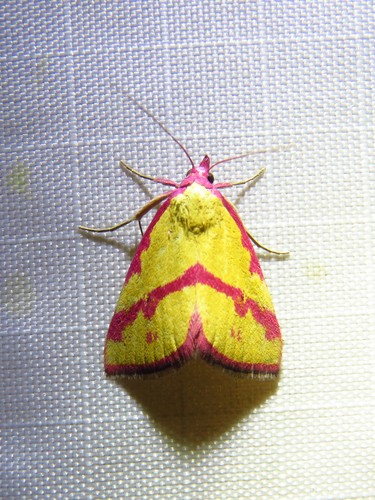
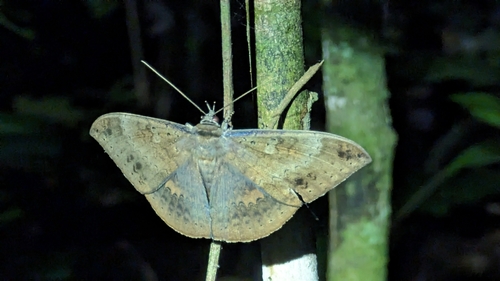
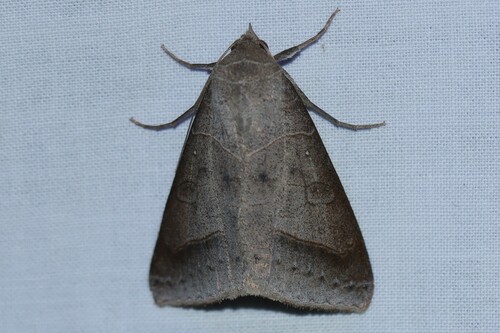
Isabella Tiger Moth

Isabella Tiger Moth

Pyrrharctia isabella

Daily sighting probability <5% · Rare
at Everglades National Park

In 3 days ~10% in a week ~30%

7 Verified sightings at Everglades National Park From 2019 to 2026
618 In all 16 parks
May Best month
☀️ Diurnal When it's spotted

About the Isabella Tiger Moth

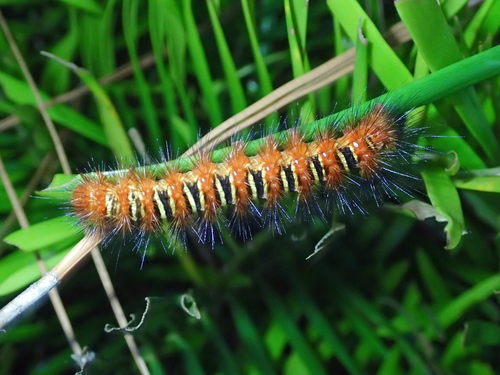
Pyrrharctia isabella, the Isabella tiger moth, whose larval form is called the banded woolly bear, woolly bear, or woolly worm, occurs in the United States and throughout Canada. It was first formally named by James Edward Smith in 1797.

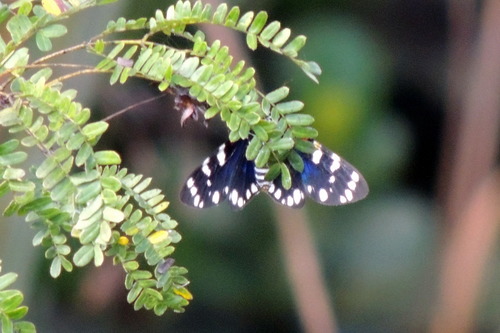
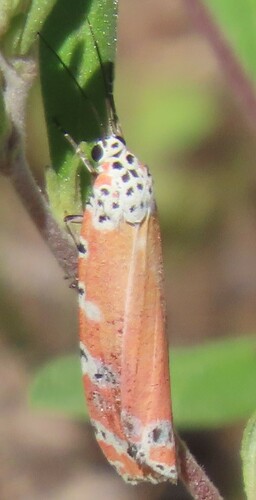
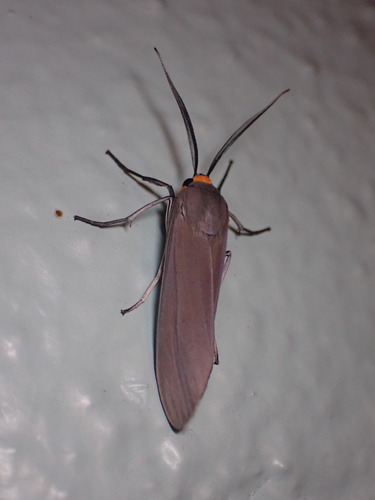
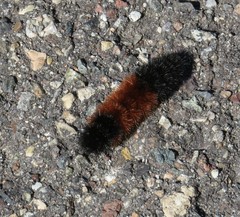
The thirteen-segment larvae are usually covered with brown hair in their mid-regions and black hair in their anterior and posterior areas. In direct sunlight, the brown hair looks bright reddish brown. The setae are uniform in length, unlike in other tiger moth larvae with similar appearance. Adults are generally dull yellowish through orangish and have robust, scaly thoraces; small heads; and bright reddish-orange forelegs. Wings have sparse black spotting. Each abdominal segment bears three black dots.

The Isabella tiger moth can be found in many cold and temperate regions. The banded woolly bear larva emerges from the egg in the fall and overwinters in its caterpillar form, by allowing most of its mass to freeze solid. First its heart stops beating, then its gut freezes, then its blood, followed by the rest of the body. It survives being frozen by producing a cryoprotectant in its tissues. This freezing occurs outside of body cells... Wikipedia →

Global Distribution

Parks Where Found

# Park Country Daily sighting probability
1 Elk Island National Park 🇨🇦 Canada
~40%
2 Shenandoah National Park 🇺🇸 United States
~30%
3 Redwood National Park 🇺🇸 United States
~20%
4 Cape Breton Highlands National Park 🇨🇦 Canada
~20%
5 Acadia National Park 🇺🇸 United States
~20%
6 Gros Morne National Park 🇨🇦 Canada
~20%
7 Great Smoky Mountains National Park 🇺🇸 United States
~10%
8 Yosemite National Park 🇺🇸 United States
~10%
9 Point Pelee National Park 🇨🇦 Canada
~10%
10 Pacific Rim National Park Reserve 🇨🇦 Canada
~10%
11 Yellowstone National Park 🇺🇸 United States
~10%
12 Great Bear Rainforest 🇨🇦 Canada
~10%
13 Riding Mountain National Park 🇨🇦 Canada
~10%
14 Olympic National Park 🇺🇸 United States
~10%
15 Merritt Island National Wildlife Refuge 🇺🇸 United States
<5%
16 Everglades National Park 🇺🇸 United States
<5%

Cities Where Found

# City Country Daily sighting probability
1 Minneapolis [Saint Paul] 🇺🇸 United States
~20%
2 Portland 🇺🇸 United States
~20%
3 Montreal 🇨🇦 Canada
~20%
4 Boston 🇺🇸 United States
~20%
5 Seattle 🇺🇸 United States
~10%
6 Toronto 🇨🇦 Canada
~10%
7 Vancouver 🇨🇦 Canada
~10%
8 Detroit 🇺🇸 United States
~10%
9 Baltimore 🇺🇸 United States
~10%
10 Washington 🇺🇸 United States
~10%

Before you go

What are the chances of seeing an Isabella Tiger Moth in Everglades National Park?

Rare

Under 5% of wildlife watchers report an Isabella Tiger Moth sighting in Everglades National Park on a given day, based on 7 verified sightings from GBIF citizen-science data from 2019 to 2026. It is the 354th most-seen of the 496 insects we can rate there. Over three days the chance rises to about 10%, and over a week to about 30%, if each day is a fresh chance.

When is the best time to see an Isabella Tiger Moth in Everglades National Park?

March to May

In those months about 10% of wildlife watchers report an Isabella Tiger Moth in Everglades National Park on a given day, against under 5% in June to February, the lowest months.

What time of day is best to see an Isabella Tiger Moth?

Between 11 am and 2 pm

Across all the parks we cover, that three-hour window holds the most Isabella Tiger Moth sightings with a recorded time, and about 9 in 10 of them come between 6 am and 6 pm: it is a daytime animal.

Which relatives of the Isabella Tiger Moth live in Everglades National Park?

Same family: Erebidae

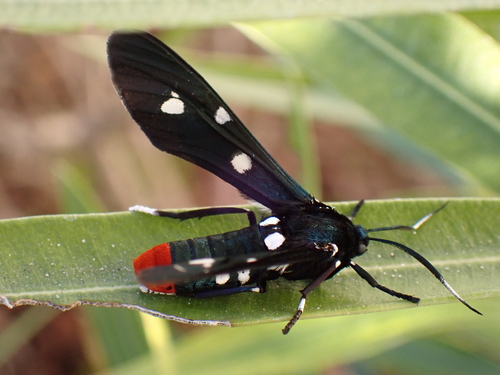
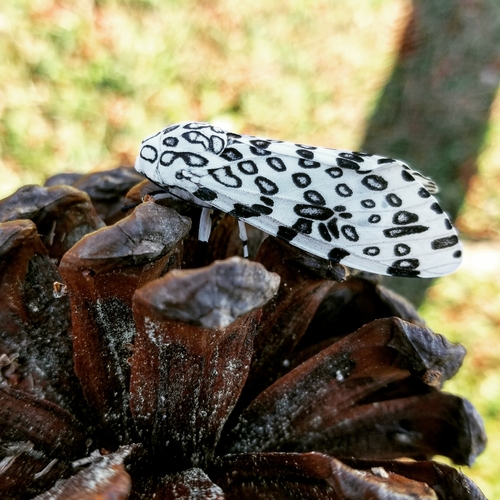
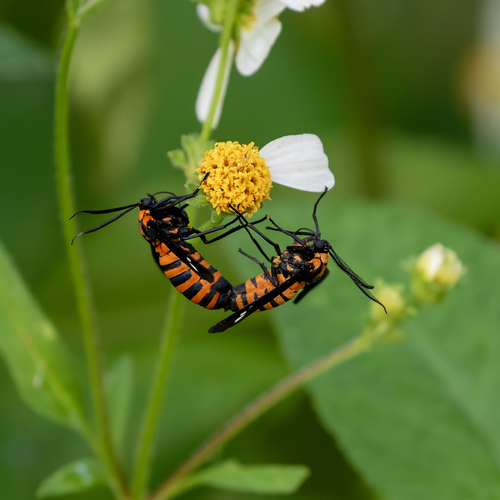
The closest relatives of the Isabella Tiger Moth that you can see in Everglades National Park (family Erebidae, Underwing, Tiger, Tussock, and Allied Moths) are Faithful Beauty (about 20%), Florida Tussock Moth (about 20%) and Polka-Dot Wasp Moth (about 10%), with each one's daily chance of a sighting.

Where does the Isabella Tiger Moth sighting chance come from?

GBIF citizen-science records

It is estimated from how often the Isabella Tiger Moth is recorded against all the insects logged in Everglades National Park (7 verified sightings from 2019 to 2026), calibrated against known sighting rates. Figures are rounded to the nearest 10% because citizen-science data supports honest approximations, not decimals, and months with records from fewer than five people show "—". How it works.

← Back to Everglades National Park