





Completed



Galápagos Shark
Carcharhinus galapagensis
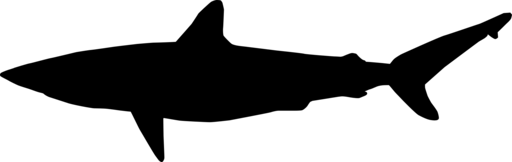
Silhouette: Margot Michaud · PhyloPic
- KingdomAnimalia (Animals)
- PhylumChordata (Chordates)
- ClassElasmobranchii
- OrderCarcharhiniformes (Ground Sharks)
- FamilyCarcharhinidae (Requiem Sharks)
- GenusCarcharhinus (Typical Requiem Sharks)
- SpeciesCarcharhinus galapagensis (Galápagos Shark)
In 3 days ~70% in a week ~90%
106 Verified sightings at Galápagos Islands From 2019 to 2026
111 In all 2 parks
October Best month
☀️ Diurnal When it's spotted
About the Galápagos Shark
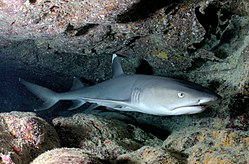
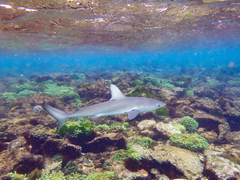
The Galapagos shark (Carcharhinus galapagensis) is a species of requiem shark, in the family Carcharhinidae, found worldwide. It favors clear reef environments around oceanic islands, where it is often the most abundant shark species. A large species that often reaches 3.0 m (9.8 ft), the Galapagos reef shark has a typical fusiform "reef shark" shape and is very difficult to distinguish from the dusky shark (C. obscurus) and the grey reef shark (C. amblyrhynchos). An identifying character of this species is its tall first dorsal fin, which has a slightly rounded tip and originates over the rear tips of the pectoral fins.
The Galapagos shark is an active predator often encountered in large groups. It feeds mainly on bottom-dwelling bony fishes and cephalopods; larger individuals have a much more varied diet, consuming other sharks, marine iguanas, sea lions, and even garbage. As in other requiem sharks, reproduction is viviparous, with females bearing litters of 4–16 pups every 2 to 3 years. The juveniles tend to remain in shallow water to avoid predation by the adults. The International Union for Conservation of Nature (IUCN) has assessed this species as least concern, but it has a slow reproductive rate and there is heavy fishing pressure across its range. Wikipedia →
Recent sightings of Galápagos Shark in Galápagos Islands
LIVEiNaturalistGlobal Distribution
Parks Where Found
| # | Park | Country | Daily sighting probability |
|---|---|---|---|
| 1 | Isla del Coco National Park | 🇨🇷 Costa Rica | |
| 2 | Galápagos Islands | 🇪🇨 Ecuador |
Zoos & Centres Where Found
| # | Zoo / Centre | Country | |
|---|---|---|---|
| 1 | Acuario de Sevilla | 🇪🇸 Spain |
Closest Relatives at Galápagos Islands


Before you go
What are the chances of seeing a Galápagos Shark in Galápagos Islands?
Possible
About 30% of wildlife watchers report a Galápagos Shark sighting in Galápagos Islands on a given day, based on 106 verified sightings from GBIF citizen-science data from 2019 to 2026. It is the 8th most-seen of the 16 sharks and rays we can rate there. Over three days the chance rises to about 70%, and over a week to about 90%, if each day is a fresh chance.
When is the best time to see a Galápagos Shark in Galápagos Islands?
March and October
In those months about 60% of wildlife watchers report a Galápagos Shark in Galápagos Islands on a given day, against about 30% in April, September and November–January, the lowest months. Those are among Galápagos Islands's wettest months, with about 25 mm of rain a month against almost none in August.
What time of day is best to see a Galápagos Shark?
Between 10 am and 1 pm
Across all the parks we cover, that three-hour window holds the most Galápagos Shark sightings with a recorded time, and about 9 in 10 of them come between 6 am and 6 pm: it is a daytime animal.
Is Galápagos Islands the best place to see a Galápagos Shark?
2nd of 2
Of the 2 parks where we can rate Galápagos Shark sightings, Galápagos Islands ranks 2nd at about 30%. The best odds are in Isla del Coco National Park (Costa Rica, about 50%).
Which relatives of the Galápagos Shark live in Galápagos Islands?
Same genus: Carcharhinus
The closest relatives of the Galápagos Shark that you can see in Galápagos Islands (genus Carcharhinus, Typical Requiem Sharks) are Requiem shark (about 70%) and Silky Shark (about 10%), with each one's daily chance of a sighting.
Where does the Galápagos Shark sighting chance come from?
GBIF citizen-science records
It is estimated from how often the Galápagos Shark is recorded against all the sharks and rays logged in Galápagos Islands (106 verified sightings from 2019 to 2026), calibrated against known sighting rates. Figures are rounded to the nearest 10% because citizen-science data supports honest approximations, not decimals, and months with records from fewer than five people show "—". How it works.
