





Completed


Requiem shark
Carcharhinus limbatus
Silhouette: PhyloPic
- KingdomAnimalia (Animals)
- PhylumChordata (Chordates)
- ClassElasmobranchii
- OrderCarcharhiniformes (Ground Sharks)
- FamilyCarcharhinidae (Requiem Sharks)
- GenusCarcharhinus (Typical Requiem Sharks)
- SpeciesCarcharhinus limbatus (Requiem shark)
In 3 days >90%
495 Verified sightings at Galápagos Islands From 2019 to 2026
523 In all 2 parks
June Best month
🌅 Crepuscular When it's spotted
About the Requiem shark
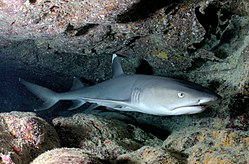
The blacktip shark (Carcharhinus limbatus) is a species of requiem shark in the family Carcharhinidae. It is common to coastal tropical and subtropical waters around the world, including brackish habitats. Genetic analyses have revealed substantial variation within this species, with populations from the western Atlantic Ocean isolated and distinct from those in the rest of its range. The blacktip shark has a stout, fusiform body with a pointed snout, long gill slits, and no ridge between the dorsal fins. Most individuals have black tips or edges on the pectoral, dorsal, pelvic, and caudal fins. It usually attains a length of 1.5 m (4.9 ft).
Swift, energetic piscivores, blacktip sharks are known to make spinning leaps out of the water while attacking schools of small fish. Their demeanor has been described as "timid" compared to other large requiem sharks. Both juveniles and adults form groups of varying size. Like other members of its family, the blacktip shark is viviparous; females bear one to 10 pups every other year. Young blacktip sharks spend the first months of their lives in shallow nurseries, and grown females return to the nurseries where they were born to give birth themselves. In the absence of males, females are also capable of asexual reproduction.
Normally wary of humans, blacktip sharks can become aggressive in the presence of food and have been responsible for a number of attacks on people. This species is of importance to both commercial and recreational fisheries across many parts of its range, with its meat, skin, fins, and liver oil used. It has been assessed as vulnerable by the International Union for Conservation of Nature on the basis of its low reproductive rate and high value to fishers. Wikipedia →
Recent sightings of Requiem shark in Galápagos Islands
LIVEiNaturalistGlobal Distribution
Parks Where Found
| # | Park | Country | Daily sighting probability |
|---|---|---|---|
| 1 | Galápagos Islands | 🇪🇨 Ecuador | |
| 2 | Padre Island National Seashore | 🇺🇸 United States |
Zoos & Centres Where Found
| # | Zoo / Centre | Country | |
|---|---|---|---|
| 1 | Okinawa Churaumi Aquarium | 🇯🇵 Japan | |
| 2 | Ripley's Aquarium of the Smokies | 🇺🇸 United States | |
| 3 | Acuario de Sevilla | 🇪🇸 Spain | |
| 4 | Acuario Inbursa | 🇲🇽 Mexico |
Closest Relatives at Galápagos Islands


Before you go
What are the chances of seeing a Requiem shark in Galápagos Islands?
Very likely
About 70% of wildlife watchers report a Requiem shark sighting in Galápagos Islands on a given day, based on 495 verified sightings from GBIF citizen-science data from 2019 to 2026. It is the 2nd most-seen of the 16 sharks and rays we can rate there. Over three days the chance rises to over 90%, if each day is a fresh chance.
When is the best time to see a Requiem shark in Galápagos Islands?
May and June
In those months about 90% of wildlife watchers report a Requiem shark in Galápagos Islands on a given day, against about 80% in July to April, the lowest months.
What time of day is best to see a Requiem shark?
Between 3 and 6 pm
Across all the parks we cover, that three-hour window holds the most Requiem shark sightings with a recorded time, and about 7 in 10 of them come between 6 am and 6 pm: it is most active around dawn and dusk.
Is Galápagos Islands the best place to see a Requiem shark?
Yes
Of the 2 parks where we can rate Requiem shark sightings, Galápagos Islands has the highest daily chance: about 70%. Next come Padre Island National Seashore (United States, about 60%).
Which relatives of the Requiem shark live in Galápagos Islands?
Same genus: Carcharhinus
The closest relatives of the Requiem shark that you can see in Galápagos Islands (genus Carcharhinus, Typical Requiem Sharks) are Galápagos Shark (about 30%) and Silky Shark (about 10%), with each one's daily chance of a sighting.
Where does the Requiem shark sighting chance come from?
GBIF citizen-science records
It is estimated from how often the Requiem shark is recorded against all the sharks and rays logged in Galápagos Islands (495 verified sightings from 2019 to 2026), calibrated against known sighting rates. Figures are rounded to the nearest 10% because citizen-science data supports honest approximations, not decimals, and months with records from fewer than five people show "—". How it works.
